Manual vs. Automatic Laser Toys: Which Engages Best
By Naomi Chen • 23rd Feb
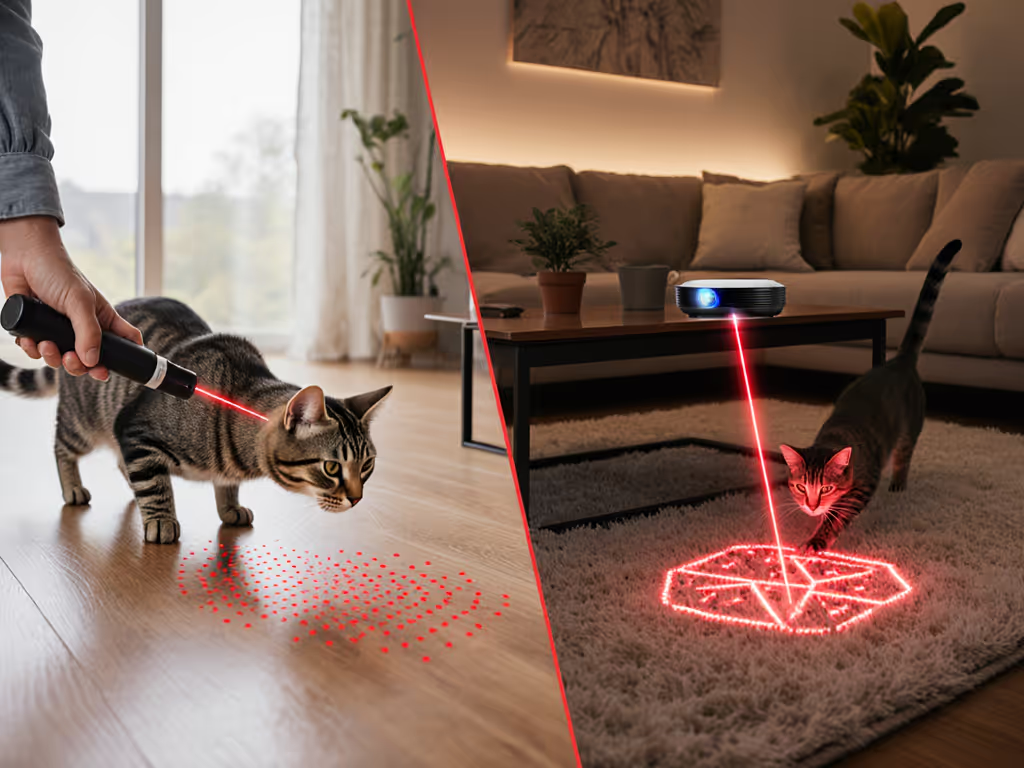
When it comes to manual vs automatic laser toys, the choice isn't binary (it's about understanding what each delivers and how they fit into your cat's world and your daily rhythm). Manual laser toys excel at deep engagement through human-led play, while automatic systems promise hands-free activity. The right pick depends on your cat's temperament, your schedule, and how you define meaningful enrichment.
The Fundamental Difference: Control and Presence
Manual (handheld) laser pointers put you in the driver's seat. You direct the beam, control speed and pattern, and can read your cat's energy in real time. This interactivity fosters bonding; your cat learns that hunting is a collaborative dance between you and them. [1][2] The laser becomes an extension of your attention, not a substitute for it.
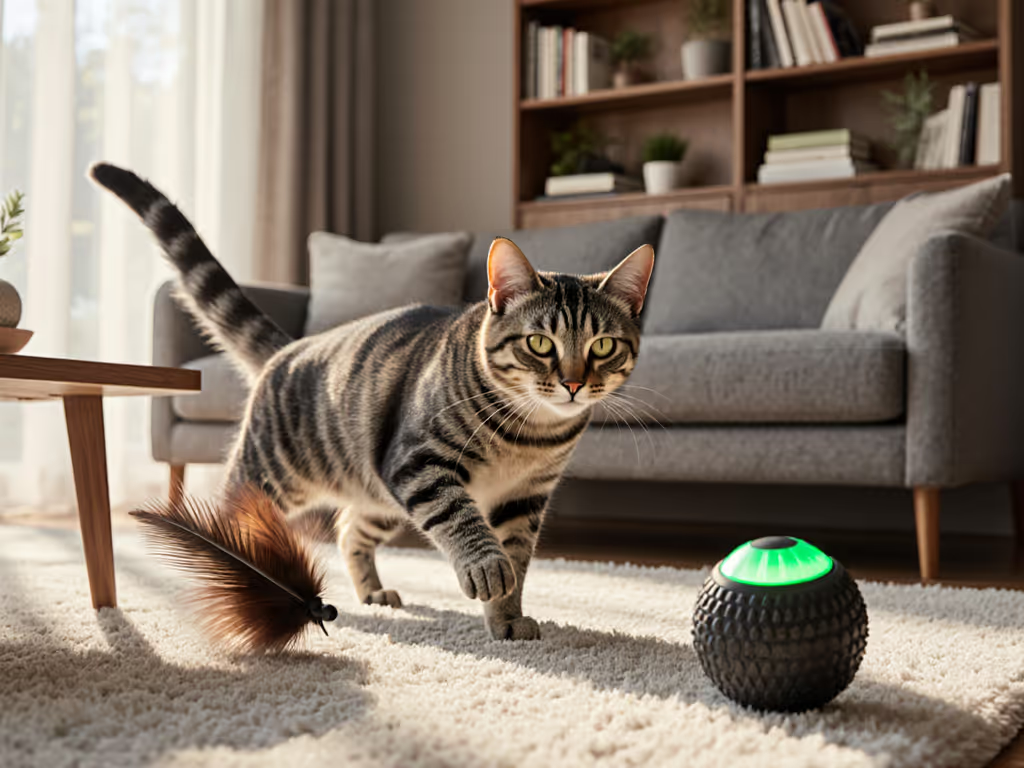
Automatic laser toys, by contrast, operate independently. They move in randomized patterns, trigger on timers, and free you from active participation. [1] For people juggling schedules or managing multi-cat households where playtime overlaps with work calls, this can feel like a practical win. The catch is that automation does not replicate the responsiveness that makes play feel rewarding. For model-by-model guidance, see our automatic laser toys comparison.
Engagement: What Research and Experience Show
Manual Laser Play Drives Active Human-Cat Bonding
When you hold the controller, your cat isn't chasing a random pattern — they're chasing your attention. This distinction matters. Handheld pointers allow you to adjust the beam's speed and direction based on your cat's fatigue, mood, and hunting intensity, creating a dynamic, responsive experience. You can slow down for an older cat or quicken the pace for a kitten's frenetic bursts. [2]
Mental agility sharpens during manual play because your cat must predict where you'll move the beam next. The unpredictability is intentional; you're mimicking erratic prey behavior. [3] This cognitive load (the "work" of the hunt) translates to focused play that tires cats more effectively than passive entertainment.
Owners frequently report that their cats seek them out before and after manual laser sessions, creating a ritual that anchors the cat's day and strengthens your bond. [1] This is enrichment that harmonizes with the human-cat relationship, not circumvents it.
Automatic Toys: Convenience Without the Catch
Automatic laser toys excel at providing exercise volume without your intervention. A cat can chase for extended periods, building cardiovascular fitness and burning off excess energy, which can help reduce night zoomies and destructive behaviors. [1][2]
The problem emerges when the chase never ends. Cats evolved to hunt prey that stops (prey they catch, consume, and feel sated by). A laser that moves infinitely offers no closure. [1] Veterinarians and behavior researchers warn that prolonged, unrewarded chasing can lead to frustration, anxiety, or even compulsive behaviors if the cat never experiences the full hunt-to-catch cycle. [1]
Automatic systems are not recommended for unsupervised, extended play. Many cat guardians report their cats become bored or frustrated when left alone with these devices, contradicting the promise of "hands-free" enrichment. [3] The toy becomes background noise rather than a source of genuine engagement.
The Prey Sequence: Why Completion Matters
This is where cat toy interaction metrics reveal a crucial gap. Both manual and automatic lasers stimulate the chase phase of predatory behavior — visual tracking, explosive acceleration, agility. But they differ sharply in completing the full sequence.
A healthy prey sequence includes: For a practical primer on using this pattern in daily play, read Prey Sequence Play.
- Stalk – Focused attention on a target
- Chase – Full-body exertion and pursuit
- Catch – The moment of capture
- Consume – A reward (food, satisfaction, rest)
Manual laser play can incorporate a catch phase: you end the game, your cat "catches" the light one final time, and the session concludes with a food reward or rest. This gives the cat a sense of completion and success. [1]
Automatic toys rarely provide this closure. The laser keeps moving; there's no definitive "end" the cat can control. Repeating this incomplete sequence can leave cats feeling unsatisfied and lead to redirected behaviors (biting your hands, ambush-attacking other pets, or obsessive tracking of shadows and reflections). [1] If redirected aggression is showing up at home, these toy-based protocols can help you reset patterns safely.
Safety, Overstimulation, and Real-World Constraints
Both types carry safety considerations worth examining.
Laser Safety Essentials:
- Use only cat-safe lasers rated at 5 milliwatts or lower to prevent retinal damage. [2]
- Never direct the beam into your cat's eyes. [2]
- Manual play allows you to supervise and prevent accidental eye exposure; automatic toys remove this control.
- Short, focused sessions (10-15 minutes) are safer than prolonged exposure. [1]
Overstimulation Risks:
Both manual and automatic lasers can trigger overstimulation in sensitive cats. Signs include dilated pupils, intense focus, twitching tail, or sudden redirected aggression (biting or scratching you mid-play). Manual toys let you see and respond to these cues in real time, scaling back intensity or ending the session. Learn the key overstimulation body language cues to pause play before frustration builds. Automatic toys, once activated, can't adapt. [3]
Cats with trauma histories, anxiety disorders, or heightened prey drive may spiral into obsessive behavior with either system if not carefully monitored. Pairing any laser toy with interactive, tangible toys — wand toys, balls, or other catch-and-release options — completes the reward cycle and prevents fixation. [1]
Space, Storage, and Aesthetic Impact
From a design perspective, this is where the practical divides become clear.
Manual laser pointers are exceptionally compact. A quality handheld device fits in a drawer, a basket, or your pocket. No charging station. No bulky housing. The footprint is negligible, and they vanish into storage with ease. For apartment dwellers or anyone practicing intentional minimalism, this matters. [2]
Automatic toys often require a base unit or charging dock. They command shelf or floor space and are rarely beautiful enough to leave out without creating visual clutter. If you value calm rooms and clear floors, clear focus (both in your space and your play routine), manual options align better with that aesthetic.
Automatic toys also risk becoming "set and forget" clutter: plugged in, rarely used, occupying space while your cat ignores them. This is exactly the trap many enrichment-conscious owners report: sunk cost and wasted real estate.
Matching Toy Type to Cat Profile and Your Schedule
Neither option is universally "best." Context is everything.
Choose a manual laser pointer if:
- You're home regularly and can dedicate 10-15 minutes to focused play sessions, 1-2 times daily.
- Your cat craves human interaction and bonds through play.
- You want to read your cat's energy and respond in real time.
- Your space is tight and you're averse to bulky devices.
- Your cat has a history of obsessive behavior; you need direct supervision.
- You prefer low-noise, low-visual-clutter enrichment.
Consider an automatic toy if:
- You need a supplement to manual play on days when your schedule is chaotic.
- You use it only for short, supervised bursts (10 minutes maximum) rather than prolonged unsupervised sessions.
- Your cat is older, less motivated, and benefits from low-pressure movement nearby.
- You pair it intentionally with other interactive toys that provide catch and reward.
- You see it as one element of a rotation, not a replacement for human engagement.
Calm rooms invite play; chaos shuts curiosity down.
When I downsized to a sunlit loft years ago, every sound echoed. Even the quiet whir of automated toys felt disruptive. Rebuilding play became an exercise in restraint. A slim wand, a silent floor target, and a lidded basket for toys transformed our evenings. The cats played more because the room invited them, not overwhelmed them. The manual wand required my presence, but that presence became a ritual our cats anticipated. The silence, the clarity, the lack of competing stimuli... that is what opened the door to real engagement.
The Synergy Approach: Combining Both
The false choice between manual and automatic dissolves when you think in terms of rotation and purpose. For a step-by-step schedule that keeps toys fresh, try our toy rotation guide.
A practical enrichment rhythm might look like:
- Morning or evening: 10-15 minutes of manual laser play, ending with a food reward or interactive toy that provides a catch.
- Throughout the day: Automatic laser toy active only during hours you're present and monitoring, set on a timer for 5-10 minute intervals, never as a continuous background presence.
- Downtime: Wand toys, balls, or puzzle feeders that offer variety and the crucial "catch" reward.
This blend addresses both the engagement gap and the practical reality of modern schedules. Manual play satisfies the cat's need for collaborative, rewarding hunts; automatic toys fill gaps without becoming a surrogate for your attention.
What Research Tells Us
Studies examining the relationship between laser play and behavioral outcomes confirm that unsupervised, unrewarded laser use correlates with increased frustration, obsessive tracking behaviors, and even redirected aggression. [1][5] The research supports what attentive owners already know: a cat that chases endlessly but never catches lives in a state of incomplete fulfillment.
Manual play, paired with tangible rewards and routine, consistently shows better outcomes for reducing boredom-driven behaviors, maintaining healthy weight, and strengthening the human-cat bond. [1]
Moving Forward: Clarifying Your Play Plan
Before choosing, ask yourself:
- Does my cat prefer human interaction or solo activity? (This points toward manual vs automatic as a primary option.)
- What time can I realistically commit to focused play? (Be honest; guilt-driven shopping backfires.)
- What does my space actually allow? (Will automatic toys add clutter or live in storage unused?)
- Does my cat have a history of obsession or overstimulation? (Manual play with supervision is safer.)
- How will I ensure the "catch" and reward happen? (This is non-negotiable for enrichment to feel complete.)
The best toy is the one that gets used consistently, aligns with your home's rhythm, and leaves your cat satisfied, not frustrated. Manual laser pointers, paired with a wand toy or puzzle feeder, typically deliver this outcome in the smallest footprint and with the deepest engagement.
Automatic lasers can supplement that core practice, but they shouldn't replace it. Enrichment should harmonize with your home and routines, not compete with them. When you choose clarity over convenience, your cat (and your space) thrive.
Related Articles