Catnip In Toys: Breed-Specific Response And Age Guide
By Hana Tanaka • 17th May
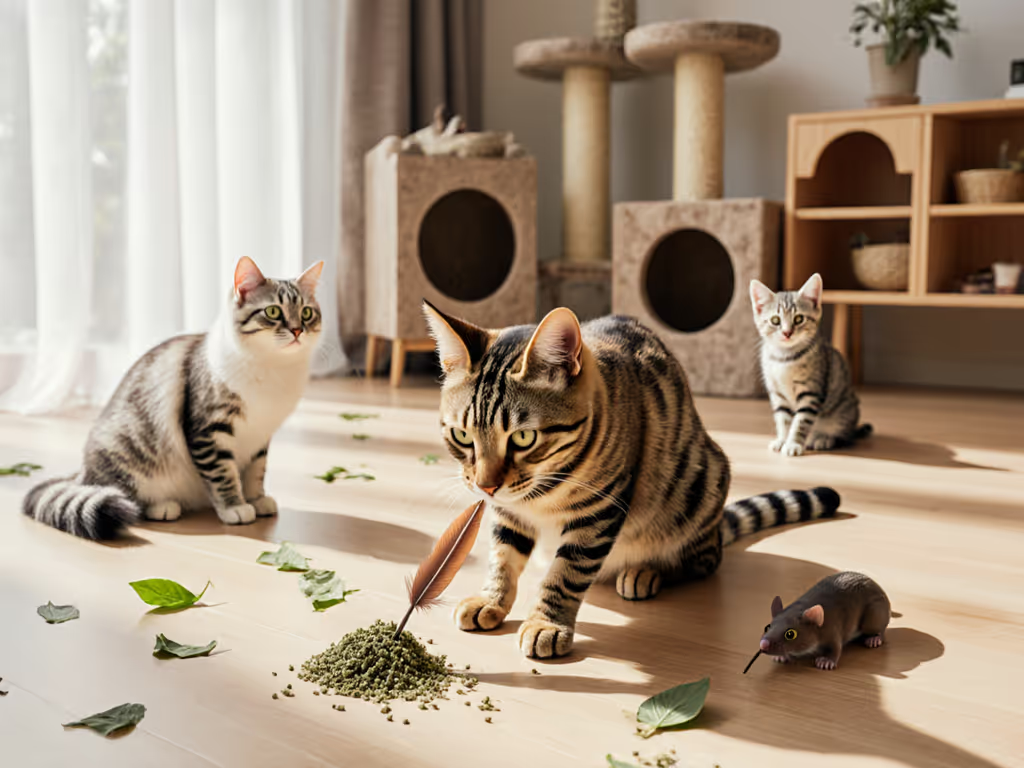
If you've bought catnip in toys and your cat either ignores them or turns into a tiny tornado, you're not alone. Not every cat responds the same way, and both age and breed-specific catnip response can quietly shape what you're seeing. The good news: you don't have to guess. With a simple, five-minute routine, you can figure out how catnip fits into your cat's play life (without clutter, chaos, or wasted toys).
In this step-by-step guide, we'll:
- demystify catnip and genetics,
- walk through age-related catnip reactions,
- compare catnip sensitivity by breed, and
- give you a tiny, trackable home experiment so you can build an easy play plan that actually works.
Five minutes daily beats any gadget in the closet.
Step 1: Understand What Catnip Actually Does (And Doesn't)
Before we compare breeds and ages, it helps to know what's happening inside your cat's body.
The quick science
Catnip (Nepeta cataria) contains an oil called nepetalactone. When a cat smells it (mostly through the nose, sometimes the mouth), that compound binds to receptors linked to the smell system. From there, signals travel to parts of the brain that process emotions and social cues. For a deeper dive into the science and toy choices, see Catnip toys explained.
Common reactions include:
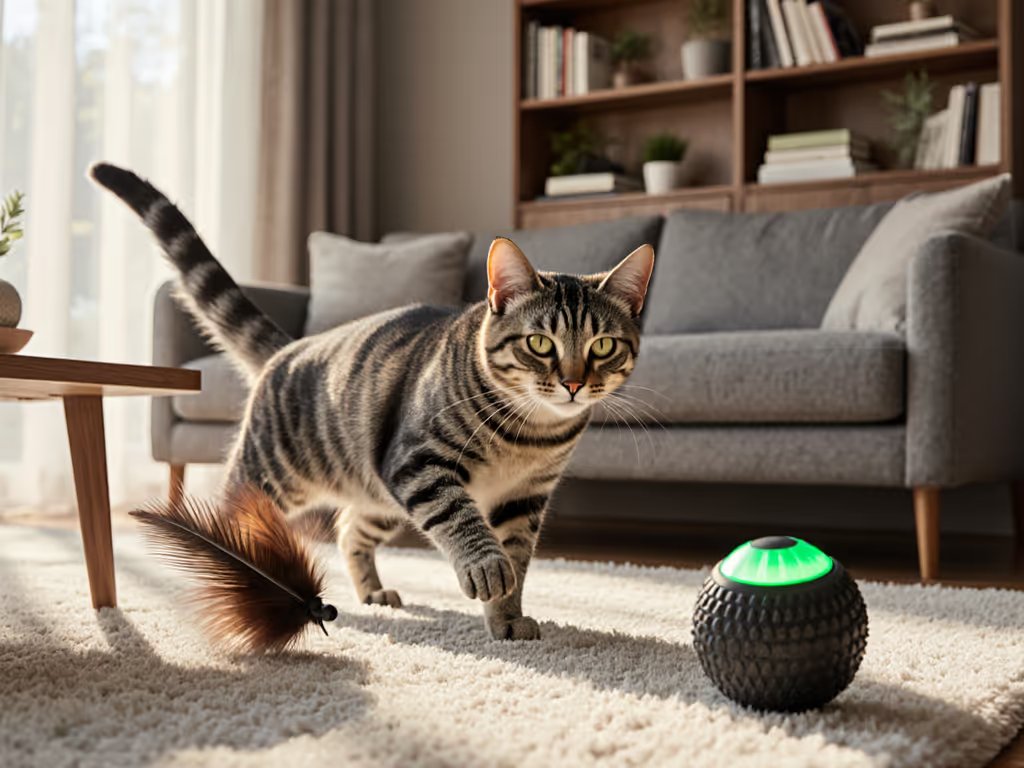
- rolling, rubbing, and cheek-marking the toy,
- pouncing, bunny-kicking, or zoomies,
- extra chirps, meows, or purrs,
- or, for some cats, simply a relaxed, dreamy state.
Most cats stay in this altered mood for about 5-15 minutes, then enter a "cooldown" period of 30-120 minutes where catnip does nothing. That's normal.
Genetics: why some cats don't care at all
Sensitivity to catnip is largely genetic. Studies consistently find that roughly half to two-thirds of adult cats respond noticeably to catnip. The rest have little or no reaction.
Important points:
- Not responding is not a health problem.
- The trait is inherited: if both parents were non-responsive, their kittens often are too.
- Breed can tilt the odds, but individual genetics matter more than the label on an adoption form.
Safety basics
Used reasonably, catnip in toys is considered safe for healthy cats:
- They cannot overdose in the way humans think of drugs, but they can get overexcited.
- Mild stomach upset is possible if they chew and swallow large amounts of loose catnip.
- Over-arousal (swatting, biting, hiding) is your signal to stop and give space.
If you ever see sudden, worrying changes in behavior around any toy, that's something to discuss with your veterinarian or a qualified behavior professional. In this guide, we'll stay on the behavior-enrichment side, not medical advice.
Step 2: Match Your Expectations to Age (Age-Related Catnip Reactions)
Age has a surprisingly big influence on how cats respond to catnip in toys.
Kittens (0-6 months)
- Many kittens don't respond to catnip yet. The sensitivity tends to "switch on" somewhere around 3-6 months for those who have the gene.
- Play is already sky-high at this age, so you may not notice a big contrast with or without catnip.
How to use catnip for kittens:
- Focus on short, gentle exposure: let them sniff a catnip toy but don't push it.
- Prioritize safe construction (no loose strings, plastic eyes, or easily chewed-off bits).
- Consider catnip as a bonus, not a main driver of play.
Teens and Young Adults (6-24 months)
This is the "rocket fuel" stage for many responsive cats.
Typical age-related catnip reactions here:
- quick, intense bursts of play,
- dramatic rolling, zoomies, wild bunny-kicking,
- sometimes mild roughness if play is allowed to go too long.
Guidelines:
- Keep catnip sessions short and structured: 5-10 minutes, followed by a calm snack.
- Use catnip toys as the "special guest star" in a routine, not as all-day floor decor.
- If things escalate into swatting or biting, you've gone past their sweet spot (end the session sooner next time).
Adult Cats (2-8 years)
For many guardians, this is the golden window: the cat is physically mature, confident, and often has a clear response pattern.
Common patterns:
- clear, predictable excitement followed by content rest,
- or a calmer, rub-and-purr response without zoomies.
Guidelines:
- Aim for 10-15 minutes of interactive play once or twice daily, with catnip toys in the rotation 2-4 times per week.
- Use catnip as a "mood booster" before more focused wand play.
- Watch how long it actually takes your cat to tire; many adults are fully satisfied in under 10 minutes.
Seniors (8+ years)
Older cats may:
- keep their catnip response but express it more gently,
- or gradually show less interest, especially if joints are sore.
Gentle use for seniors:
- Offer soft, easy-to-grab catnip toys at floor level.
- Keep sessions short (5 minutes) and frequent rather than long and exhausting.
- Use catnip toys to encourage low-impact movement: slow pounces, gentle batting, short kicks.
Age vs. Catnip: Quick Comparison
| Age group | Typical catnip reaction | Best practice |
|---|---|---|
| 0-3 months | Usually none | Don't worry; focus on general play |
| 3-6 months | Emerging, unpredictable | Very short, supervised catnip toy exposure |
| 6-24 months | Strong, high-energy | 5-10 min, end with food, avoid late-night chaos |
| 2-8 years | Clear pattern, often ideal | 10-15 min play routine, catnip 2-4x/week |
| 8+ years | Softer or shorter reactions | Gentle, low-impact, micro-sessions |
Step 3: Compare Catnip Sensitivity by Breed (With Caveats)
Now let's talk breed-specific catnip response (with one big reminder):
Breed can tilt the odds, but your individual cat writes their own story.
Even within a single breed, lines can differ. Still, patterns do show up when many guardians and breeders report similar things.
Breeds often reported as strong catnip responders
These breeds are frequently described as very engaged with catnip in toys:
- Siamese & Oriental-type cats (Oriental Shorthair/Longhair, Balinese)
- Bengal
- Abyssinian & Somali
- Maine Coon
- Norwegian Forest Cat
- Ragdoll (often enthusiastic but in a softer, floppier way)
These breeds already tend to be active and curious. When the catnip gene is present, you may see:
- fast, intense response within seconds,
- long play bouts (10+ minutes) compared to some other cats,
- repeated returns to the toy even after a short break.
Breeds reported as moderate or variable responders
Here, individual lines matter more than the breed label:
- British Shorthair
- Persian & Himalayan
- Scottish Fold
- Russian Blue
Guardians often describe:
- a clear response, but milder,
- more rubbing and cheek-marking than wild zoomies,
- interest that may fade faster.
Domestic shorthairs & longhairs (mixed-breed cats)
If your cat is a "domestic shorthair" or "domestic longhair," they're in the biggest genetic lottery of all.
- Some are as catnip-crazy as any Bengal.
- Others are totally indifferent.
- Littermates can differ even when they look identical.
This is where home testing really matters more than assumptions.
Multi-cat households and mixed responses
In homes with more than one cat, catnip sensitivity by breed and age can create uneven scenes:
- One cat goes into joyful frenzy.
- The other watches from the couch or walks away.
Practical tips:
- Offer catnip toys in separate spaces if intensity leads to tension.
- Rotate who gets the catnip spotlight on a given day.
- If one cat tends to guard toys, have individual sessions behind a closed door. For product picks that minimize tension, see best toys for multi-cat homes.
Step 4: Run a 7-Day Catnip Response Trial (Your At-Home Lab)
Now we turn information into action. You're going to collect simple catnip response metrics so you can stop guessing and start tailoring.
This is a tiny experiment designed for real life in small spaces.
What you'll need
- 1-2 catnip toys (preferably soft, quiet, and similar in size)
- A timer (phone is fine)
- A note app or small notebook
If your cat is nervous or easily startled, choose a very soft, silent toy. In my own small apartment, a shy ex-street cat once spent weeks under the bed; the only thing that worked at first was a soft toy, a quiet room, and a short daily routine.
The 5-minute daily routine
Do this once a day for 7 days at roughly the same time.
- Set the stage
- Choose a quiet, familiar spot.
- Put away loud toys or distractions.
- Present the toy
- Place it on the floor near (not on) your cat.
- Don't shove it under their nose or rub it on them. Let them choose.
-
Start your timer for 5 minutes. Watch quietly. No talking, teasing, or wiggling the toy unless your cat completely ignores it for the first 60 seconds, then you can gently nudge or roll it once or twice.
-
Record your catnip response metrics:
- Latency: How many seconds until they first sniff/touch?
- Intensity (0-3):
- 0 = ignores
- 1 = sniffs, light rubs
- 2 = rolling, light pounces
- 3 = full-body play, bunny kicks, zoomies
- Duration: How many minutes of active engagement within the 5 minutes?
- Mood afterward: Calm, agitated, or neutral?
Here's a simple log template you can copy:
| Day | Time of day | Latency (sec) | Intensity (0-3) | Active minutes | Mood after (calm/agit/neutral) |
|---|---|---|---|---|---|
| 1 | |||||
| 2 | |||||
| ... |
- End on a positive note After the 5 minutes, put the toy away and offer a small snack or a few kibbles. This helps your cat's brain complete the hunt-eat-groom-sleep cycle.
Tiny sessions, big trust.
After a week, you'll have real data instead of vague impressions.

Step 5: Interpret Your Results and Build a Micro Play Plan
Now, match your log to one of these broad profiles and tweak for age.
Profile 1: High-Intensity Responders
Patterns you might see:
- Latency under 20 seconds most days.
- Intensity 2-3 regularly.
- Active for most or all of the 5 minutes.
Risks: over-arousal, rough play, night zoomies if used too late.
Micro plan:
- Frequency: 2-4 catnip toy sessions per week, alternating with non-catnip play.
- Timing: Early evening, not right before bed.
- Structure: 1-2 minutes free play with the catnip toy -> 5-8 minutes wand or chase play -> snack -> put all toys away.
For teens and young adults, lean toward shorter, more frequent sessions instead of marathon hype.
Profile 2: Gentle Responders
Patterns:
- Latency between 20-60 seconds.
- Intensity mostly 1-2.
- 1-3 active minutes per session.
These cats often:
- rub, head-butt, and sit near the toy,
- show soft purrs or slow blinks,
- may enjoy the scent more than wild play.
Micro plan:
- Frequency: 3-5 short sessions per week.
- Timing: Anytime; even bedtime is usually fine.
- Structure: 5 minutes where the catnip toy is present while you gently roll or tap it and speak softly. End with a treat or cuddle if your cat likes touch.
For seniors, this profile is especially common. For more ideas tailored to older cats, try our gentle senior toy guide. Embrace gentle movement; think of catnip as aromatherapy plus light exercise.
Profile 3: Non-Responders
Patterns:
- Latency high or "never approaches."
- Intensity 0 most days.
- No change in behavior before vs. after.
First, rule out freshness: old, poorly stored catnip may have lost potency. Try one more week with:
- a different brand, or
- a freshly opened toy, or
- loose catnip sprinkled inside a sock and tied off (supervised only).
If there's still no change, your cat is likely simply not sensitive. If catnip isn't a fit, compare catnip alternatives like silver vine and valerian to find what works.
Micro plan for non-responders:
- Treat catnip toys as normal toys; keep them in rotation if your cat likes the texture or shape.
- Consider alternatives like silvervine or valerian root toys (again, start small and supervise; some cats find these stronger).
- Focus on prey-style wand play, puzzle feeders, and climbing opportunities.
Your cat is not missing out. You're just working with a different toolset.
Step 6: Keep Things Safe, Calm, and Clutter-Free
You've compared your cat's reaction across days, factored in age, and considered breed. Now let's keep everything sustainable.
Signs it's time to dial back catnip
Stop the session and give space if you see:
- sudden tail thrashing or stiff, swishy tail,
- ears flattening sideways or back,
- fixed stare, growling, or hissing,
- swatting at you when you weren't touching the toy.
Next time:
- Cut the session length in half.
- Use catnip earlier in the day.
- Pair with calmer, lower-arousal toys.
Rotation to reduce clutter and keep novelty
A simple, space-friendly system: Use this 7-day plan to rotate toys the right way and keep interest high.
- Pick 4-6 total toys, only 1-2 with catnip in toys.
- Keep the rest in a box/closet.
- Every 3-4 days, swap the toys that are out.
You'll:
- keep your floor clear,
- extend each toy's lifespan and novelty,
- and have a predictable kit that fits your home's aesthetic.
Multi-cat safety and fairness
If your cats have different catnip responses:
- Give separate catnip times if one tends to guard toys.
- Match sessions to age: the teen tornado gets a fast, early-evening hunt; the senior gets a quiet, gentle sniff-and-rub session later.
- Store catnip toys out of reach between sessions so nobody is "on duty" 24/7.
This is especially important in apartments or studios where everyone shares tight quarters. Calm boundaries keep relationships smoother.
Your Actionable Next Step (This Week)
Tonight or tomorrow, choose one cat, one catnip toy, and one 5-minute window.
- Run the Day 1 routine from Step 4.
- Log what you see - latency, intensity, duration, mood.
- Repeat daily for 7 days.
At the end of the week, you'll know:
- whether your cat is a strong, gentle, or non-responder,
- how their age shapes their sessions,
- and how much catnip belongs in your play routine.
From there, build a tiny, repeatable schedule around their profile. You don't need bins of toys or elaborate setups (just tiny sessions, big trust), tailored to the cat in front of you.
Related Articles