Low-Impact Amazon Cat Tunnels Compared for Senior Cats
By Naomi Chen • 29th May
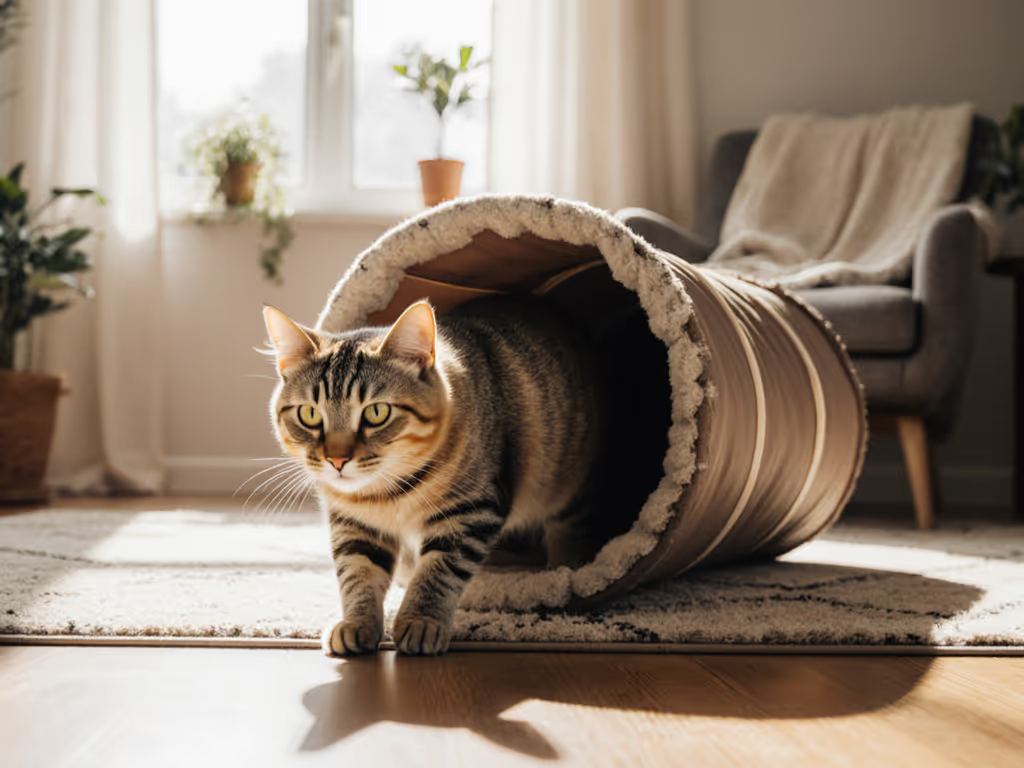
If you share your home with an older cat, you have probably noticed that many Amazon cat tunnels are built for kittens on turbo mode - loud, bright, and a little chaotic. This low-impact tunnel comparison is for the opposite goal: gentle, quiet enrichment that respects aging joints, sensitive ears, and a calm, shared living space.
Instead of chasing the "most exciting" tunnel, we'll look at which tunnel design choices actually help senior cats move comfortably, feel secure, and rest well afterward. The aim is a single, thoughtfully chosen piece that truly gets used (because calm rooms invite play; chaos shuts curiosity down).
What "low-impact" really means for senior cats
For older cats, "low-impact" is less about marketing labels and more about how a tunnel feels in real use. Think in three layers:
- Physical load: how much effort it takes to step in, turn, and exit.
- Sensory load: how noisy, bright, and crinkly the tunnel is.
- Emotional load: whether the tunnel feels predictable and safe vs. startling.
Most mainstream tunnels (especially 3-way crinkle designs like popular collapsible polyester models with central peepholes) are built around noise and surprise. That can be thrilling for young cats, but overwhelming for seniors who are stiff, anxious, or easily startled by sudden sounds. For a broader overview of low-impact play options, see our gentle toys for elderly cats.
Low-impact tunnels are quiet, easy to step into, and visually simple enough that they disappear into the room when not in use.
How this guide compares tunnels
Because listings rarely say "good for arthritis," we'll compare common Amazon cat tunnels across five practical dimensions:
- Entry height & opening size (senior cat tunnel accessibility)
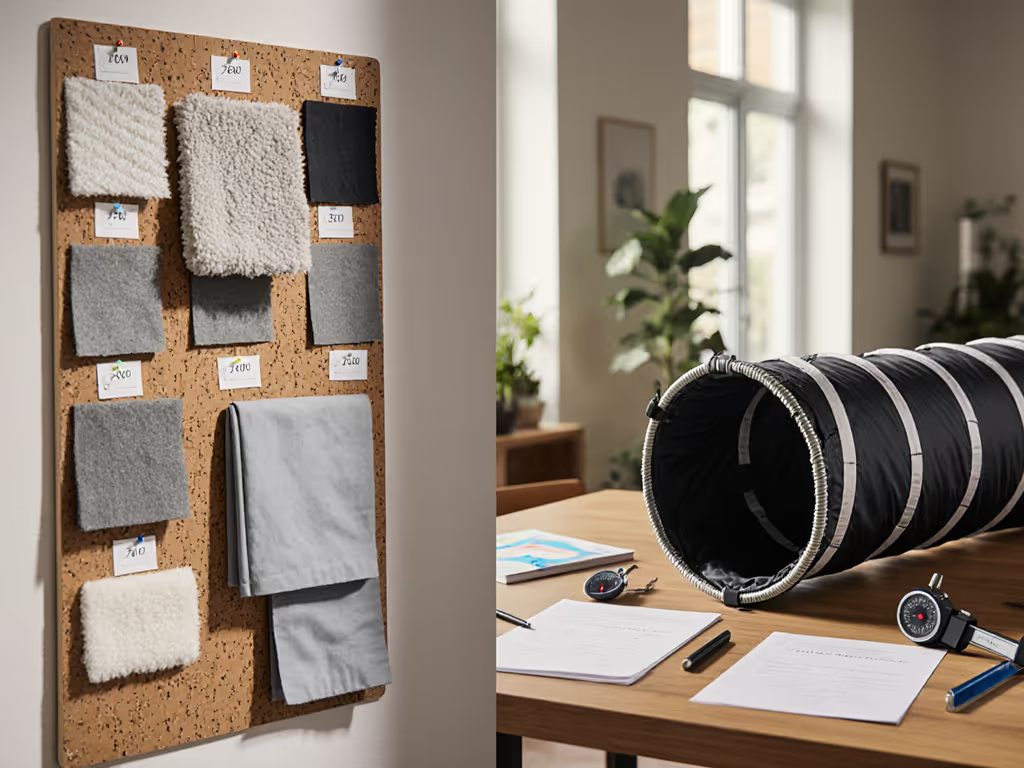
- Interior surface & padding (tunnel surface comfort testing)
- Structural support & collapse behavior
- Noise level & sensory profile
- Footprint & storage fit for small apartments
I'll reference typical Amazon-style tunnels (like polyester 3-way collapsible models with crinkle material), not specific ASINs, so you can apply this framework to any listing. For build-specific pros and cons, compare cat tunnel materials: durability vs noise.
The five metrics that matter for senior cats
1. Entry height & opening size: Can your cat step in without a jump?
For senior cat tunnel accessibility, the first question is: How high is the lip?
- Many collapsible polyester tunnels have a wire frame that lifts the opening slightly off the floor. For young cats this is nothing; for arthritic hips, that extra inch feels like a hurdle.
- Listings often show diameter (e.g., 10-12 inches) but not lip height. In product photos, compare the tunnel edge to nearby flooring or furniture to approximate how high your cat must lift a paw.
- Wide openings (10-12 inches across) are generally easier for seniors to turn in than narrow "kitten" tubes, a pattern seen in popular indoor tunnel roundups.
What to favor for low-impact:
- Openings that appear flush with the floor or very close
- Wider, round entrances for easy turning
- Shorter tunnels or those with side escape holes so your cat can exit early
2. Interior surface: How does it feel on aging joints?
Most classic crinkle tunnels use polyester fabric over a wire frame. It's durable and easy to wipe down, but it can be slightly slippery. For cats with arthritis, a surface that provides a little traction and softness is kinder.
From a comfort testing perspective (even if we're doing this informally at home):
- Polyester with crinkle film inside is stimulating but noisier and less cushiony.
- Soft fleece or plush lining (mentioned in several "cozy" tunnel reviews) offers better grip and more forgiving landings when your cat shifts weight.
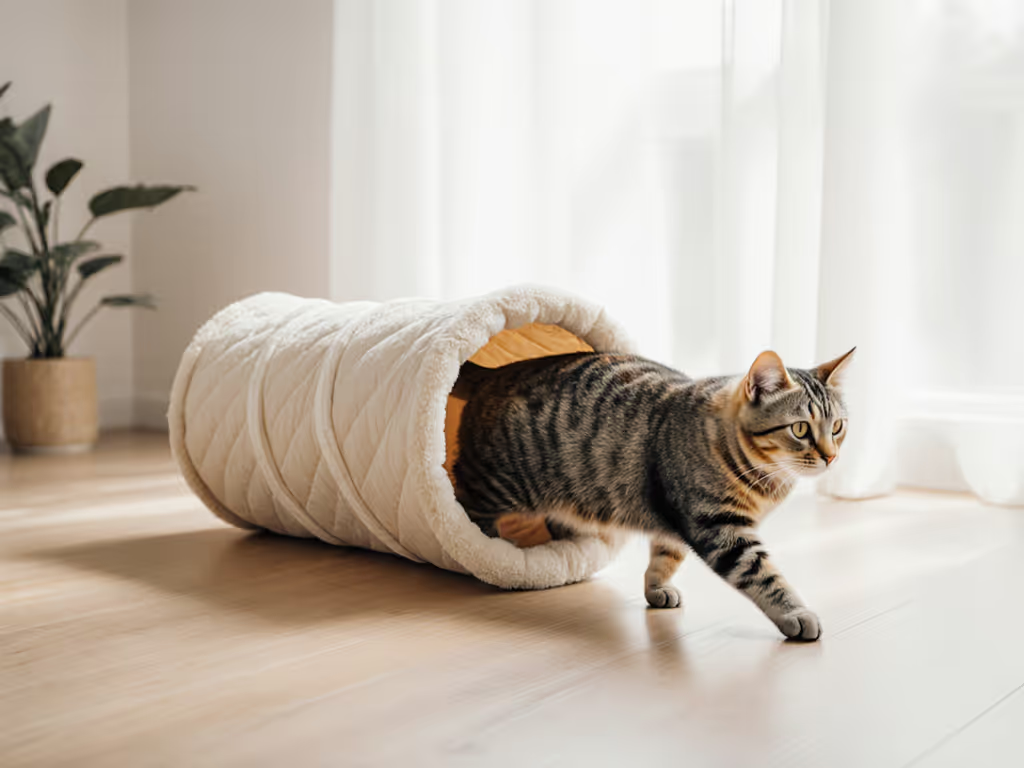
- Felt or thick fabric shells on some modern tunnels act like a semi-rigid mat - supportive without being harsh.
If your cat tends to lie inside the tunnel rather than sprint through, prioritize soft, non-slippery textures over novelty.
3. Structural support & collapse behavior
Collapsible tunnels are popular because they fold flat for storage, a key benefit highlighted in many product descriptions and roundups. For senior cats, the question is less "Does it collapse?" and more "When does it collapse?"
- Wire-framed polyester tunnels usually hold their shape unless stepped on directly, then spring back. That spring action can startle a sensitive cat.
- Some felt or fabric tunnels use softer support that gently folds when leaned on and doesn't rebound as sharply.
- Multi-way designs (3-way, 4-way) can twist if your cat leans on the central junction, which may feel unstable.
For low-impact setups, we want a tunnel that feels predictable: it stays put during typical use and, if it does deform, it does so slowly and quietly.
4. Noise profile: Crinkle vs. quiet
Many best-seller tunnels on Amazon emphasize crinkle material specifically because it grabs attention and encourages pouncing. That's perfect for high-energy kittens; less so for:
- Noise-sensitive cats
- Humans sharing thin walls, babies' rooms, or echo-prone spaces
Crinkle tunnels make sound every time your cat shifts weight, and some reviews describe them as "loud" or "constant rustling," especially in hard-floored apartments. If your cat enjoys the crinkle sensation, our quiet crinkle toys comparison highlights lower-noise options.
For low-impact use, the ideal is:
- Minimal or no crinkle film
- Quiet fabrics (fleece, felt, cotton)
- No dangling bells or noisy attachments
In a small home, a single loud tunnel can dominate the soundscape; low-impact designs keep clear floors, clear focus for both you and your cat.
5. Footprint, storage, and visual calm
Most Amazon tunnels are collapsible, often folding into a small circle with attached straps or elastic bands. That's essential if you:
- Rotate toys to keep them novel
- Need the floor clear for kids, mobility aids, or your own sanity
From a design-forward perspective, choose:
- Neutral colors that read as part of your decor, not visual clutter
- Tunnels that fold to 2-3 inches thick so they slide into a closet or behind a sofa
- Simple silhouettes that don't demand attention when you're not in play mode
Low-impact enrichment respects your cat's body and your visual bandwidth.
Comparing common Amazon tunnel types for seniors
Below is a practical low-impact tunnel comparison across four common tunnel types you'll see in Amazon listings.
1. Classic 3-way crinkle tunnel (polyester)
Typical features (e.g., popular Tempcore-style tunnels):
- Three connected polyester tubes with a central junction
- Built-in crinkle material along the walls
- Often includes a peek hole or dangling toy
- Fully collapsible with straps or elastic bands for storage
Pros for seniors:
- Multiple exits reduce the chance of feeling "trapped"
- Collapses for easy storage in small apartments
- Central peek hole can be used for gentle wand play instead of full sprints
Cons for seniors:
- Crinkle noise can be overwhelming in echo-prone rooms
- Wire frame edge may sit slightly above the floor, creating a step-up
- Junction area can shift or twist, feeling unstable under slower, heavier bodies
Best suited for:
- Seniors who are still fairly mobile and enjoy occasional bursts
- Guardians who can confine use to daytime and don't mind crinkle noise
To make this type more low-impact:
- Place it on a rug to dampen sound.
- Remove dangling toys if your cat startles easily.
- Partially fold one tunnel leg to create a shorter, simpler pathway.
2. Straight soft-fabric tunnel (fleece or plush-lined)
Some tunnels highlighted in indoor-fun guides use plush or fleece linings, marketing themselves as cozy hideaways. These are often straight, slightly shorter tubes.
Pros for seniors:
- Softer interior provides better traction and comfort for resting joints
- Typically quieter than crinkle tunnels
- Straight path reduces the need for sudden turns or pivots
Cons for seniors:
- Only one entrance at each end; timid cats may feel exposed in the middle
- If diameter is small, larger seniors may feel cramped
Best suited for:
- Seniors who like to nap inside rather than race through
- Shy cats who enjoy a predictable, cave-like space
To make this type more low-impact:
- Position the tunnel with one end against a wall or furniture for extra security.
- Place a thin mat under the tunnel to reduce sliding when your cat enters.
3. Cube-and-connector sets
Many Amazon sets pair fabric play cubes with short connector tunnels. The tunnels are often crinkle polyester, but the overall structure is modular.
Pros for seniors:
- Shorter connectors mean less walking distance inside the tunnel
- Cubes can serve as low-height hideouts or rest spots
- Flexible configuration allows you to create gentle angles instead of sharp bends
Cons for seniors:
- Connectors are often crinkly and noisy
- Cubes may be tall enough to require a small jump to enter
Best suited for:
- Homes with multi-cat dynamics, where one cat prefers the cube and another prefers the tunnel
- Guardians who want a layout that can be scaled up or down depending on the day
To make this type more low-impact:
- Use one connector and one cube instead of the full maze.
- Set the cube on its side if that lowers the entry height.
4. Semi-rigid felt "cave" tunnels
Some modern designs use thick felt or similar materials shaped into low arches or caves. While not always marketed as tunnels, they function similarly.
Pros for seniors:
- Felt offers a quiet, cushioned surface
- Semi-rigid walls feel stable under weight
- Low archways can keep entry height minimal
Cons for seniors:
- Less common; options on Amazon may be limited compared with crinkle styles
- May not fold as compactly as wire-framed designs
Best suited for:
- Seniors who prefer lounging and watching more than sprinting
- Guardians who value aesthetic alignment with minimalist decor
To make this type more low-impact:
- Add a thin fleece pad inside if your cat likes extra cushioning.
- Place in a low-traffic corner to encourage relaxed use.
How to read Amazon listings through a senior-friendly lens
When you're scrolling through Amazon cat tunnels, the photos and adjectives can be overwhelming. Here's a simple checklist to turn it into a tunnel entry height analysis and comfort audit.
Scan the photos first
- Look for images that show the tunnel next to furniture or a cat for scale.
- Check whether the entrance edge appears flush with the floor.
- Note whether the cat in photos is a kitten - if so, assume the tunnel may feel smaller and higher for a larger senior.
Read for key phrases
Favorable phrases for low-impact use:
- "Soft" or "plush lining"
- "Quiet play" or "non-crinkle"
- "Collapsible for storage"
Phrases to treat cautiously (depending on your cat):
- "Loud crinkle sound" or "extra crinkle for stimulation"
- "For kittens and small pets" (may be too narrow)
Check reviews specifically for:
- Mentions of older cats using the tunnel
- Comments about noise level ("too loud," "fine at night," etc.)
- Notes on stability ("tips over," "springs back hard")
This is your at-home version of tunnel surface comfort testing (using other guardians' experiences as field data).
Integrating a tunnel into a quiet, senior-friendly play corner
A tunnel only helps if your cat feels invited to use it - and if you can live with it visually and acoustically.
Placement tips
- Choose a quiet corner, not the center of a busy hallway.
- Anchor the tunnel on a rug to reduce sliding and noise.
- Position an entrance facing something interesting: a window, a safe vantage point, or your usual spot on the sofa. For layout ideas that mimic natural hunting routes, see how to optimize your cat's play environment.
In my own echo-prone space, changing from a large, noisy setup to a slimmer, quieter play corner with a soft-floor target and lidded storage completely changed how the room felt in the evenings, and the cats played more because the space felt open, not chaotic.
Routine ideas for seniors
A tunnel pairs especially well with short, predictable play sessions:
- Invite your cat with a soft wand toy, guiding it along the outside of the tunnel first.
- Once they're interested, let the toy disappear through the tunnel slowly.
- Keep sessions to 5-10 minutes, ending with a small snack or meal.
This structure supports a gentle "hunt-eat-groom-sleep" cycle that many behavior pros recommend, which can reduce night zoomies and early-morning wake-ups.
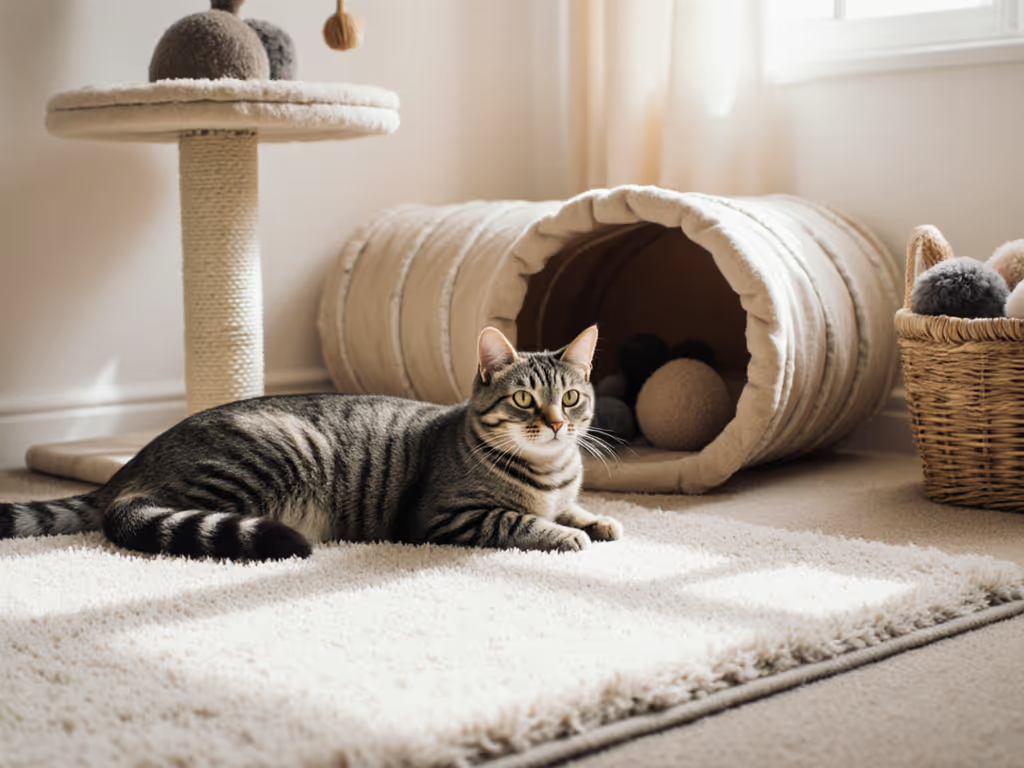
Quick decision guide: which tunnel type matches your senior cat?
Use this as a simple starting point:
-
Arthritic or visibly stiff cat
Look for: soft-lined, straight tunnels with low openings and minimal crinkle.
Avoid: tall cube entries and very narrow connectors. -
Shy or easily startled senior
Look for: felt "cave" styles or single tunnels in quiet fabrics, placed in low-traffic corners.
Avoid: multi-way crinkle tunnels with lots of sudden sound. -
Playful but slower senior
Look for: one 3-way tunnel with at least one leg shortened by folding, plus a rug underneath for stability.
Avoid: overloaded setups - one well-placed tunnel is better than a sprawling maze.
Whatever you choose, think in terms of a rotation plan: the tunnel lives out for a week or two, then folds away while another favorite (box, mat, perch) takes its place. For an easy schedule to keep novelty high, use our toy rotation guide. That keeps novelty high without adding clutter.
Where to explore next
If you're ready to experiment, start with a single tunnel that scores well on:
- Low entry height
- Soft, quiet interior
- Stable structure on the floor
- Easy storage that fits your home
Try it for two weeks and keep a simple log: how quickly your cat approaches, whether they walk through or lie inside, and how their movement looks before and after play. If you notice hesitations, slipping, or avoidance, treat that as useful data (not failure) and adjust: add a rug, reduce crinkle, or switch to a softer design.
Over time, one thoughtfully chosen tunnel can become a gentle daily ritual rather than another piece of floor decor. Low-impact enrichment respects your cat's changing body and your need for a peaceful home, and when you honor both, you'll see the difference in how confidently your senior cat moves through the room.
Related Articles