Multi-Cat Tree Platform Comparison: Space-Smart Solutions
By Hana Tanaka • 6th May
Introduction
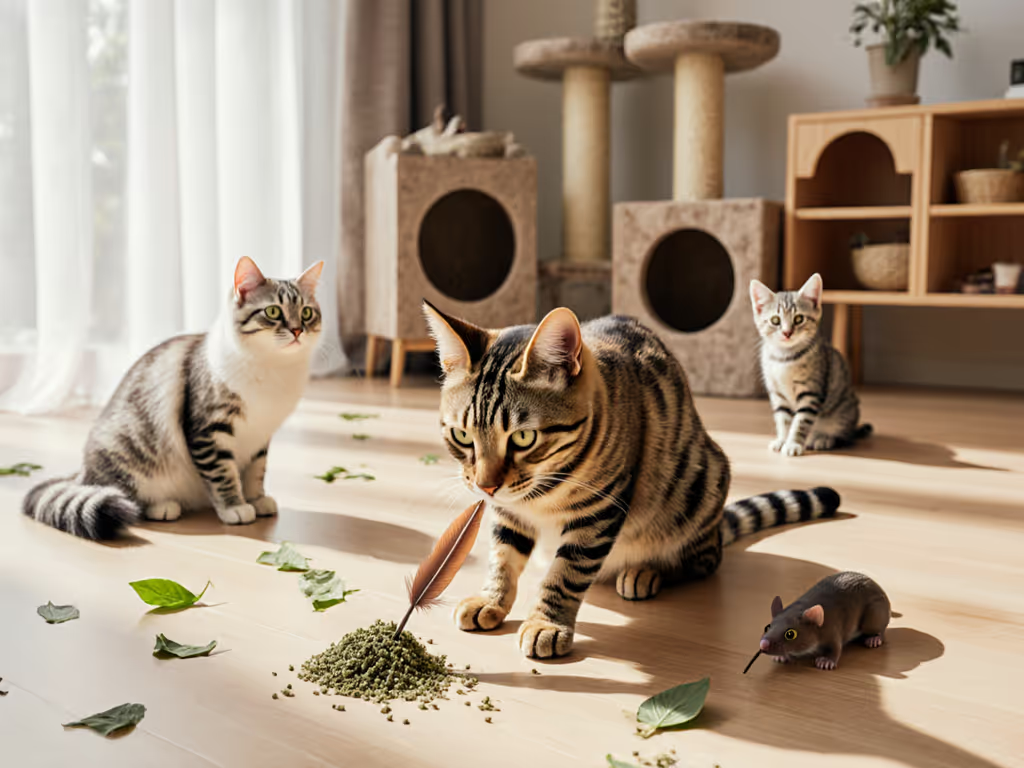
If you live with multiple cats in a space that wasn't designed with feline gymnastics in mind, you've probably stood in your living room thinking, There has to be a better way.
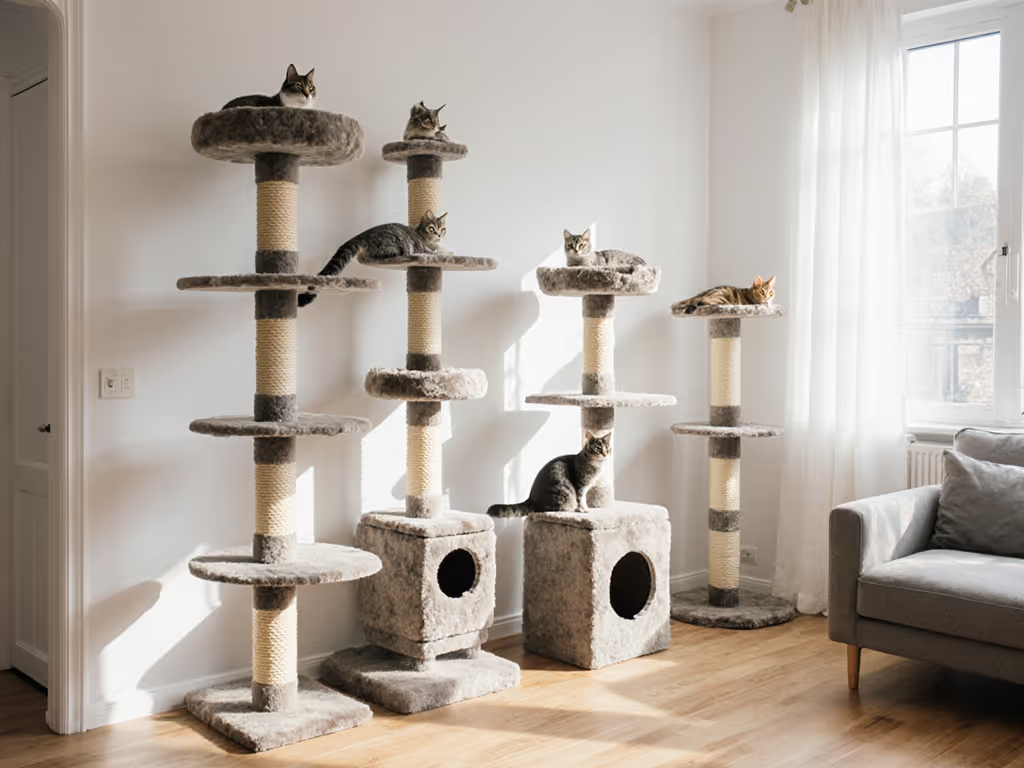
A cat tree platform comparison reveals that choosing the right structure for a multi-cat space-efficient tree isn't just about picking the tallest option, it's about creating calm, vertical territory that actually fits your life. In a studio apartment with a shy former street cat, I learned that the most transformative tool wasn't size or complexity; it was consistency. Five minutes daily beats any gadget in the closet, and that principle applies to the very foundation your cats use to play, rest, and feel secure.
This guide walks you through how to evaluate cat trees for multi-cat households without overwhelm. By the end, you'll have a clear framework for finding a solution that matches your space, your cats' personalities, and your real-world routine.
Why Multi-Cat Trees Matter, and Why Space-Smart Choices Matter More
The common misconception is that more cats need a bigger tree. Not always. What they need is smarter placement. For room-by-room layout strategies that make trees work with your floor plan, see our play environment setup guide.
In multi-cat homes, trees serve three critical functions:
- Resource distribution – Reducing conflict by giving each cat their own perch or escape route
- Vertical territory – Expanding usable square footage without consuming your living room
- Confidence scaffolding – Offering shy, older, or less agile cats accessible ways to participate in family life
The mistake I see most often is buying a massive tree that becomes the room's visual anchor, then wondering why play still feels flat and conflicts linger. The real issue is rarely the tree's size; it's whether it's positioned and selected with your household's specific dynamic in mind.
Consistency beats complexity for cats and caregivers.
When you choose a tree thoughtfully (one that matches your cats' confidence levels, your space, and your willingness to use it daily) it becomes an extension of routine, not a piece of furniture you're managing.
The Core Comparison Framework: Four Dimensions to Evaluate
Before looking at specific models, let's establish what actually matters. Here's what to compare:
1. Stability Testing Methods and Real-World Durability
A tree that wobbles undermines confidence (especially for shy or older cats). When evaluating stability, ask:
- Base footprint: Does it require a dedicated corner, or can it fit against a wall?
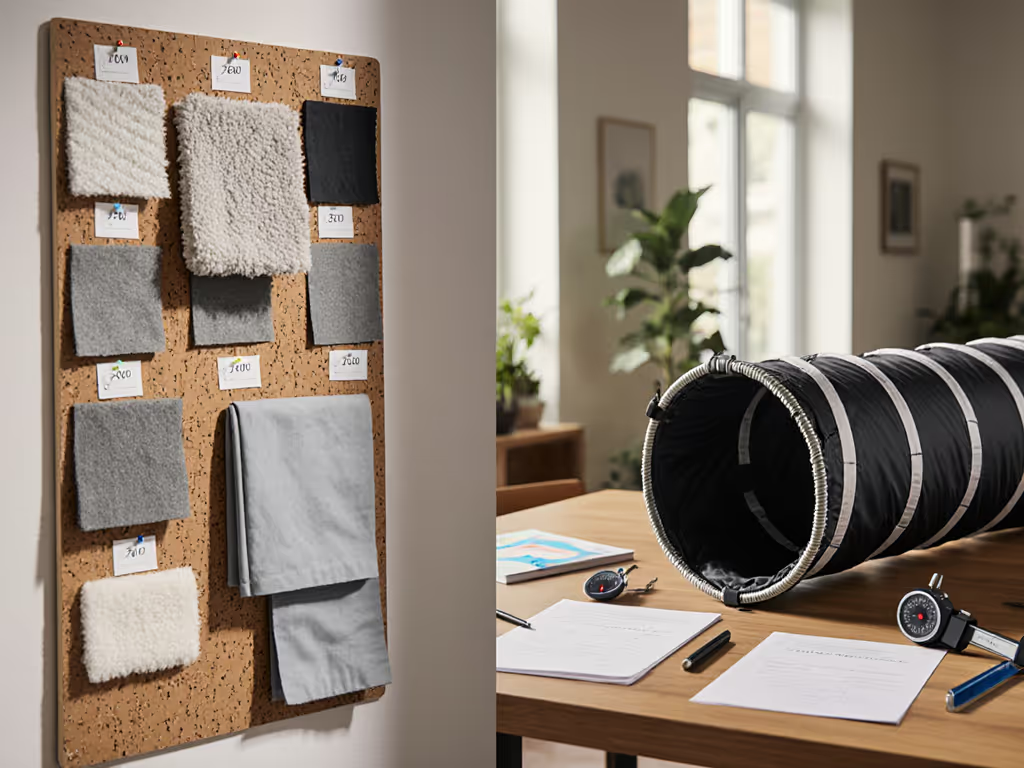
- Material construction: Solid wood vs. particleboard vs. sisal-wrapped metal frames, each has longevity trade-offs
- Weight capacity: Does it safely support your heaviest cat plus active climbing?
- Customer reviews on wobble: Look for specific mentions of stability during multi-cat play, not just aesthetic praise
A tree that passes stability testing means your cats can launch between platforms without hesitation, and you can forget to think about it.
2. Vertical Space Optimization
This is where urban dwellers win. Instead of spreading out, you're growing up. Consider:
- Height-to-footprint ratio: Does the tree max out at 5 feet but only claim 2 square feet of floor space? That's efficient
- Stepped platforms vs. open perches: Stepped designs (like ramps or staggered shelves) reduce the "flying leap" anxiety some cats feel. Useful for elderly or fearful cats
- Wall-mountable hybrid options: Some trees attach to the wall, freeing floor space entirely
- Layering: Multiple smaller trees in different rooms can feel less visually heavy than one monolith
If your living area is modest, vertical optimization is your shortcut to enrichment without clutter creep. To turn window watching into complete hunting sessions, use our window perch play system guide.
3. Material Durability and Maintenance Reality
This directly affects whether you'll keep using the tree six months from now. When comparing:
- Carpet vs. sisal: Sisal is easier to clean and more durable; carpet collects hair and odor
- Fabric coatings: Microsuede or performance fabrics resist staining better than standard velvet
- Scratch visibility: Light-colored surfaces show damage; darker tones hide wear
- Cleaning ease: Can covers be vacuumed or wiped? Are they removable and washable?
In my own routine, I've found that easier maintenance means I'm more likely to keep the tree inviting (not neglected in the corner).
4. Multi-Cat Territory Mapping and Conflict Prevention
This is the human aspect of stability. Think about your specific cats: For conflict-aware toy picks that complement your tree setup, see best toys for multi-cat homes.
- Do they play together or prefer parallel solitude? Parallel players benefit from multiple levels where they can't collide. Joint hunters need wider platforms to avoid crowding.
- Is there a dominant cat? Ensure escape routes or high perches so subordinate cats can retreat.
- Age and mobility mix? Kittens may overwhelm seniors. Trees with ramps or low entry points prevent gate-keeping.
Tiny sessions, big trust: when each cat has their own zone on a tree, play becomes safer and more frequent.
Platform Types: How to Compare Your Options
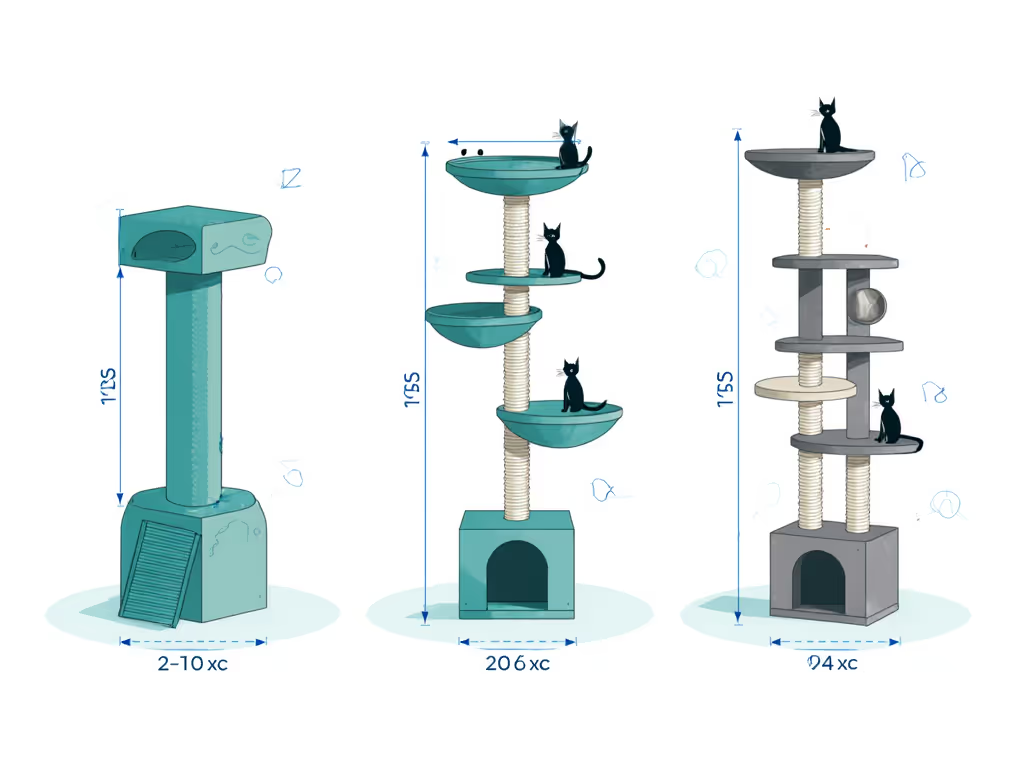
The Compact Tower (Under 5 feet, <20 sq. ft. footprint)
Best for: Small spaces, apartment dwellers, 2–3 cats with moderate energy.
Comparison checklist:
- ✓ Fits in a corner or against a window?
- ✓ Sturdy base weight (8+ lbs ensures it won't tip)?
- ✓ At least 2–3 distinct levels?
- ✓ Easy to move if you need to vacuum?
Trade-off: Less real estate, but easier to integrate into decor and less commitment to repositioning.
The Multi-Tier Platform (5-7 feet, sprawling footprint)
Best for: 3+ cats, mixed ages, households where the tree is a design focal point.
Comparison checklist:
- ✓ Meets all stability tests under dynamic multi-cat play?
- ✓ Material durability rated for heavy, frequent use?
- ✓ At least 4–5 distinct zones to reduce crowding?
- ✓ Can you access it for cleaning without moving furniture?
Trade-off: Larger visual footprint, but genuine territory expansion. Worth it if you're committed to using it as the hub of daily play.
Hybrid & Wall-Mounted Options
Best for: Severe space constraints, aesthetic sensitivity, or experimental households testing multi-cat dynamics.
Comparison checklist:
- ✓ Installation complexity and your confidence level?
- ✓ Weight rating and wall stud compatibility?
- ✓ Accessibility for cats of all mobility levels?
- ✓ Can you add or reconfigure pieces over time?
Trade-off: Higher setup barrier, but floor space remains clear and the visual profile is minimal.
How to Actually Choose: A Two-Step Decision Path
Step 1: Assess Your Cats (5 minutes)
Create a simple snapshot:
| Cat Name | Age | Mobility | Play Style | Confidence Level |
|---|---|---|---|---|
| Example | 7yo | Slower | Solo hunter | Medium |
| Example | 2yo | High | Chase & pounce | High |
This one-minute investment clarifies your actual needs. Mismatched households (senior + kitten) need different tree features than same-age cohorts.
Step 2: Map Your Space (3 minutes)
- Where does natural light fall? (Cats gravitate toward windows.)
- Which corner can "disappear" into your home's aesthetic?
- Is there a high-traffic zone you want to avoid?
- Do you have wall space vs. only floor options?
From these two quick snapshots, your shortlist shrinks to 2-3 genuine contenders.
The Real Investment: Consistency, Not Just Hardware
Here's where my philosophy intersects with your choice: the tree is only half the equation. The other half is using it daily.
When I set a timer for five quiet minutes twice a day with a soft wand in that tiny studio, I wasn't investing in expensive equipment. I was investing in a routine my cat could count on. Within a month, she greeted sessions at the doorway, no longer hiding under the bed. Structure those five-minute sessions with our prey sequence play guide to build confidence faster. The tree became a landmark in her confidence, not just my apartment's furniture.
The same applies to multi-cat households. Choose a tree that:
- Fits your daily rhythm – Not so complex that setup feels like a chore
- Matches your cats' confidence – Shy cats need accessible entry points; confident cats can handle heights
- Suits your space – A frame you resent looking at won't inspire consistent use
Five minutes daily beats any gadget in the closet. A modest, consistently used tree outperforms an expensive model gathering dust.
Common Comparison Mistakes to Avoid
- Chasing height alone: A 7-foot tree is overkill if your cats prefer horizontal sprawling. Measure against your cats, not Instagram aesthetics
- Ignoring material longevity: The cheapest option often means replacement in 18 months. Compare cost-per-year, not sticker price
- Underestimating stability: Wobble saps confidence faster than anything else. Test reviews for real-world multi-cat chaos, not solo-cat praise
- Forgetting accessibility: A ladder-style platform feels adventurous to a 2-year-old; it's anxiety-inducing for an arthritic 12-year-old. Match the design to your household's mobility spectrum
- Treating it as a one-time purchase: Trees change value as cats age and routines evolve. Design for adaptability: modular systems beat monolithic towers
Your Implementation Path: Next Steps
- Grab product pages or videos showing real stability testing
- Note footprint and material details (write them down; don't rely on memory)
- Read reviews for your specific household profile (not just "great tree," but "great for shy older cats" or "stable under kitten zoomies")
- Imagine it in your space for six months. Does it align with how you actually live?
Then pick one. You don't need the perfect tree; you need a reliable tree paired with a routine you'll actually use.
Remember: five minutes daily beats any gadget in the closet. The tree is the stage; your consistent play is what builds confidence and calm in a multi-cat home.
Conclusion
Comparing cat trees for multiple cats isn't about finding the most impressive model, it's about matching form, function, and your real-world commitment. By evaluating stability, vertical efficiency, material durability, and your specific cats' dynamics, you move from confusion to confidence.
Start with the two-minute assessment. Build your shortlist. Choose the option that feels both practical and sustainable. Then commit to tiny sessions, big trust, and watch as your cats settle into their vertical territory with ease.
Your space doesn't have to feel cramped when it's thoughtfully layered with function. To keep visual clutter down as you expand vertical territory, try these minimalist cat toy storage solutions. And your routine doesn't have to feel overwhelming when it's grounded in consistency.
You've already done the hard part: you're thinking about this intentionally. The rest is one good choice away.
Related Articles