
Window Perches for Cats: Complete Hunting Sequences
By Naomi Chen • 28th Apr
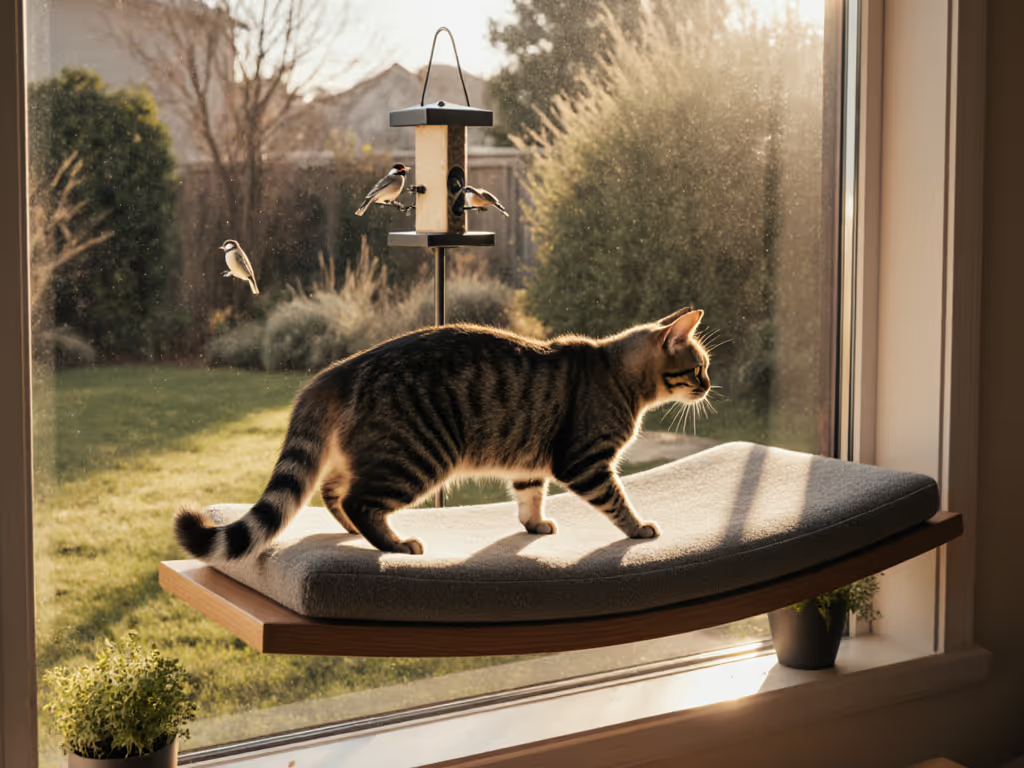
Cat perches for window setups offer far more than a comfortable view (they're a direct window into your cat's natural hunting sequence observation and prey drive). When you understand how cats process the outdoors from a secure vantage point, you can design an enrichment system that calms rather than frustrates, engages rather than overstimulates.
This isn't about entertainment for its own sake. It's about honoring the hunting architecture your cat was born with, even inside your home. For a deeper primer on the prey sequence that underpins this approach, see Prey sequence play.
Why Hunting Sequences Matter for Indoor Cats
Every cat, whether they've ever set paw outside or not, inherits a complete hunting protocol. This sequence typically follows a pattern: hunt, stalk, chase, capture, and consume. Indoor cats with no outlet for this drive often redirect it (into your hands during play, into night zoomies that start at 2 a.m., or into destructive behaviors that feel like problems but are actually unmet needs).
A window perch doesn't eliminate that drive. Instead, it channels it into an observable, manageable, and deeply satisfying form. When your cat watches birds or movement outside, their brain is executing the full hunt sequence, even if the physical chase never happens. Research on indoor cat behavior confirms that this mental engagement alone reduces stress and unwanted behaviors caused by boredom.
The key is that calm rooms invite play; chaos shuts curiosity down. A well-positioned window perch in a tranquil space becomes a reliable anchor for your cat's daily rhythm.
Reading Your Cat's Prey Profile Through Window Observation
Not all cats hunt the same way. Some are bird specialists: head tilts, chirping, intense focus on flight patterns. Others are rodent hunters, drawn to ground-level movement and rustling. Still others key on insects: quick, unpredictable flickers.
Before you optimize a window setup, spend a week simply watching your cat watch. Which movements capture their attention? Do they vocalize? At what distance do they lose interest? This observation is free, non-invasive data about what actually motivates your individual cat.
Once you know whether your cat is a sky watcher or ground tracker, you can position your perch and consider what's visible outside. For room layouts that mimic natural hunting grounds, see our play environment guide. If birds are the draw, a perch at mid-to-upper window height works best. If your cat fixates on insects or ground prey, a lower or corner perch may be more engaging. This specificity (matching perch placement to prey profile) is what separates "nice to have" from "genuinely used."
The Architecture: Why Window Perches Facilitate Natural Hunting Sequences
A window perch serves a precise structural purpose: it elevates your cat to a position of security and control. Height gives cats what behaviorists call "territory satisfaction": a vantage point from which they can safely survey their environment without being exposed.
This matters because a cat watching from ground level feels vulnerable. A cat watching from a secure, elevated perch can relax into observation. That relaxation is crucial. It allows the hunting sequence to unfold mentally without the panic response that comes from feeling exposed. Your cat can stay engaged (watching, tracking, even chirping) without the stress of "I'm visible, I could be hunted."
The best perches balance several factors: they offer a clear sightline to outside, they're sturdy enough to hold weight without wobble, and they take up minimal floor footprint. Suction-cup mounting systems, for example, keep the perch anchored to the window itself rather than eating into your floor or shelf space. For a tested, window-mounted option, read our K&H Kitty Sill review. This is especially important in apartments or small homes where every square foot counts.
When I downsized to a sunlit but echo-prone loft, every sound carried, and every toy clang felt intrusive. A simple window perch with no moving parts, no bells, no motorized elements changed everything. Suddenly, our evenings felt calm again, and the cats played more because the room invited them, not overwhelmed them. Sound matters more than you think, particularly in shared or noise-sensitive spaces.
Bird Feeder Placement for Cats: Strategic Positioning
One of the most overlooked variables is what's actually visible from the window. A perch that faces a blank fence or a parked car becomes unused decoration. A perch that faces active outdoor life (bird feeders, movement, trees with visible wildlife) becomes the most-visited spot in your home.
If you're able to influence outdoor placement, consider positioning bird feeders or landscaping (trees, shrubs, water features) at heights and distances that create sustained, changeable visual interest. The ideal distance is roughly 8 to 15 feet from the window (close enough for your cat to track movement clearly, far enough that the prey feels unreachable, which prevents frustration).
This distance matters more than people realize. Too close, and your cat may exhibit stress behaviors (pacing, yowling, or window-scratching) because the prey feels simultaneously visible and inaccessible. Too far, and the detail blurs; your cat loses interest. Positioning bird feeders or planting with this visual "sweet spot" in mind transforms a window perch from a pleasant spot to a genuinely enriching hunt simulator.
Frustration Prevention Without Overstimulation
One real concern is that window access can frustrate rather than satisfy. If your cat spends hours window-gazing and then redirects predatory energy into biting your hands or attacking housemates, the perch alone isn't solving the problem (it may be amplifying it).
The answer isn't to remove the perch. It's to pair visual stimulation with physical outlet. A window perch works best as part of a routine: your cat watches for 20 to 30 minutes, then you engage them in direct, interactive play or offer a puzzle feeder that translates the hunt into capture and consumption. Match difficulty and size with this puzzle feeder skill guide to keep the "capture and consume" stage satisfying.
This sequence (observe, stalk (interactive play), capture (toy interaction), consume (food or treat)) mirrors a complete hunt and leaves your cat satisfied rather than frustrated. Without the final stages, your cat is left in a heightened predatory state with no release valve.
Also consider timing. If your cat is a dawn or dusk hunter (when outdoor activity peaks), align your interactive play sessions with those natural peaks. This reduces the mismatch between their drive and available outlet.
Perch Safety Considerations
-
Verify mounting integrity. If using suction cups, test them weekly. Temperature changes, dust, and humidity affect suction strength. A perch that fails mid-nap creates a fall and breaks trust in the space.
-
Check window sill edges. Repeated jumping can wear grooves into soft sills. A thin protective pad under the perch distributes weight and extends window life.
-
Ensure no entrapment hazards. If the perch has fabric or mesh, confirm there are no loose threads or gaps where claws or collar hardware could catch.
-
Avoid perches near houseplants or breakables. Even a calm, focused cat can bump items during repositioning.
-
Keep perches away from radiators or heating vents. Window perches in winter can get cold; those directly above heat sources create uncomfortable temperature swings.
Simplicity in design (a flat, washable surface with secure mounting) reduces nearly all safety concerns.
Territorial Marking and Multi-Cat Dynamics
In multi-cat homes, a prized window perch can become a flashpoint. For conflict-preventing play options, see resource guarding toy picks. Cats use elevated spaces to assert territory, and a sunny window spot is premium real estate.
If tension arises, consider installing two perches (one on each side of the window, or staggered at different heights). This lets each cat have a private viewing zone. Alternatively, rotate perch access: one cat gets morning, another gets afternoon. This system works when you're home to manage it, but for hands-off enrichment, multiple access points prevent conflict.
Scent-marking matters too. Your cats may rub the perch, the window frame, and the sill itself. This is normal and healthy. Keep the perch clean enough to be hygienic but don't strip scent markers so aggressively that you erase your cat's sense of ownership.
Integrating Perches into Minimalist Space
A window perch doesn't need to feel like a pet-store intrusion into your home. The best perches are visually quiet: neutral fabrics, slim profiles, metal or natural wood hardware. They blend into the window rather than dominating it.
Think of it as you would any piece of furniture. Does it fit the visual weight of the room? Can it be stored or removed if needed? Does it add calm or clutter? A design-forward perch (one that matches your aesthetic) gets used more consistently because it doesn't feel like a compromise.
Consider footprint measurements carefully. A perch should use no more than 12 to 18 inches of window height and width unless your window is very large. This preserves natural light and sightlines while still offering your cat ample surface area.
Bringing It Together: A Sustainable Window Practice
A functional window perch system is part observation tool, part enrichment infrastructure, and part home design. It reduces unmet prey drive, provides mental stimulation that calms rather than agitates, and requires almost no daily effort to maintain.
The results (a cat who rests at night, engages with purpose during active hours, and has fewer redirected behaviors) speak for themselves. And because a well-chosen perch fits seamlessly into your space, it's something you'll keep, use, and feel good about year after year.
Next Steps: Observation and Iteration
Start where the research begins: watch. Spend a few days noticing which windows your cat gravitates toward, what outdoor activity captures attention longest, and whether there are times of day when interest peaks. Document whether your cat seems frustrated or satisfied by what they see.
From there, experiment with perch placement, height, and outdoor positioning (if feasible). Small adjustments often yield surprising changes in engagement and calm. And remember: the goal isn't to recreate a hunt your cat can complete (it's to offer them a space where their hunting mind can work, their body can rest in safety, and your home stays the calm, curated place you've designed it to be).
As your practice evolves, you might layer in interactive play routines, puzzle feeders, or seasonal outdoor viewing shifts. But the window perch remains the anchor: a quiet, reliable tool that honors your cat's nature while honoring the space you share.
Related Articles