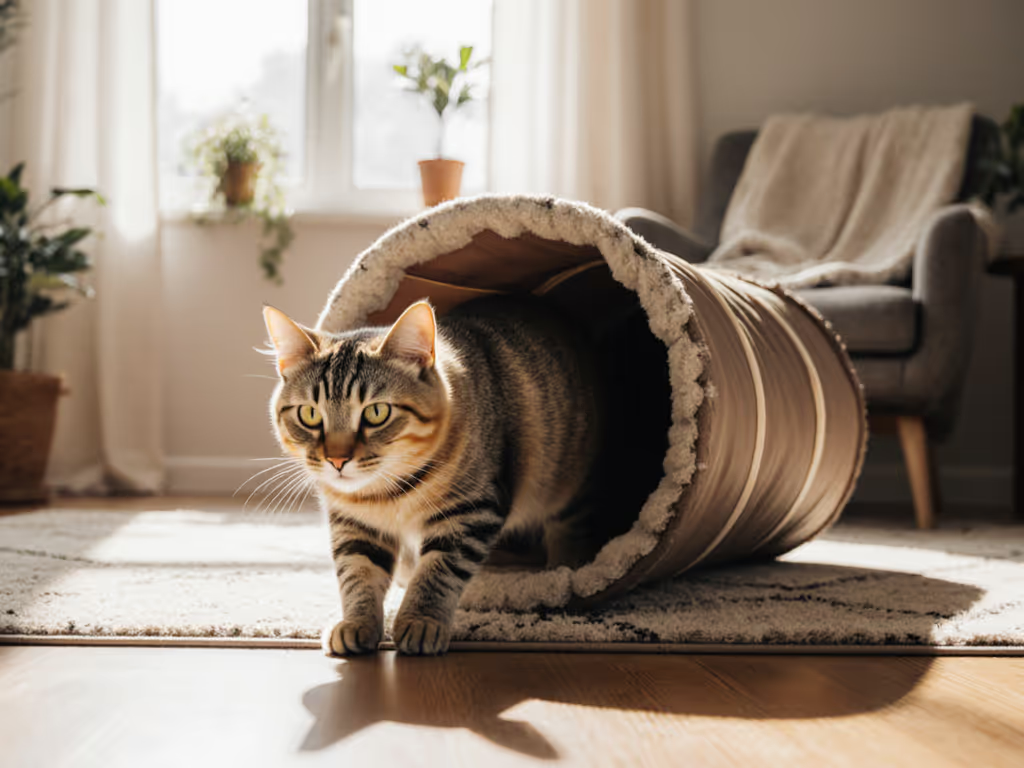
Cat Resource Guarding Toys: Top Picks Tested
By Hana Tanaka • 7th Mar
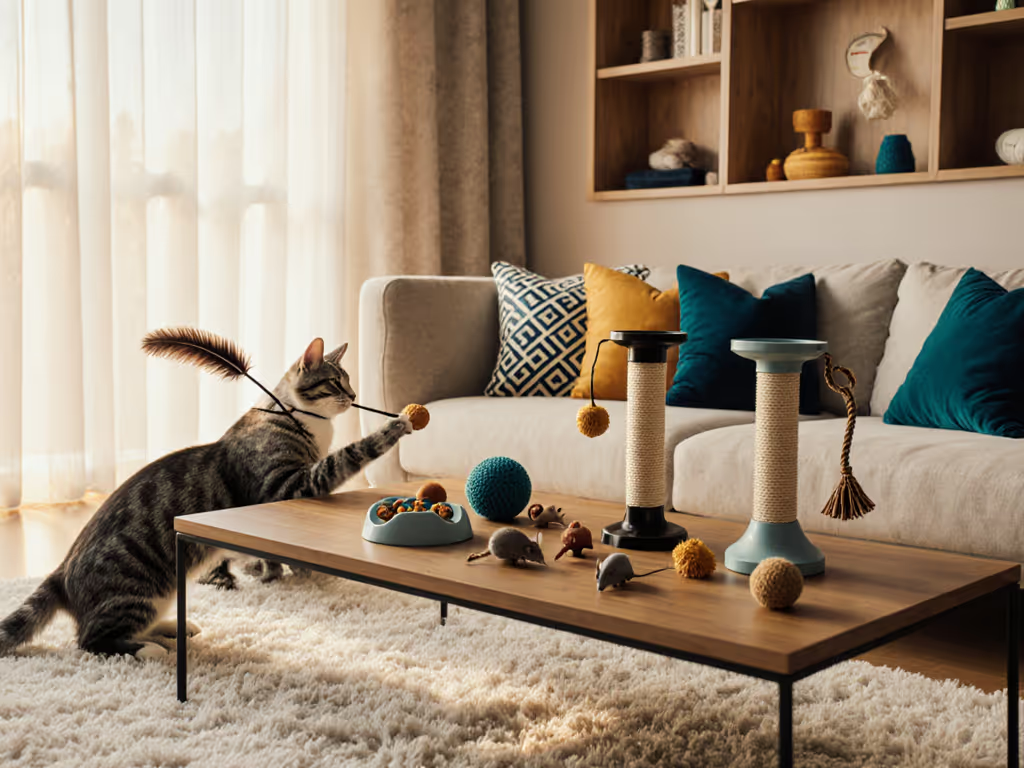
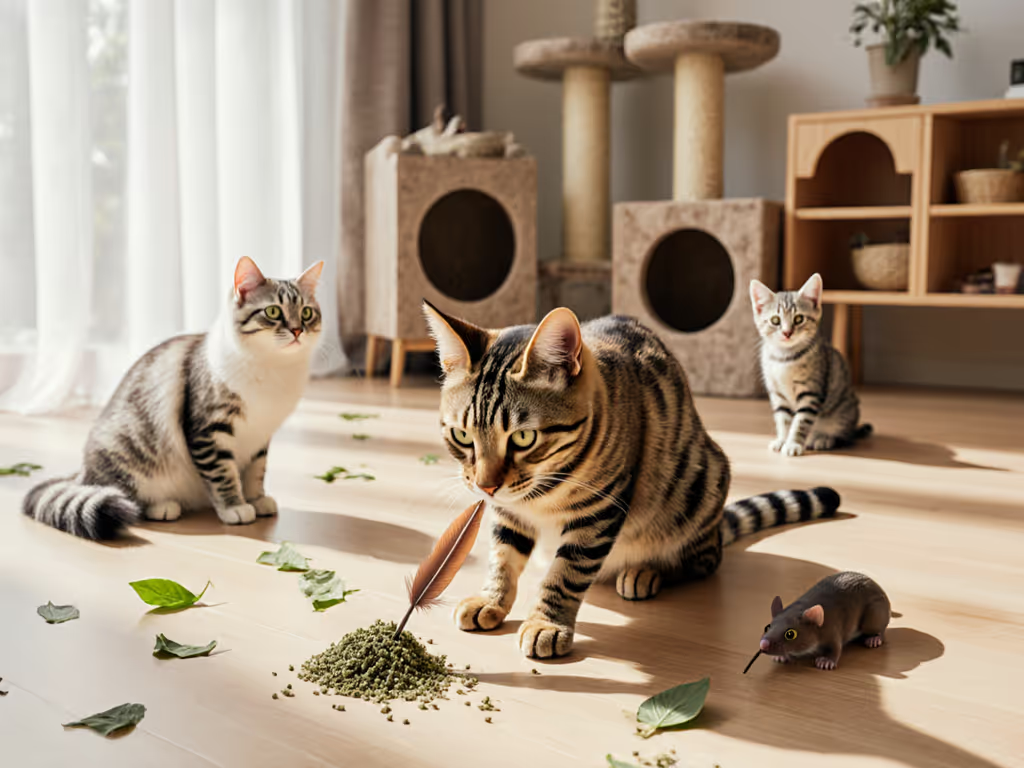
When you live with multiple cats, recommended cat toys become more than just entertainment, they become peacemakers. Cat resource guarding toys work not by being fancy, but by giving each cat their own winning hunt so no one feels forced to defend or compete. I learned this the hard way: my shy studio-cat rescue and my confident foster-kitten couldn't occupy the same space without tension until I stopped thinking about "one toy for the room" and started thinking about "a small, quiet play station for each cat's personality."
This guide cuts through the confusion. Below are tested approaches to recommended cat toys that defuse cat group dynamics stress and build confidence in every cat (not just the bold ones).
Why Resource Guarding Happens (And How Toys Help)
Resource guarding in cats isn't meanness; it's survival instinct. In a shared environment, cats without their own hunting wins may see toys, food, or safe spaces as worth defending. The solution isn't to remove toys; instead, multiply satisfying hunts so every cat gets prey-before-petting without competition. Learn the why and how with our prey sequence play guide.
Five minutes daily beats any gadget in the closet, but when you have multiple cats, consistency means giving each one their turn.
The Five-Toy Framework for Multi-Cat Homes
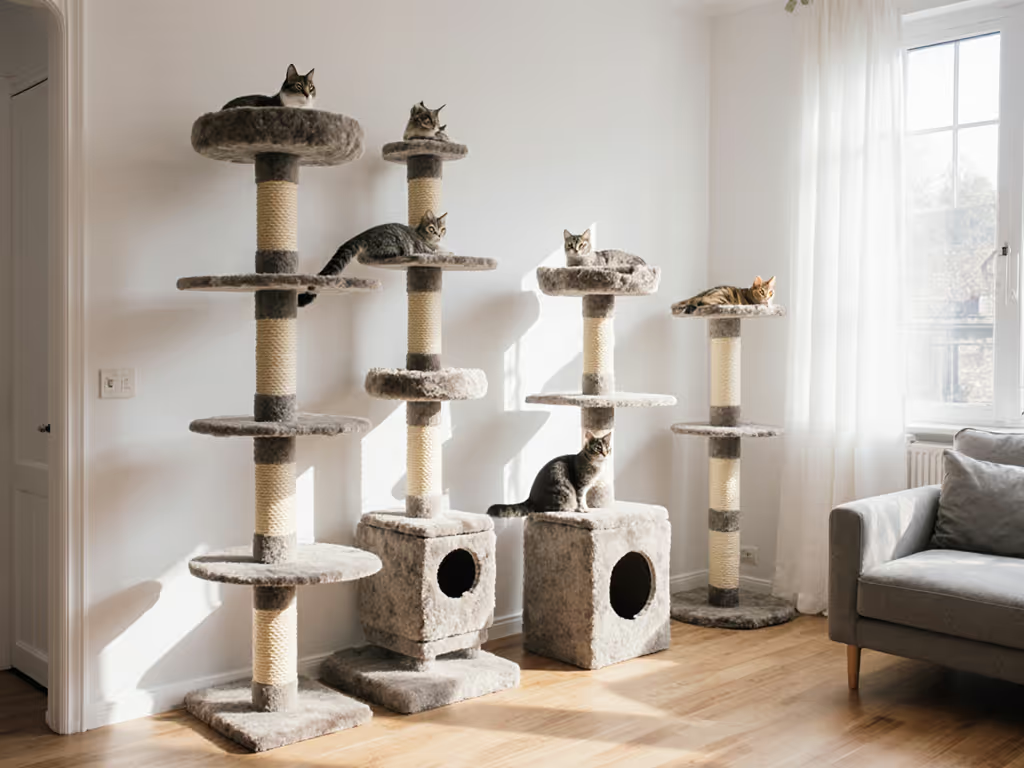
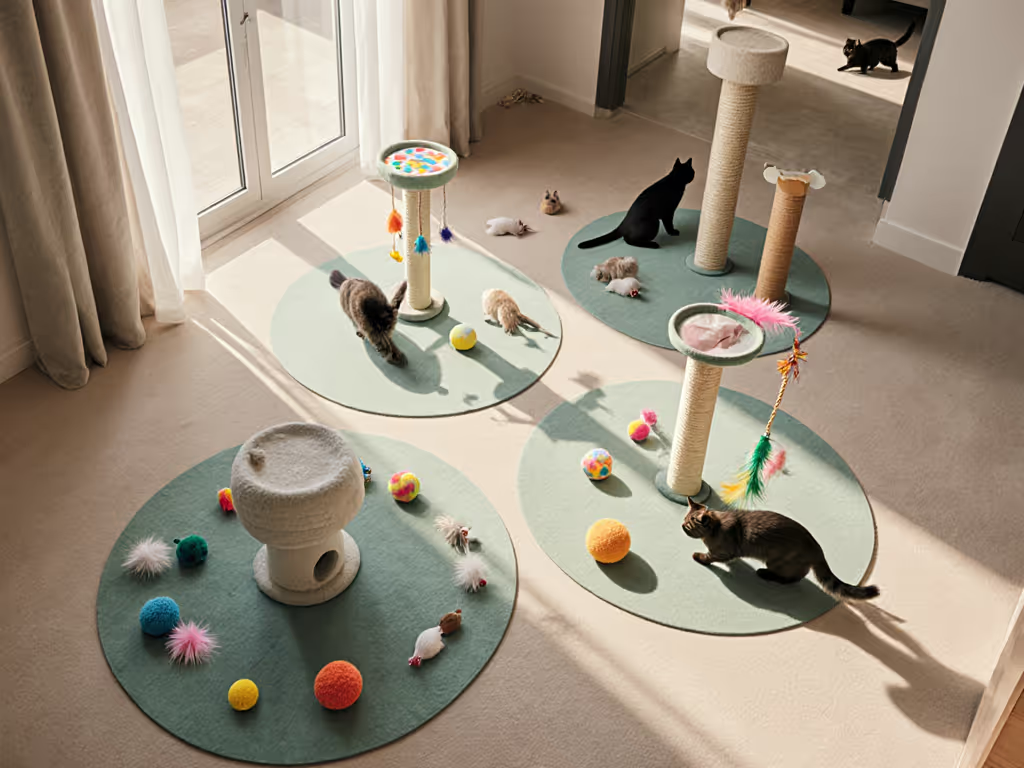
Before we dive into specific types, here's the structure that changed everything for me: rotate a small set of toys weekly, keep one or two always out, and give each cat access to independent play stations with different toy types. For product picks tailored to multi-cat dynamics, see our best toys for multi-cat homes. This prevents the "all cats want the same toy right now" meltdown.
How to Build Your Multi-Cat Rotation
Your checklist:
- Designate one toy per cat (even if they share toys, one is "theirs" in their zone)
- Keep one shared toy in neutral territory (hallway, open room)
- Store the rest hidden; rotate every 5 to 7 days
- Refresh every 2 to 3 weeks if a toy loses appeal
- Set a five-minute play timer for interactive toys daily
1. Wand Toys: The Prey-Based Peacemaker
Why they work for resource guarding: Wand toys give you control. You decide who plays first, for how long, and when to finish. This prevents ambush situations and lets shy cats warm up without pressure.
What to look for:
- A long metal wand (keeps your hands safe and creates distance)
- Lightweight, replaceable attachments (feathers, mice, yarn) (get extras so each cat's "prey" stays fresh)
- A wand that feels solid but not heavy (you'll use it twice daily for each cat)
Two-minute win: Set a timer. Move the toy slowly on the ground at first (no aerial leaps). If your cat bats or stalks, pause. Let them "catch" every 10 to 15 seconds so they experience the pounce and grip. When the timer ends, offer a small treat. Consistency matters more than acrobatics.
Multi-cat tip: Wand play prevents collision because you're the referee. Play with the resource-guarding cat first when they're freshest; others see their turn coming. Prey-before-petting teaches them play has a satisfying end, not a fight-over-scraps feeling.
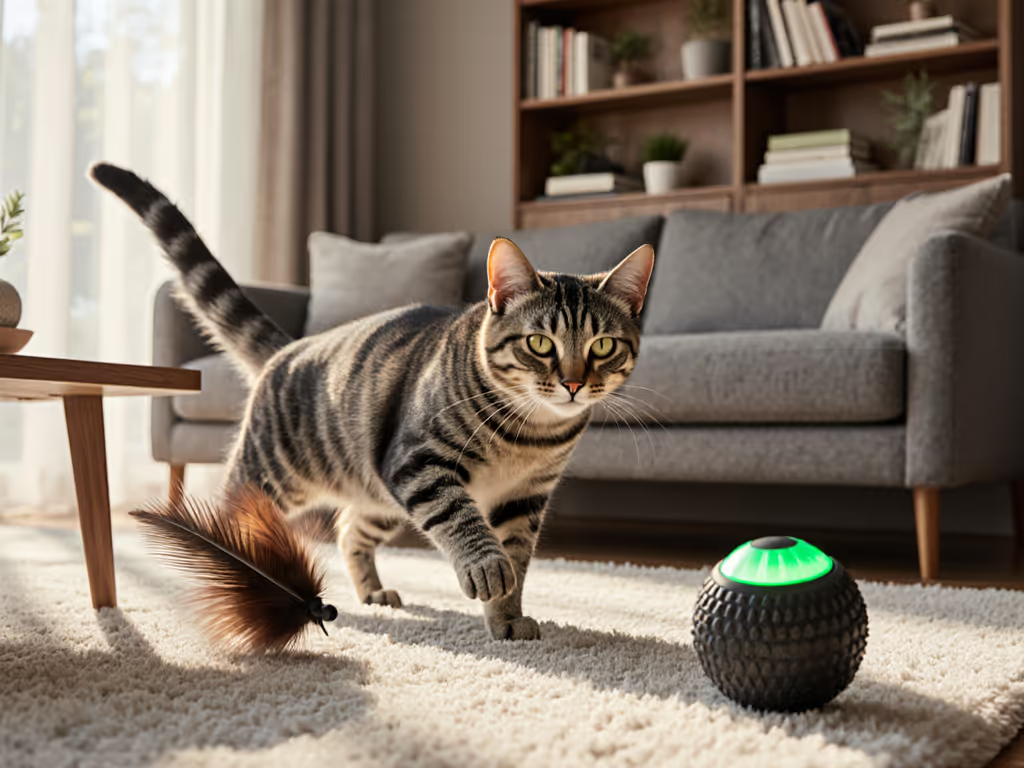
2. Self-Play Track Toys: The Quiet Confidence Builder
Why they work for resource guarding: Cats don't compete over a track toy, they take turns or ignore it. It's low-pressure enrichment that runs silent (crucial for apartments and early mornings).
What to look for:
- A ball-on-track design with non-slip feet (stays in place; won't skate under the fridge)
- A size that lets your cat bat from a lounging position (no jumping required; great for older or lower-energy cats)
- Enclosed tracks (so the ball doesn't roll away mid-pounce and discourage play)
Two-minute win: Place the toy in a neutral zone. Pop it out during your lunch break or before a video call. Your cat engages independently; you get peace. No timer, no guilt.
Multi-cat tip: One track toy works because cats don't see it as a trophy, it's environmental enrichment. Each cat approaches it on their own schedule. Quiet counts when you're managing multiple play personalities.
3. Motorized "Prey Under Fabric" Mats: The Extended-Play Station
Why they work for resource guarding: These mats invite low-energy stalking and swatting without the fast chase that triggers competitive arousal. The butterfly and hidden toy mimic realistic prey behavior, so cats stay engaged longer, and longer play means calmer evenings.
What to look for:
- A motorized element that moves unpredictably (not the same repetitive loop; cats lose interest in "fake" prey fast)
- A fabric cover with safe, enclosed toy underneath (no strangulation hazards)
- Motion speeds you can adjust (slow for shy cats; medium for confident hunters)
Two-minute win: Turn it on while you shower or handle a task. Come back to a visibly tired, content cat. One mat gives all your cats access without possession stress.
Multi-cat tip: A single mat can serve multiple cats throughout the day without jealousy because it's not "owned" by a cat, it's an environmental feature, like a sunny window.
4. Motion-Activated Electronic Toys: The WFH Lifeline
Why they work for resource guarding: When triggered by your cat's movement, these toys reward exploration without your involvement. This is especially valuable if you're juggling work calls and can't drop everything for a play session.
What to look for:
- Touch-activated toys with adjustable speed settings (so you can match your cat's confidence level)
- Toys with an "off" timer (prevents overstimulation and battery drain)
- Rechargeable models (longer lifespan; fewer batteries in the landfill)
Two-minute win: Keep one hidden in a drawer near your workspace. If a cat gets demanding mid-call, pre-emptively toss the toy into view. They redirect without pulling your focus. Quiet counts here too (no bells or loud motors).
Multi-cat tip: Resource-guarding cats often ambush playmates during human play sessions. Electronic toys split that attention. One cat hunts the toy; the other cat relaxes. Tension drops.
Critical add-on: Electronic toys do not complete the prey sequence on their own. Cats can't fully "grip-and-kill-bite" a motor toy, which leaves them frustrated. Follow up with 5 to 10 minutes of wand play or a kicker toy to finish the hunt. Consistency beats complexity, but completion matters.
5. Kicker Toys: The "Kill Bite" Station
Why they work for resource guarding: Kicker toys let cats finish the prey sequence, the grip, thrash, and "kill bite" that hunting requires. Without this outlet, cats get frustrated and redirect aggression onto each other or you.
What to look for:
- A soft, roughly mouse-or-rabbit-sized toy (easy for a cat's mouth to grip)
- Catnip or silvervine fill (adds motivation without overstimulation)
- Durable seams and non-toxic materials (cats hug and kick these hard)
Two-minute win: Toss a kicker toy onto the floor after a wand-toy session (or after electronic play). Your cat pounces, grabs, and thrashes. Two-minute cool-down. They're physically satisfied, not seeking outlets on a sibling.
Multi-cat tip: Keep one kicker toy per cat in separate zones. A resource-guarding cat won't defend a toy if their sibling has their own. Prey-before-petting: wand play leads to pounce; kicker toy completes the kill bite; then rest. Full cycle, no rivalry.
6. Puzzle Feeders and Treat-Dispensing Toys: The Brain-Calming Strategy
Why they work for resource guarding: Cats guarding resources often do so because they're anxious about scarcity. Puzzle feeders convert mealtime into a hunt, slowing fast eaters and giving each cat cognitive work that reduces stress. Match difficulty and size with our puzzle feeder skill-level guide.
What to look for:
- A design that requires batting, turning, or rolling to access kibble
- Slow-feeding geometry (elongates meal time; keeps cats occupied longer)
- A size that fits your cat's mouth and energy level (no frustration over a too-complex design)
Two-minute win: Use a puzzle feeder once daily at mealtime instead of a bowl. No timer needed, feeding is feeding. Your cat's brain works; guarding instinct drops because they're problem-solving, not competing.
Multi-cat tip: Place two puzzle feeders in separate rooms during mealtime. Each cat hunts independently. No eye contact, no tension, no guarding. Quiet counts: most puzzle feeders are silent, so early morning feeding doesn't trigger household chaos.
7. Paper Bags and Cardboard Structures: The Zero-Cost Confidence Nest
Why they work for resource guarding: Shy cats and resource-guarders often hide and ambush from enclosed spaces. Paper bags and cardboard boxes let each cat have their own "safe hunt zone."
What to look for:
- Plain kraft paper bags (no handles; no ink hazards)
- Cardboard boxes with multiple entry holes (so your cat doesn't feel trapped, they choose escape routes)
- A size that fits your space without clutter
Two-minute win: Place a bag or box in a quiet corner with a wand toy draped inside. Your cat hunts from their safe space. No forcing them into your preferred play style, you're meeting them where they are.
Multi-cat tip: Multiple bags mean multiple hideouts. A guarding cat won't defend a bag if a playmate has their own refuge. Rotate bags weekly; replace when worn.
Rotation Schedule: Your Weekly Checklist
Let consistency do the work. Here's a simple template to prevent toy fatigue and play stagnation:
Week 1 to 2: Wand toy daily + track toy always out Week 3 to 4: Motion-activated toy daily + kicker toy in rotation Week 5 to 6: Motorized mat daily + puzzle feeder at meals Week 7+: Cycle back; reintroduce bags and surprises
Set a phone reminder for rotation day. Get step-by-step rotation tips in our 7-day toy rotation plan. Two minutes to swap. Toys regain novelty; cats re-engage. Your guarding tension drops because play feels new again.
What to Avoid in Multi-Cat Homes
- Laser toys alone: Cats can't complete the prey sequence without a physical toy to grab. Pair any laser with a kicker toy or wand play finish.
- Noisy, battery-heavy toys: In shared spaces, noise triggers arousal and tension. Quiet counts.
- Toys with loose strings, bells, or ingestion risks: Resource-guarding cats may swallow toys during aggressive play. Safety first.
- Single large toys everyone "should" share: This is exactly what triggers guarding. One toy = potential conflict. Multiple smaller toys = peace.
Your Next Move: Build Your Five-Toy Starter Kit
You don't need a closet full of toys. You need intention. Here's your action plan:
Step 1 (Today): Assess each cat's prey profile. Does your cat prefer feathered toys (birds) or furry mice (rodents)? Fast-moving prey or slow stalking? Start there.
Step 2 (This week): Invest in one wand toy with replaceable attachments. Commit to five minutes daily with each cat (at different times, in separate spaces). Watch resource-guarding behavior drop within two weeks.
Step 3 (Next week): Add a track toy and one motion-activated toy. Rotate every five days. Track which toys get real engagement.
Step 4 (Ongoing): Set a weekly reminder to rotate toys. Stick to it. Consistency beats complexity (for your cats and your peace of mind).
The core truth: I've never met a cat whose guarding behavior didn't improve when their play became structured and complete. You don't need fancy gadgets. You need a repeatable rhythm: prey-before-petting, then rest. Five minutes daily beats any toy in a closet gathering dust. Give every cat their own winning hunt, and tension dissolves, quietly and reliably, within a month.
Start with wand play. Everything else builds from there.
Related Articles