Ball Toys for Cats: Which Movement Triggers Play
By Naomi Chen • 8th Apr
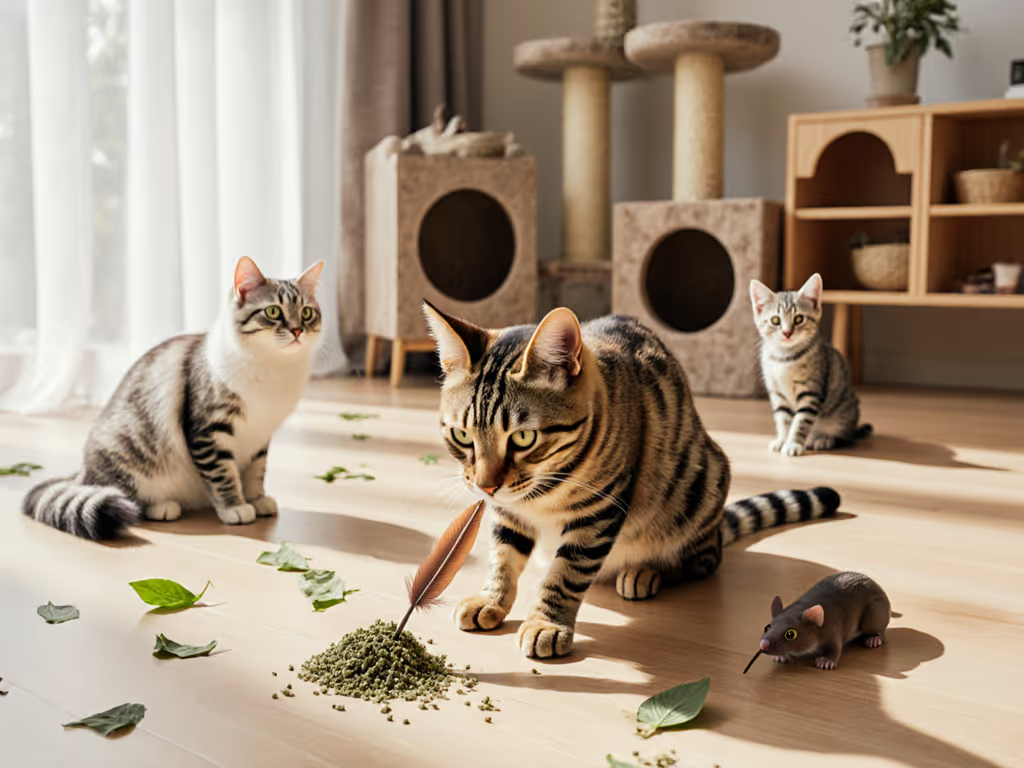
Cat ball toys work because they tap into something primal (the rolling, erratic motion of small prey). But not all balls move the same way, and not every movement pattern will captivate your cat. Understanding which ball movement patterns align with your cat's prey drive is the difference between a toy that becomes floor decor and one that fuels focused, satisfying hunts.
When I downsized to a bright but echo-prone loft, I learned that not every toy deserves shelf space. The ones that stayed were quiet, purposeful, and deliberately chosen. The same principle applies to ball toys: clarity about what triggers engagement (and why) turns random purchases into a curated system.
Why Movement Matters: The Hunting Blueprint
Cats stalk, chase, and pounce in response to specific prey cues. Movement is the primary trigger. A stationary toy is a missed opportunity; a toy with the right movement pattern becomes irresistible.
The rolling and bouncing motion of ball toys mirrors small prey (rodents, insects, and birds in erratic flight). This isn't accidental; it's evolutionary. Cats recognize these patterns instantly, and their body language shifts: ears forward, pupils dilated, hindquarters lowered. That's the prey drive activating. Ball toys provide an outlet for this instinct in a way that's contained, safe, and compatible with apartment life.
But movement alone isn't enough. How the ball moves (its speed, trajectory, predictability, and whether it's player-directed or self-initiated) determines whether your cat will engage once, for five minutes, or become genuinely invested.
Movement Pattern Breakdown: Four Core Types
Gentle Rolling: The Cautious Stalker
A slow, predictable roll across a smooth floor invites even anxious or older cats to engage. Think lightweight foam or fabric balls nudged with a paw. The movement is gentle, easy to track visually, and low-stakes.
When this works: Shy cats building confidence, senior cats with joint sensitivity, or multi-cat households where one cat's style is gentler than the other's. It also works beautifully during quiet evening hours when clear floors, clear focus matters most.
When it falls short: High-energy kittens or experienced hunters often lose interest quickly because the movement lacks surprise or challenge.
Erratic Bouncing: The Unpredictable Prey
Bouncing introduces chaos and surprise. The ball's trajectory becomes less predictable, mimicking an insect or fleeing rodent. This movement pattern typically requires a harder material (rubber or rigid plastic) and often works best on tile, hardwood, or low-pile flooring.
Erratic bounce patterns can be player-driven (you toss it) or passive (the ball lands and bounces on its own after being batted). The unpredictability is what triggers the hunting cascade: focus, stalk, pounce, capture.
When this works: High-drive cats, multi-cat households where play helps burn energy and reduces tension, and situations where you want directed, timed play sessions (10-15 minutes, 1-2 times daily).
Noise consideration: Bouncing on hard floors creates audible taps. This is a significant pain point for apartments, nighttime play, and shared spaces. See our quiet cat ball picks tested for low-noise, apartment-friendly play. Material and surface matter (rubber balls on hardwood are louder); softer materials or carpeted areas muffle sound substantially.
Spinning or Tumbling Motion: The Contained Chaos
Some balls are designed to wobble, spin, or tumble as they're moved. These might have internal rolling balls (like bell balls), asymmetrical weight distribution, or textured surfaces that catch and slow motion unpredictably.
This movement type keeps the action localized (the ball doesn't sprint across the room; it moves within a smaller radius), making it ideal for small spaces. The spinning or tumbling motion also engages the visual tracking system differently, often holding attention longer because the motion is more complex.
When this works: Apartments with limited floor space, situations where you need quiet, self-directed play, and cats that prefer to keep their hunt zone compact and controlled.
Important note: Bell balls are classic, but bell ball effectiveness varies widely based on material. Plastic bells inside loose housings rattle loudly (red flag for noise-sensitive spaces). Sealed or muffled bells are quieter but may dampen the auditory trigger entirely. If you choose a bell ball, prioritize design (a well-sealed, high-quality version creates subtle sound that enriches without overwhelming).
Self-Propelled Motion: The Autonomous Prey
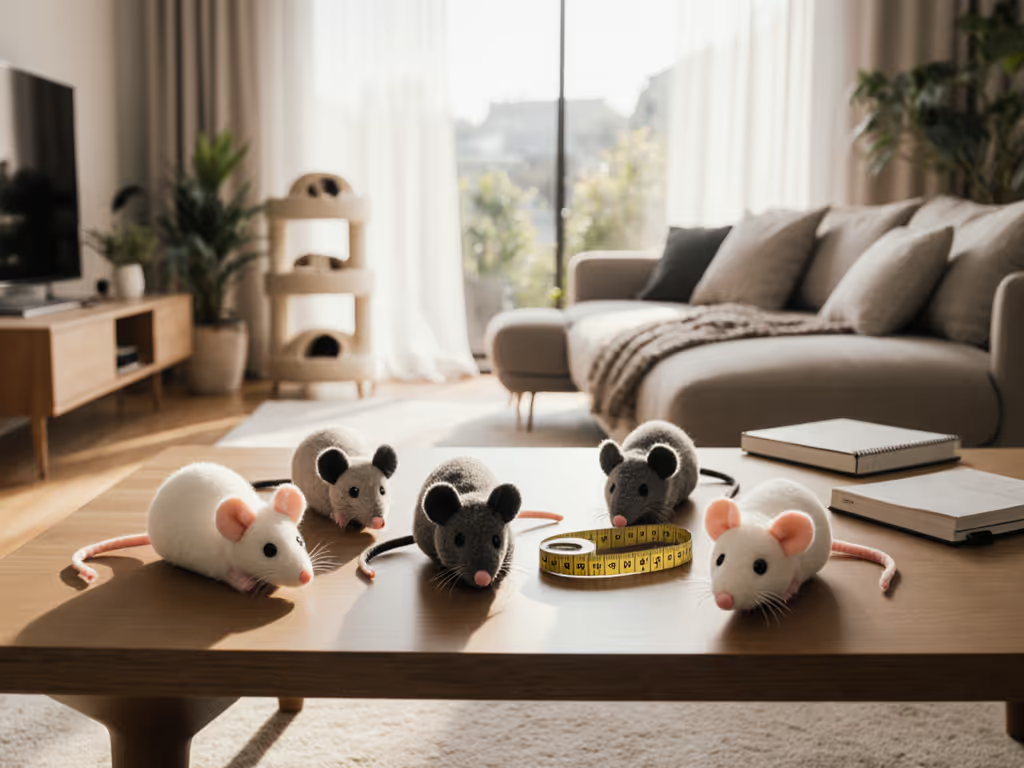
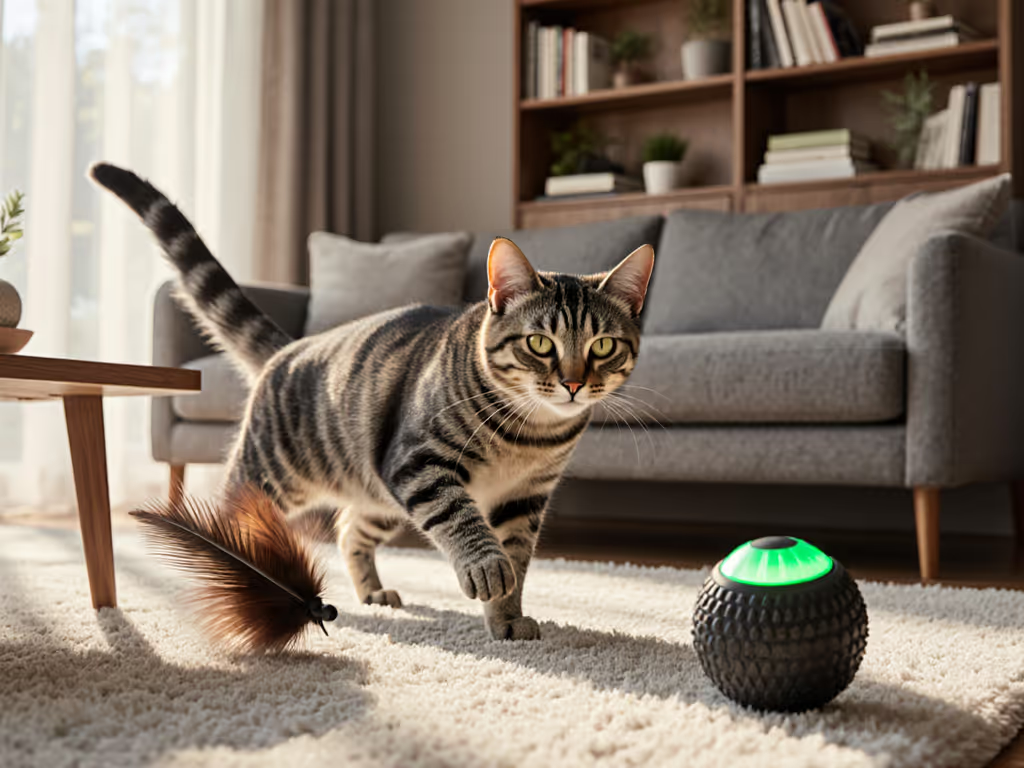
Some balls move on their own via battery-operated mechanisms (rolling in random directions, vibrating, or following preset patterns). This is the "set it and forget it" option, and it appeals to time-pressed guardians and multi-cat households.
However, this category demands careful evaluation. Self-propelled ball analysis requires asking hard questions: Is the motor quiet enough for evening use? Can it be turned off and turned on intentionally, or does it drain battery on standby? Is it large and stable enough that a cat can't accidentally ingest parts? Is supervision possible or realistic?
When this works (with caveats): Multi-cat households during the day, situations where you can actively supervise, and homes where noise isn't a factor. Battery-powered toys need responsible, intentional use (not unsupervised overnight play or left running while you're away).
When to skip it: Noise-sensitive environments, nighttime, unsupervised periods, or if the toy design feels flimsy or prone to breakage. Minimalist living often means zero battery toys; the trade-off in simplicity and peace of mind is worth it.
Material, Durability, and Movement Sustainability
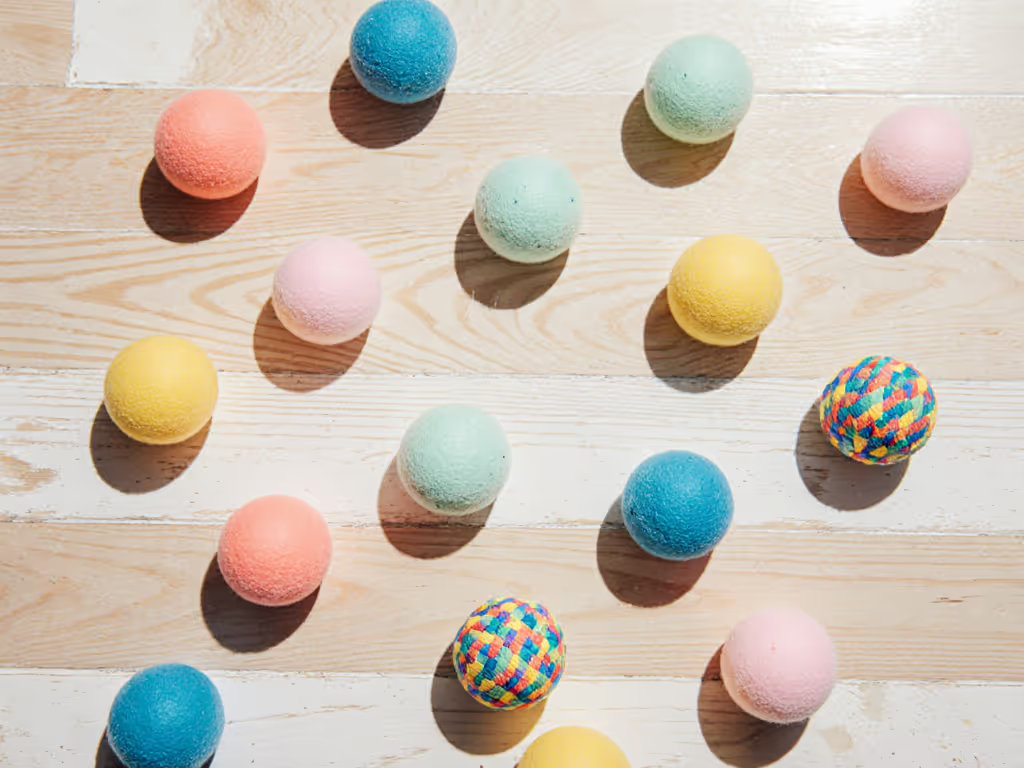
The material of the ball directly affects how its movement translates. A lightweight foam ball moves slowly and quietly; a dense rubber ball bounces higher and travels farther. Crinkle ball durability metrics also matter: a crinkle ball that shreds after a week of enthusiastic play is both wasteful and a safety concern (ingestion risk from loose materials).
Consider:
- Foam balls: Lightweight, quiet, durable, but may lose bounce quickly if low-quality
- Rubber balls: Durable, predictable bounce, but heavier (louder on hard floors and more prone to rolling under furniture)
- Fabric/plush balls: Ultra-quiet, often with textured surfaces; lower bounce, but may pill or fray
- Crinkle balls: Engaging sound, but carefully evaluate stitching and material integrity before committing
Evaluating Your Cat's Prey Profile: The Missing Link
Not every ball movement will resonate with every cat. Ball movement pattern evaluation means observing which stimuli your cat naturally responds to.
Does your cat stalk low, moving slowly before a precise pounce? That's a rodent hunter (rolling, ground-level movement will captivate them).
Does your cat leap and swat at movement in the air? That's a bird or insect hunter (bouncing or vertical motion is their trigger).
Does your cat freeze, then explode into a sprint? That's a high-chase prey drive (erratic, fast-moving balls work best).
Does your cat seem indifferent to toys entirely? They may have a blunted prey drive (common in older or very well-fed indoor cats), or you haven't matched their specific trigger yet.
Observe. Test one movement pattern for a week before rotating or retiring. The data you gather (what engages, what bores, what overstimulates) becomes the foundation of a working system.
Building a Rotation That Actually Works
Chaos shuts curiosity down. A pile of twelve different balls loses power; three balls on rotation, with one active, one stored, and one retired, maintains novelty and control. For a simple system that prevents boredom, use our toy rotation guide.
Pair your ball toy selection with a simple framework:
- Week 1: Gentle rolling foam ball (confidence-building, low-noise)
- Week 2: Bouncing rubber ball (high-engagement, player-directed, 10-15 minutes x 2)
- Week 3: Tumbling or bell ball variant (quiet, self-directed, compact footprint)
- Week 4: Repeat or introduce a new category
This rotation prevents habituation, keeps storage minimal, and ensures you're observing what truly lands with your cat (not what you assumed would).
For multi-cat households, consider differing movement types to match each cat's style. One cat's self-directed tumbler might be boring to another's high-chase hunter. Honoring those differences, even with a small kit, reduces frustration and inter-cat tension.
Noise, Space, and Real-World Fit
If you work from home, live in an apartment, or share space with light sleepers, movement type intersects directly with livability. Get practical tips in our WFH cat play solutions for silent toys and schedule-friendly play. A bouncing rubber ball on a hardwood floor at 6 a.m. is incompatible with peace. A silent foam ball's gentle roll invites calm, intentional play that fits the morning without disruption.
Similarly, erratic bouncing requires space. A small studio doesn't accommodate high-velocity rolling; a tumbling or self-contained motion does. Knowing your footprint (and your tolerance for sound) isn't a limitation; it's the foundation of a system that works.
The Practical Path Forward
Ball toys work because movement triggers prey drive. But which movement and which ball depend entirely on your cat's hunting blueprint, your space, your noise tolerance, and your schedule.
Start by observing your cat's natural response to motion (do they stalk, chase, leap, or freeze?). Match a ball movement type to that pattern. Choose a material that aligns with your soundscape and space. Commit to a simple rotation. Track what genuinely engages versus what becomes clutter.
The goal isn't a toy chest; it's a curated, purposeful kit that turns enrichment into routine (one that harmonizes with your home and your cat's actual needs, not an imagined ideal).
From there, explore deeper. Test the specific brands and movement patterns that resonate with your cat's prey drive. Notice what quiet, minimal design looks like in your space. Build on the framework, not from scratch. Your home stays calm, your cat stays engaged, and the play system becomes something you maintain, not something you guilt-spiral over.
The right ball toy isn't the loudest or the flashiest (it's the one that moves in a way your cat recognizes as prey, fits your space without apology, and earns its place in rotation because it actually gets used).
Related Articles