Potaroma Chirping Birds Review: Realistic, Tested
By Tariq Hassan • 15th Feb
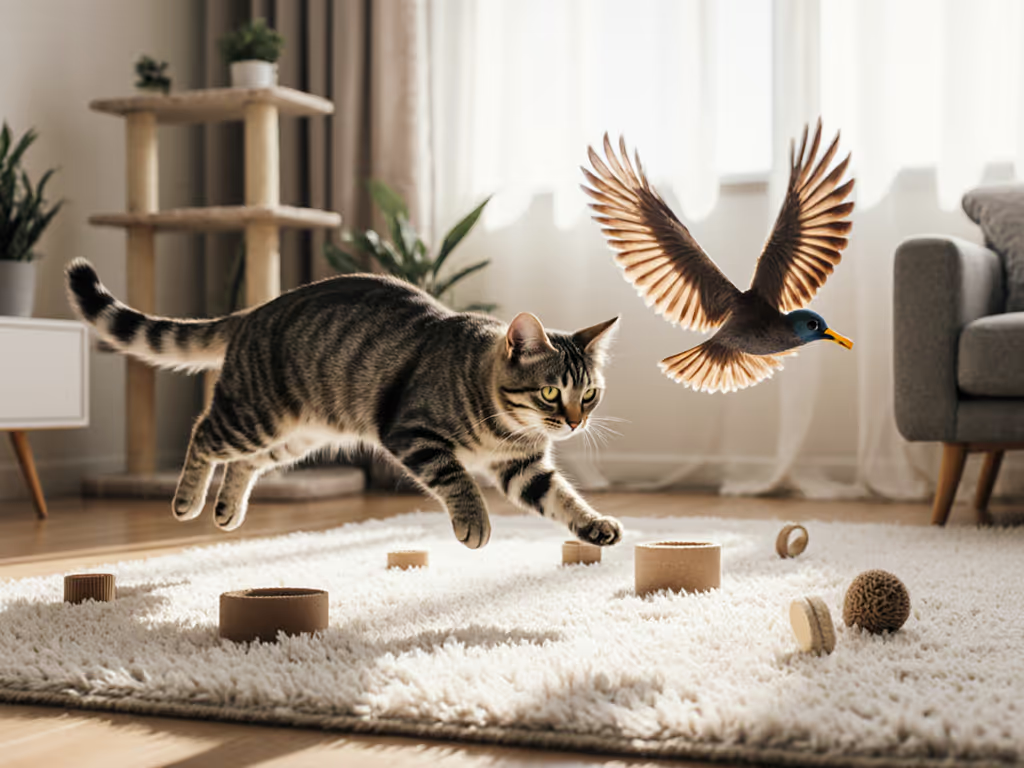
The Potaroma Chirping Birds review landscape has expanded significantly, with multiple models now available to indoor-cat guardians seeking realistic bird simulation toys that bridge the gap between engagement and durability. This comparative analysis examines the core variants (battery-operated chirping birds and rechargeable flapping models) to help you identify which design aligns with your cat's prey profile and your household's play protocol.
The Case for Structured, Realistic Prey Simulation
The fundamental premise behind realistic bird simulation toys rests on a straightforward behavioral principle: cats retain predatory sequences regardless of indoor confinement. For a deeper foundation, read our prey sequence play guide to structure sessions that reduce frustration. Stalk, chase, catch, eat, groom, sleep: close the loop. When play sessions neglect the final stages (the capture, the food reward, the rest period), frustration accumulates. This manifests as night zoomies, redirected aggression, and overstimulation-driven biting that destabilizes both single and multi-cat households.
From my time volunteering at a high-intake shelter, I observed how overstimulated cats cycled chaotically from chase to swat. Once we structured sessions into discrete, bounded intervals (tactile toys for the stalk-and-pounce phase, then a food finish, then enforced rest), incidents of cage-front frustration and inter-cat tension softened considerably. The Potaroma Chirping Birds line addresses this by providing the catch-phase realism that many wand toys and laser pointers neglect. The built-in sounds and plush texture anchor the predatory sequence without the fatigue of continuous human-led interaction.
Potaroma Chirping Birds: Battery-Operated Core Models
Build and Materials
The standard Potaroma Chirping Birds models, including the Sparrow & Northern Cardinal set and the Painted Bunting & Sparrow variant, share a consistent architecture. Each toy is constructed from durable plush material combined with natural feathers, designed to withstand what the industry terms "aggressive play." The toys measure approximately 3.5 to 4 inches, making them appropriately sized for cats to bat, bite, and carry without choking risk.
The plush-and-feather hybrid addresses a critical safety concern: purely synthetic materials can shed fibers or separate under sustained chewing, while authentic feathers risk quill breakage. This balanced composition reflects a clear boundary between enrichment and ingestion hazard.
Activation and Sound Performance
Both battery models activate on touch, initiating realistic chirping that mimics live prey behavior. The built-in batteries are rated to sustain over 10,000 chirps per toy, translating to months of routine use in typical play protocols. Critically, the toys remain silent when undisturbed, a feature that addresses a common pain point for time-pressed guardians who work from home. See our WFH cat play solutions for quiet toys and scheduling tips that pair well with these birds. Unlike continuously chirping novelties, these toys preserve battery life by staying dormant until engagement occurs.
This risk flag merits attention: the toys must be stored securely when unsupervised, particularly in multi-cat households or homes with destructive chewers, as the battery compartments can be accessed if the plush is compromised. Supervision during initial sessions establishes whether your cat exhibits safe play thresholds.
The Catnip Component
Each set includes a bonus catnip and silvervine pouch. Learn how catnip and silver vine work and which toys maximize their effects in Catnip toys explained. This addresses a nuanced audience need: not all cats respond equally to catnip, and some guardians prefer to reserve aromatic triggers for targeted rotation rather than continuous exposure. Having a separate pouch allows you to dose the toy's interior on your schedule, preventing habituation and preserving novelty for critical moments, such as managing overstimulation in multi-cat households or reviving interest in a previously ignored toy.
Potaroma Rechargeable Flapping Bird: The Premium Variant
Motion Sensor and Realism
The rechargeable model introduces a motion sensor that activates flapping and fluttering when touched, alongside chirping. This layered sensory feedback (sound plus movement) extends the catch-phase engagement by simulating the disoriented flutter of a real bird. According to user testing, the fluttering motion successfully captures attention and triggers immediate pouncing behavior in most cats, though the intensity may not match the erratic flight of a truly terrified bird.
Battery and Sustainability
The USB rechargeable design eliminates the sunk cost of replacing disposable batteries, addressing both a practical and philosophical concern for eco-conscious guardians. Reviewers confirm the toy reaches dormancy when not in use, preserving battery longevity between sessions. This design choice also supports predictable playtimes: you charge on a set schedule, then deploy during your planned protocol windows, reinforcing the structure that reduces behavioral drift.
Real-World Performance: Strengths and Limitations
Independent testing reveals that the flapping motion is sufficient for most domestic cats but may underwhelm cats with heightened prey drive or prior experience with live prey. The chirping sound, while lifelike, occasionally fails to trigger with every touch, a limitation that some guardians find minor but others perceive as inconsistency.
The Potaroma durability test outcomes remain positive overall. Testers confirm the plush material withstands vigorous play without immediate degradation, though long-term durability after months of intense chewing remains unconfirmed. The durability advantage favors this model for aggressive players, as the rechargeable mechanism is more robust than user-replaceable batteries that can loosen or corrode.
Comparative Framework: Which Model Fits Your Protocol?
For Single-Cat Households with Time Availability
If your cat exhibits normal prey drive and you have 10-15 minutes twice daily for interactive play, the standard battery models offer excellent value. They require minimal setup, integrate easily into existing routines, and the touch-activated chirping complements wand toys during your protocol window. The separate catnip pouch allows rotation: use the toy fresh for 2-3 weeks, then "refresh" with catnip when novelty wanes, extending the toy's utility over months.
For Multi-Cat Households or High-Arousal Players
Households managing overstimulation or inter-cat tension benefit from the rechargeable flapping model's compound stimulus (motion plus sound). The USB charging creates a boundary: toys are deployed during designated play windows, then stored and recharged. This protocol eliminates the scenario where a neglected toy becomes a hidden frustration source. The rechargeable design also supports rotation across multiple units, so you can charge three toys on rotation, then deploy one per session, ensuring consistent novelty without purchasing endless replacements.
For Space-Constrained or Noise-Sensitive Environments
Renters, condo dwellers, and guardians sharing walls with noise-sensitive neighbors appreciate the quiet design. Unlike motorized track toys or jingly balls, the chirping toy safety analysis reveals minimal decibel output; the sound activates on touch and remains directional. This aligns with the aesthetic and auditory minimalism many audience members prioritize.
Safety Considerations and De-Escalation Steps
While great cat toys should deliver enrichment, they also demand clear boundaries. The plush-and-feather construction, while durable, is not indestructible. Risk flags include:
- Unsupervised access to damaged toys: If plush begins separating or feathers shed, remove the toy immediately to prevent ingestion.
- Overstimulation cycles: Some cats, particularly kittens or previously understimulated cats, may exhibit redirected aggression (biting your hands, attacking other cats) during or after play. This signals the protocol needs de-escalation: shorten sessions, space them further apart, and introduce a food finish (a treat or meal after each session) to signal closure.
- Battery management: Verify battery compartments are sealed after each refill. Loose batteries pose obvious hazards.
De-escalation steps if overstimulation occurs:
- Stop active play immediately and remove the toy.
- Offer a food reward (a small treat or meal topper) to anchor the end of the sequence.
- Enforce rest: confine the cat to a quiet space or redirect to a crate/bed for 15-30 minutes.
- Next session: reduce duration by 50%, increase spacing to at least 4-6 hours between sessions, and monitor baseline arousal before reintroduction.
This protocol reflects evidence from both shelter and home settings: cats that complete the full predatory cycle (stalk, chase, catch, consume, rest) exhibit significantly lower frustration-driven behaviors. For cats showing redirected aggression, follow our toy-based protocols to de-escalate safely.
Durability and Long-Term Value
Both models are rated for sustained use, with the battery-operated variants showing proven resilience over months of typical indoor play. The rechargeable model's long-term durability remains promising but less established in user reports, as these units have been on market for a shorter window.
Potaroma durability test results confirm:
- Plush does not pill or degrade noticeably under normal play (2-3 weekly sessions).
- Feathers remain intact unless the cat achieves dedicated chewing access to the seams.
- Battery compartments hold firm after repeated open-and-close cycles.
For guardians treating these toys as rotation components rather than permanent fixtures, both variants justify their price point through 6-12 months of utility. Discontinuing a toy before it fully degrades, by design every 4-6 weeks, preserves novelty and prevents the sunk-cost frustration of a beloved toy becoming invisible furniture.
Integration into a Broader Play Protocol
These toys excel as the "catch" component within a structured sequence. A complete protocol might look like:
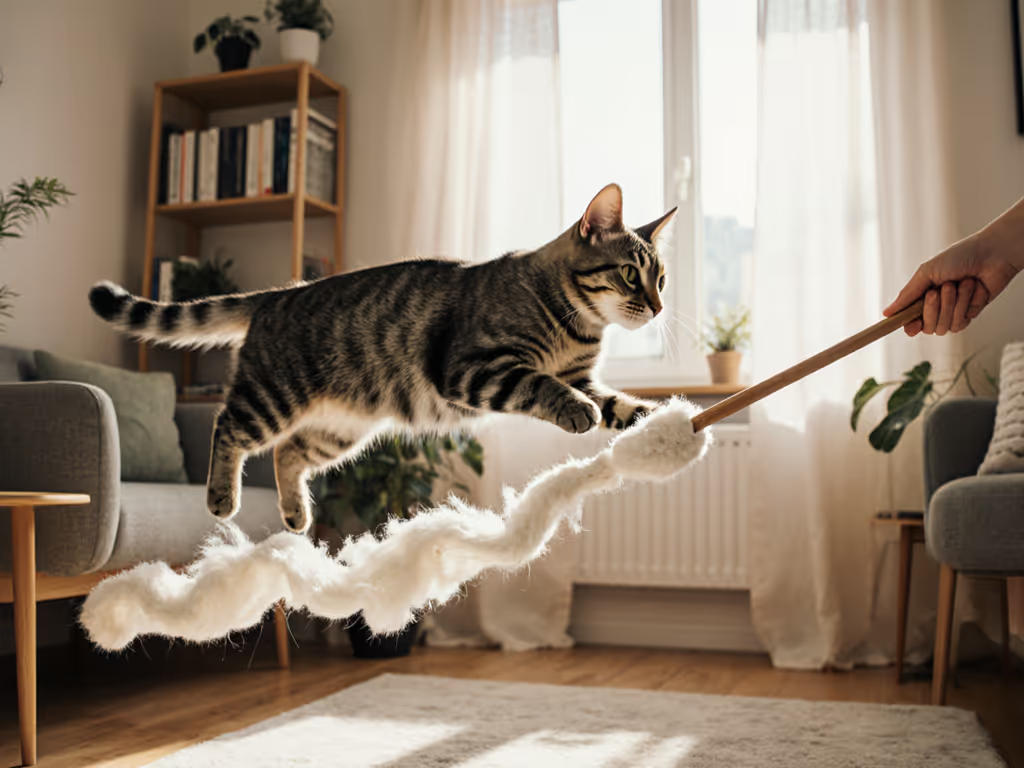
- Wand toy engagement (5 minutes): human-led stalk and chase with a feather or string toy.
- Autonomous catch (3-5 minutes): introduce the Potaroma bird for independent pouncing and carrying.
- Food finish (1-2 minutes): a meal topper, treat, or scheduled dinner to signal the end of the hunt.
- Enforced rest (30 minutes): confinement or environmental redirection (couch perch, catio) away from other cats or stimulating toys.
This sequence, deployed once or twice daily, addresses the full predatory loop and measurably reduces night zoomies, redirected aggression, and inter-cat friction in multi-cat homes. It also supports calmer transitions between activities in tight living spaces.
Common Questions and Risk Mitigation
Are these toys safe for unsupervised play?
Yes, with caveats. Initial sessions should be supervised to establish your cat's bite intensity and confirm no immediate interest in destroying seams. Once safe thresholds are confirmed, these toys can be deployed during your work-from-home hours. However, never leave toys accessible overnight or during extended absences; confine them to a secured play area or remove entirely.
What if my cat ignores the toy?
Ignorance often reflects prey-profile mismatch rather than toy quality. Some cats prioritize rodent-like toys (small, squeaky) over birds. Test the toy with catnip first (open the seam slightly, add fresh catnip, re-seal). If interest remains absent after 2-3 primed sessions spaced a week apart, the toy may not align with your cat's hunting profile. This is not failure; it informs your future rotation strategy.
How often should I rotate these toys?
Evidence suggests rotating toys every 3-4 weeks preserves novelty. Get step-by-step rotation schedules in our 7-day toy rotation guide. With two to three Potaroma units on hand, you can deploy one per protocol cycle while others rest away from sight. Reintroduce a rested toy after 2-3 weeks; most cats treat it as novel again.
Summary and Final Verdict
The Potaroma Chirping Birds review landscape presents two functional solutions for different household contexts. The battery-operated models (Sparrow & Northern Cardinal, Painted Bunting & Sparrow) deliver reliable, touch-activated realism at an accessible price point, with proven durability and effective engagement across a broad range of prey drives. They require minimal infrastructure and integrate seamlessly into existing toy rotations.
The rechargeable flapping variant justifies its premium positioning through compound stimulus (motion plus sound) and sustainability, making it ideal for high-arousal players, multi-cat households managing overstimulation, and guardians seeking long-term value from fewer, higher-quality pieces.
Both options excel at a critical behavioral function: providing the autonomous "catch" phase that wand toys and laser pointers neglect, allowing cats to complete the predatory sequence without endless human effort. When deployed within a structured protocol (bounded sessions, food finishes, enforced rest), these toys measurably reduce the boredom-driven and overstimulation-driven behaviors that undermine indoor cat welfare and human-cat harmony.
For urban and suburban guardians managing time pressure, noise sensitivity, space constraints, and multi-cat dynamics, the Potaroma Chirping Birds line represents a tested, safety-conscious option that closes the loop. Choose the battery model for simplicity and affordability; choose the rechargeable variant for intensity and sustainability. Either way, integration within a predictable protocol transforms a toy into a behavioral anchor, and that distinction separates impulse purchases from investments in a calmer, more confident, fully engaged feline household.
Related Articles