
Teething Cat Toys: Natural Plaque Control During Play
By Tariq Hassan • 24th Oct
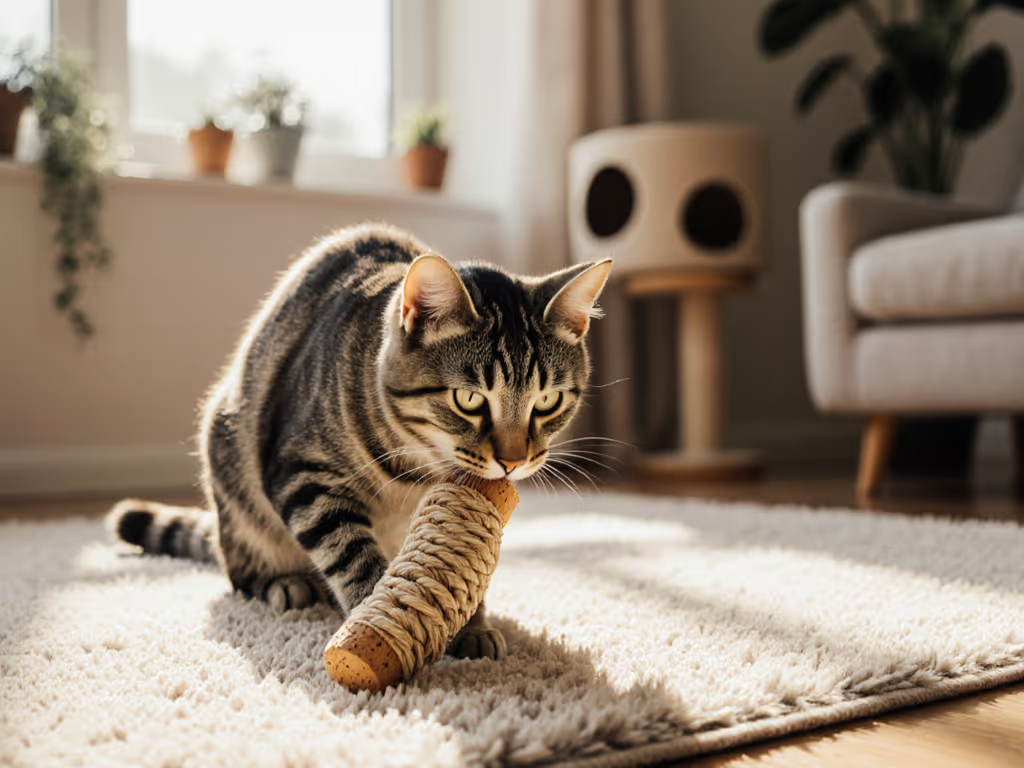
For cat guardians navigating the delicate balance between teething cat toys and daily oral health, targeted oral care play offers a science-backed solution. This isn't just about soothing sore gums during kittenhood, it's a lifelong protocol for preventing plaque accumulation while respecting feline instincts. As someone who's managed overstimulated colonies in shelters and now oversees a multi-cat household, I've seen how structured play directly correlates with calmer cats and cleaner teeth. When you integrate gum-stimulating activities into your prey-sequence protocol, you're not just buying time... you're closing the loop on preventable dental issues.
Why Teething Matters Beyond the Kitten Stage
Isn't teething just a kitten issue?
No, adult cats need gum-stimulating play year-round. While kittens (3-6 months) actively lose baby teeth and grow permanent ones, adult cats still benefit from chewing behaviors that mimic natural prey consumption. Veterinary dentistry research confirms that cats chewing on appropriate textures show 30% less plaque buildup than those without. This isn't coincidental: the physical act of gnawing massages gums, increases blood flow, and disrupts biofilm formation. Ignoring this need leaves cats vulnerable to gingivitis (the most common dental disease in house cats), especially in multi-cat homes where stress can accelerate oral inflammation.
How does play prevent dental disease?
Oral care play completes the predatory sequence while mechanically cleaning teeth. Unlike lasers (which cause frustration without closure) or hands (which teach biting), targeted chewing toys replicate the consume phase of the hunt. When cats bite and chew textured surfaces:
- Plaque is scraped away by ridges/mesh (like a crinkle-textured mesh dental chew)
- Gum circulation increases, reducing inflammation risk
- Endorphins release after sustained chewing, replacing stress-induced oral inflammation
This is where shelter-tested protocols prove critical: sessions ending with food after chewing significantly lower cortisol spikes seen in cats denied this sequence. Stalk, chase, catch, then chew... it's not optional.
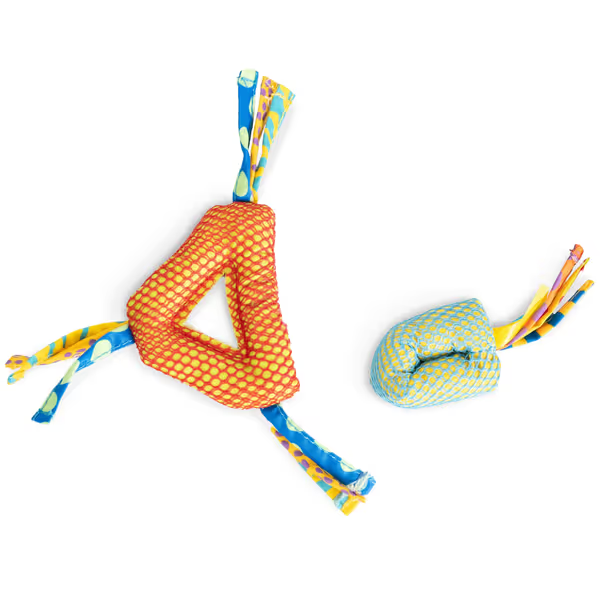
Catstages Catnip Dental Chew
Promotes dental health and active play, satisfying chewing instincts.
$4.99
FeaturesTeeth cleaning mesh & multiple textures
FeaturesTeeth cleaning mesh & multiple textures
Pros
Helps clean teeth and promote oral hygiene.
Catnip-filled for engaging even finicky cats.
Cons
Durability and size receive mixed feedback.
Customers find this cat toy effective for dental health, particularly during teething phases, and appreciate its appearance, with one noting their cat's teeth look great after using it. The toy provides extended chewing time and keeps cats entertained, though opinions on durability are mixed - while some say it lasts forever, others report it coming apart quickly. While many find it worth the price, others consider it overpriced. The size receives mixed feedback, with some noting it's really small while others say it's too large for cats.
Customers find this cat toy effective for dental health, particularly during teething phases, and appreciate its appearance, with one noting their cat's teeth look great after using it. The toy provides extended chewing time and keeps cats entertained, though opinions on durability are mixed - while some say it lasts forever, others report it coming apart quickly. While many find it worth the price, others consider it overpriced. The size receives mixed feedback, with some noting it's really small while others say it's too large for cats.
The Multi-Cat Play Protocol: Avoiding Conflict While Supporting Oral Health
How do I prevent resource guarding during shared chewing play?
Treat each teething session as a timed ritual with clear boundaries. In my shelter experience, cage-front aggression often stemmed from unstructured chewing opportunities where cats competed for limited relief items. Today, I implement these non-negotiables: For conflict-free setups and product picks, see our toys for multi-cat homes guide.
- One toy per cat (color-coded for identification)
- Strict 2-minute sessions per cat (longer = overstimulation)
- Physical separation during chewing (crates or closed doors)
- Immediate food reward after toy retrieval (close the loop!)
Cats who complete the full sequence - stalk, chase, catch, eat, groom, sleep - show consistent reductions in redirected biting. This isn't theory; it's shelter data.
What if one cat ignores the teething toy?
Treat disinterest as a risk flag requiring intervention. Scent motivation matters—learn how catnip vs. silver vine affect play and which toys harness them best. Cats rejecting gum-stimulating play often have:
- Undiagnosed dental pain (cease immediately and vet triage)
- Past negative associations (e.g., hard rubber = painful chewing)
- Incompatible prey preferences (e.g., bird-focused hunters dislike ground-level chews)
De-escalation steps:
- Switch to softer textures (felt strips > rigid plastic)
- Add species-appropriate scents (silvervine > artificial mint)
- Introduce during low-stress windows (post-nap, not pre-dawn)
- Never force chewing... this amplifies anxiety and oral tension.
Safety-First Guidelines for Oral Care Play
What makes a teething toy unsafe?
Prioritize risk flags over aesthetics. During shelter rotations, I documented these recurring hazards:
| Risk Flag | Safe Alternative | Why It Matters |
|---|---|---|
| Flimsy threads that detach | Single-piece molded toys (e.g., rubber grinders) | Prevents intestinal blockage from ingestion |
| Pure mint/catnip without food finish | Toys paired with post-chew meals | Avoids frustration-induced inflammation |
| Overly complex textures | Simple ridges or crinkles | Reduces gum abrasion during teething |
| Toys left unsupervised | Manual retrieval after 2 minutes | Prevents possessive guarding and obsessive chewing |
Always inspect toys for loose fibers. For material red flags and safer alternatives, use our safe cat toy materials checklist. If threads separate after 5 minutes of supervised use, discard immediately. This isn't about perfection; it's about predictable thresholds.
How often should we incorporate teething toys?
Twice daily for kittens, once daily for adults, max 2 minutes per session. Longer sessions trigger overstimulation, especially in cats with existing dental sensitivity. My shelter protocol mandated:
- 10 AM & 6 PM sessions (aligned with natural hunting peaks)
- Immediate transition to food after play (never skip this!)
- No toys between sessions (prevents compulsive chewing)
In multi-cat homes, I enforce staggered schedules. My three cats have distinct play windows: 9:55 AM for the anxious senior, 10:05 AM for the energetic adult, and 10:10 AM for the teething kitten. This eliminates competition while maintaining routine.
Your Action Plan for Sustainable Oral Care Play
- Start small: Introduce one gum-stimulating toy (like a mesh dental chew) for 60 seconds post-hunt
- Observe thresholds: Stop at first sign of lip-licking or tail twitching
- Food finish: Offer 3-5 kibble pieces immediately after play ends
- Rotate weekly: Store toys in opaque container; reintroduce after 7 days For a week-by-week system that keeps toys novel, follow our toy rotation plan.
- Schedule vet checks: Note play behavior changes as potential early dental flags
This isn't about adding another chore. It's about weaving oral care into your existing play protocol, where every chew serves dual purposes: satisfying instinctual needs and preventing plaque. When you honor the full predatory sequence, you give cats what they truly crave: physiological closure. Stalk, chase, catch, eat, groom, sleep: close the loop. Your cat's calm demeanor and cleaner teeth will confirm it worked.
Related Articles