
Seasonal Cat Toy Rotation: Simple Steps to Engagement
By Hana Tanaka • 23rd Mar
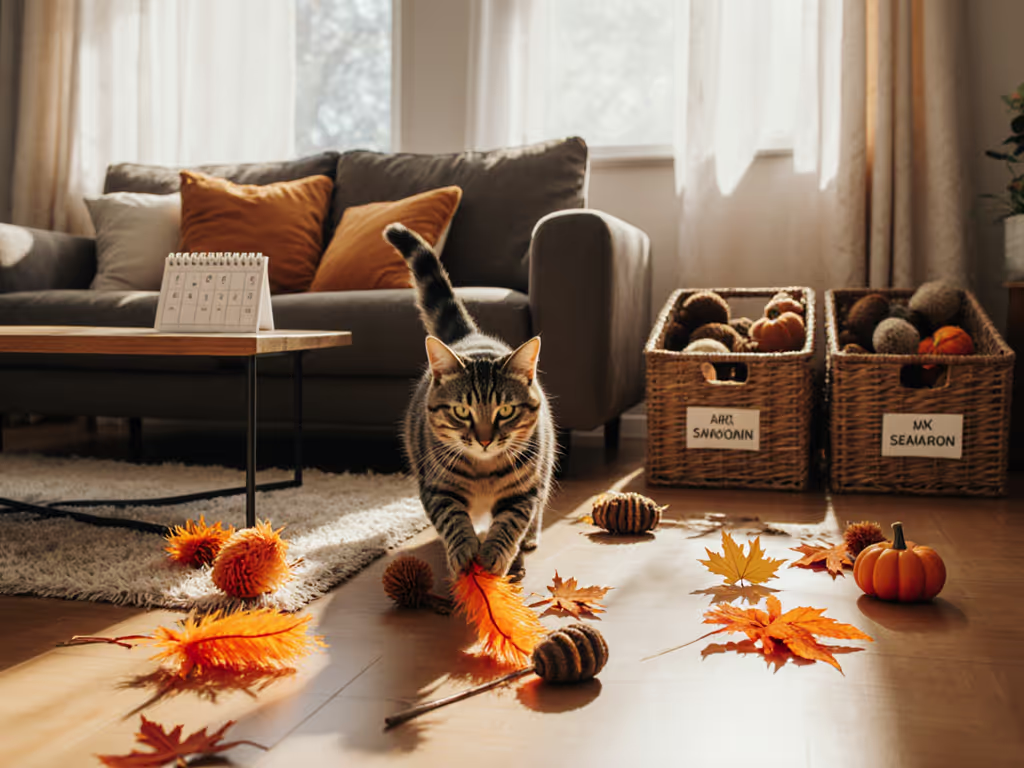
Your cat's play needs shift with the seasons, yet most of us rotate toys the same way year-round, or don't rotate at all. Cat toy seasonal rotation and house cat enrichment aren't just about buying new items, they're about matching your cat's natural activity cycles to what you offer. When you align play with the season, you're tapping into something deeper: the way cats are wired to hunt, rest, and move through the rhythms of their environment.
I learned this in my studio apartment with a shy former street cat who hid under the bed for weeks. Once I started pairing quiet, low-energy toys in winter with high-energy wand work in spring, something shifted. Five minutes daily beats any gadget in the closet, but those five minutes matter most when you're offering what her body and mind actually craved that time of year. Within a month, she greeted my play sessions at the doorway.
Seasonal thinking transforms a toy rotation from a chore into a rhythm. Let's walk through how to build one that works for your household and your cat.
Why Seasonal Patterns Matter for Indoor Cats
Even indoors, cats respond to light, temperature, and the behavioral cues embedded in their bodies. Seasonal behavior changes in cats mirror what wild felines experience: shorter days and cooler temperatures often mean cats rest more and conserve energy, while longer days and warmth trigger hunting activity and alertness. This isn't just theory. Cats play as if they are hunting, so many cats like their toys to imitate their favourite prey, and the prey they're drawn to may shift with the season. To understand this instinct, see our prey sequence guide.
Indoor cats also pick up on your rhythms. Winter might mean you're home more, working hybrid, or feeling less energetic. Summer often brings visitors, outdoor sounds, and variable schedules. By adjusting seasonal play patterns to match both your cat's instincts and your household reality, you sidestep the common trap: buying a toy, feeling guilty it sits unused, and letting clutter pile up.
Toy rotation is regularly changing the toys your cat has access to in order to keep things exciting and new. When you layer seasonality on top of rotation, you're preventing boredom, managing overstimulation, and giving yourself permission to simplify.
Understanding Natural Feline Behavior Cycles
Before you rotate, map your cat's year. Start where your cat says yes: observe, don't impose.
Winter (November to February) Colder, darker months typically trigger slower, more focused play. Cats often have less access to outdoor stimulation (if they go outside at all), so indoor enrichment becomes crucial for mood and weight management. Many cats prefer shorter, quieter play sessions. Prey drive doesn't vanish, but the pace shifts (think patient stalking indoors rather than explosive chasing).
Spring (March to May) Days lengthen, temperature rises, and cats often experience a surge in energy. Natural feline behavior cycles shift into high gear. This is the season for interactive toys that reward fast movement: wand toys, balls, and toys that mimic small prey darting. If your cat has any outdoor access, they're picking up on external activity too.
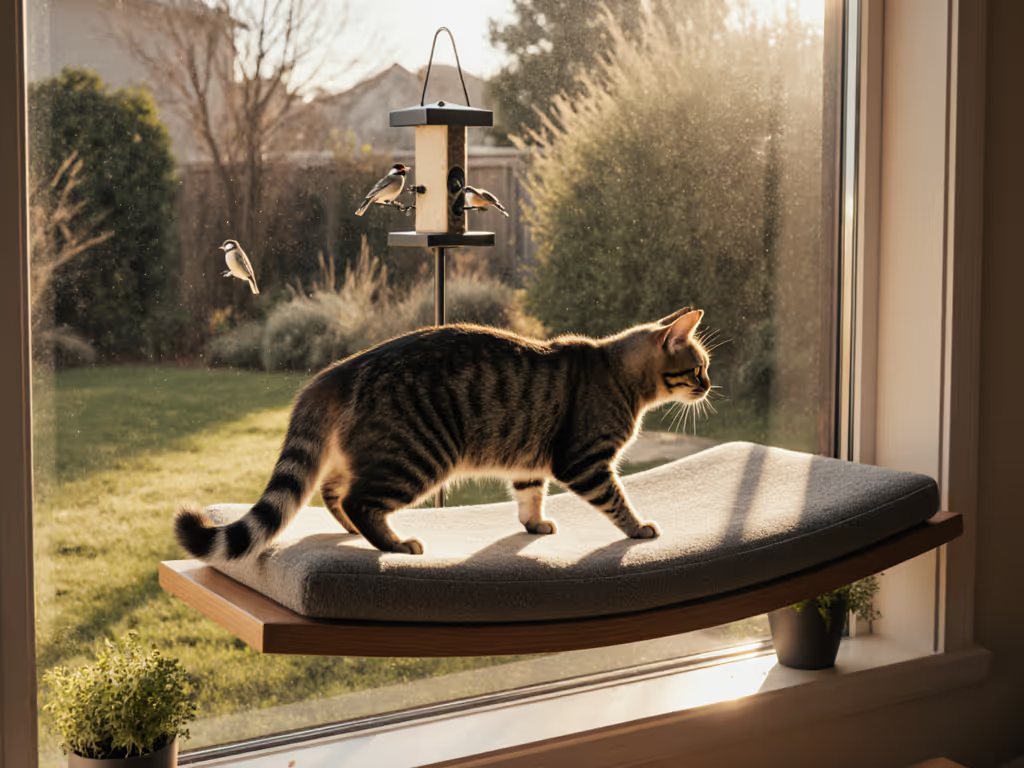
Summer (June to August) Heat often makes cats choose rest over play, especially during peak afternoon hours. Adjust timing: morning and evening play sessions may be more engaging than midday. Some cats slow down; others stay high-energy in cooler moments. Self-play toys and puzzle feeders can keep them engaged without demanding your presence. For hot days, try these automatic summer toys that keep play going without overheating.
Fall (September to October) Another transitional surge, often as dramatic as spring. Days shorten, energy increases again. It's a second window for active engagement before the winter slowdown.
Step-by-Step: Building Your Seasonal Rotation System
Step 1: Audit What You Have
Gather all your cat's toys. This is typically the moment people gasp at how many sit unused. Don't judge, just catalog them.
For each toy, note:
- Type: wand/interactive, ball/chase, puzzle/self-play, texture/sensory
- Activity level required: high-energy, moderate, low-energy, sedentary
- Noise level: silent, quiet, moderate, loud
- Condition: safe, worn but playable, retire
Be honest about which ones your cat actually engages with. Pay attention to which toys your cat gravitates towards and which they don't like as much so you can tailor playtime toward the kind of play they most enjoy.
Step 2: Sort by Season
Create four piles: one for each season. Use this rough guide:
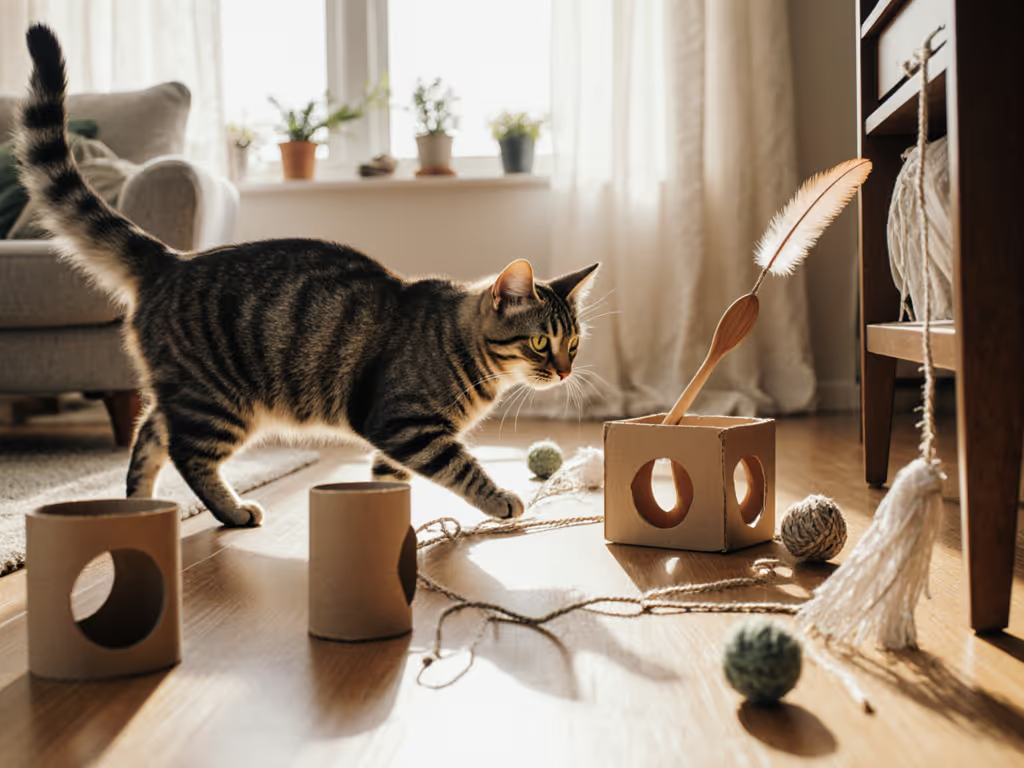
Winter rotation: Quiet, focused toys. Soft wands, small mice, gentle balls. Low-noise options. Shorter, cozy play sessions.
Spring rotation: High-energy interactive toys. Feather wands, jingly balls, prey-mimicking toys. Toys that reward bursts of speed.
Summer rotation: Puzzle feeders, slow-motion toys, self-play items. Toys that don't require you to move around much.
Fall rotation: A blend, reintroduce spring's high-energy toys; keep a few calm options.
Don't force toys into seasons. Cats can easily get bored with the same toys. If they always have the same toys out and available, the novelty wears off. Rotating removes that fatigue.
Step 3: Choose Storage That Works
Small apartments and shared spaces demand smart storage. Use:
- A closed bin under the bed or in a closet (keeps toys hidden, dust-free, and out of sight)
- A fabric drawer organizer for active-season toys
- Mason jars for small mice and balls, labeled by season
The goal: toys out of your living space, easily accessible when it's time to swap. For compact spaces, see our minimalist toy storage guide for simple, clutter-free setups.
Step 4: Set a Rotation Cadence
Each cat's toys should be rotated regularly, at least once a week to provide variation. For seasonal rotation, follow this timeline:
- Every 1 to 2 weeks within the season: Swap 1 to 2 toys to maintain novelty without overwhelming your cat.
- Every 6 to 8 weeks: Introduce the next seasonal collection as the season shifts.
Mark it on your calendar or set a phone reminder. Too many toys out at once can lead to overstimulation. Cats can get overwhelmed and won't know which toy to play with first. Keep 4 to 6 toys available at any time.
Step 5: Observe and Adjust
Not all cats follow the rulebook. Some high-energy cats ignore seasonal cues. Others are sensitive to change. Watch for:
- Does your cat engage with the current rotation?
- Are play sessions lasting 10+ minutes?
- Are night zoomies or daytime behaviors improving?
- Does your cat seem anxious with the swap?
If a toy or season isn't working, adjust. Consistency beats complexity for cats and caregivers.
Quick Seasonal Rotation Checklist
Every 1 to 2 weeks:
- Remove 1 to 2 toys; introduce 1 to 2 from storage
- Inspect toys for safety (loose strings, worn fabric)
- Wipe down toys with a dry cloth For material-specific cleaning, use our toy sanitizing methods to keep play safe.
- Note which toys were most popular
Every 6 to 8 weeks (seasonal transition):
- Pack away the current season's toys (clean and dry)
- Unpack the next season's collection
- Do a final safety check
- Plan your interactive play time for the new season
Why This Works for Real Life
You don't have to overthink it. The magic isn't in perfection; it's in consistency and attention. Reintroducing tried and true toys keeps things interesting and can reignite your cat's interest in playing with them. When a toy disappears for a few weeks, it becomes novel again, almost like a new toy without the expense or clutter.
Seasonal rotation also gives you a framework for when life gets chaotic. Working late? A well-chosen puzzle feeder that matches the season keeps your cat engaged. Busy household? Quieter winter toys might mean fewer disruptions. Small space? You're storing toys strategically, not cramming them all into one closet.
Most importantly: this approach honors your cat's body and behavior without requiring you to become an enrichment expert overnight.
Your Next Step
Start where your cat says yes. This week, gather your toys, spend 15 minutes sorting them into rough piles, and pick one quiet toy to retire for two weeks. Notice what your cat does when that toy reappears. That small win (watching your cat rediscover a forgotten favorite) is the foundation of a rotation that actually sticks.
Seasonal rotation isn't about having the perfect system. It's about building a rhythm that works for both of you: less guilt, less clutter, and a cat that's genuinely engaged. In my experience, five quiet minutes with the right toy at the right time beats any gadget gathering dust. Let the season guide you.
Related Articles