
Pick the Right Toys: A Guide to Cat Breed Play Styles
By Hana Tanaka • 3rd Mar
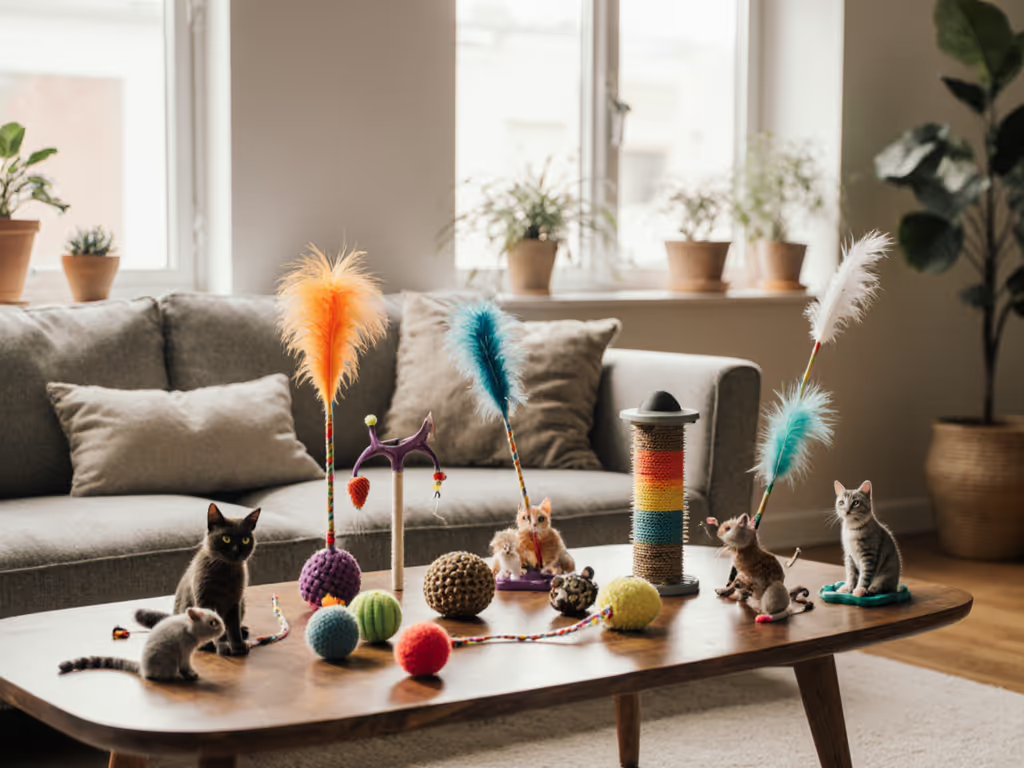
Understanding cat breed toy preferences and your individual cat's personality is one of the quickest paths to a happier, calmer home. Every cat comes with a blueprint (hunting style, energy level, and play temperament) that shapes what actually holds their attention. Rather than guessing or accumulating a closet full of ignored toys, you can match your cat's prey drive and personality type to toys that will genuinely engage them. This guide walks you through the play profiles so you can build a small, intentional collection that works.
Five minutes daily beats any gadget in the closet. When you know what your cat truly craves, those few minutes become enough, and consistency becomes your secret.
Understanding the Four Play Personalities
Before you look at breeds, recognize that cats fall into personality archetypes.[1] Knowing which one (or blend) your cat is helps you choose toys that align with how they're already wired.
1. The Hunter
Your Cat's Drive: Stalking, pouncing, dispatching prey through predatory sequences
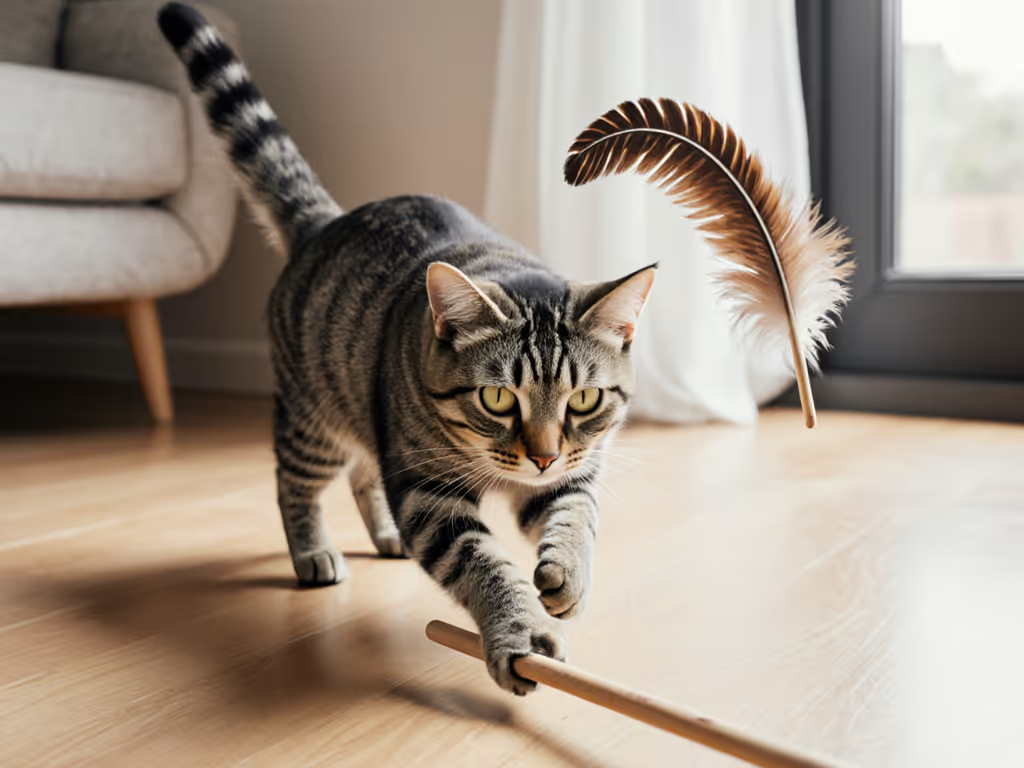
The Hunter lives for the stalk-and-pounce cycle. They'll become obsessed with toys that mimic small, quick-moving prey, especially those with unpredictable movement patterns.[1] Feather wands, teaser toys, and toys that dart or flutter will captivate them. The reward is the catching and carrying phase, so interactive play with you creates the full hunt loop they're seeking.
Personality markers: Eyes track fast movement with laser focus. They ambush from hiding spots. If they bite during play, it's often gentle and deliberate (they're practicing dispatch, not aggression).
2. The Social Butterfly
Your Cat's Drive: Bonding and interactive play with you
Social Butterfly cats crave connection and shared activity.[1] They thrive on toys that require your participation, like feather wands, fishing-pole toys, and interactive teasers that invite back-and-forth play. For them, the toy is really the you attached to it. These cats often greet you at the door, follow you from room to room, and will jump on toys more enthusiastically when they know you're involved.
Personality markers: They seek your attention consistently. They'll abandon a solo toy to watch you work. Structured playtime with you is their preferred enrichment.
3. The Thinker
Your Cat's Drive: Problem-solving and cognitive challenge
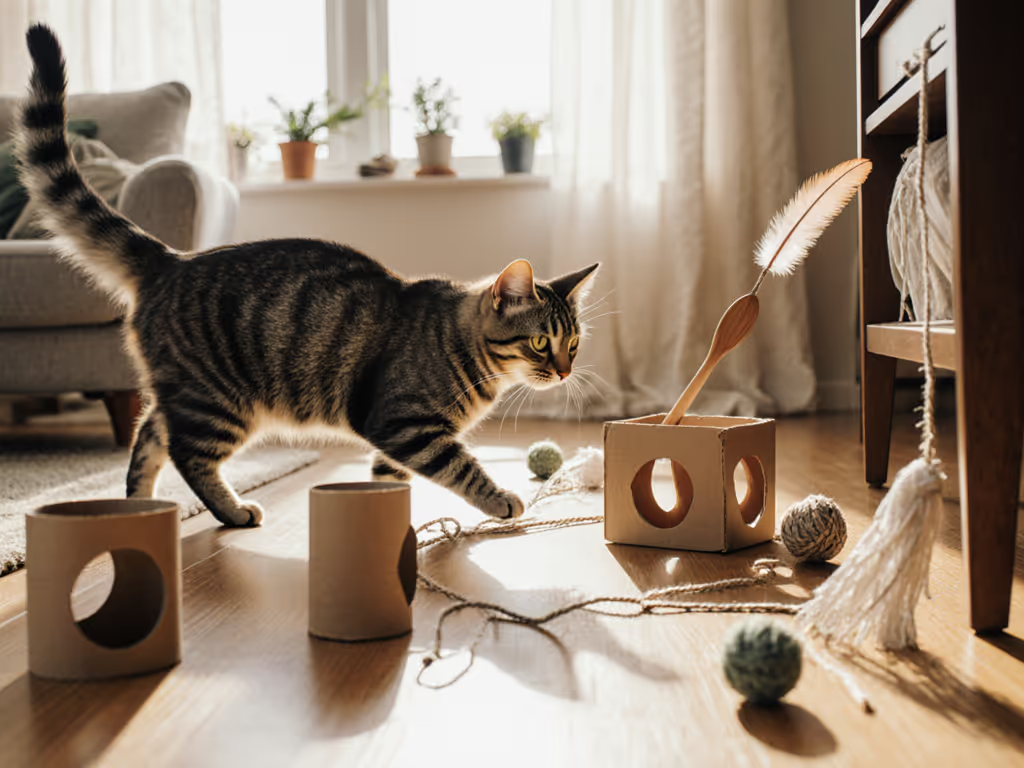
Thinker cats need mental engagement to feel fulfilled.[1] Puzzle toys, treat-dispensing feeders, and toys with hidden compartments that require a sequence of actions to keep them sharp and satisfied. Intelligence breeds like Bengals, Abyssinians, and Cornish Rex often fall into this category.[3] For these cats, figuring out how to win a reward is far more rewarding than a simple toy.
Personality markers: They paw at toys methodically, not frantically. They lose interest in toys without novelty or challenge. They may solve a puzzle and move on (and that's success, not rejection).
4. The Comfort Seeker
Your Cat's Drive: Safety, softness, and companionship
Comfort Seekers aren't uninterested in play; they prefer gentler, lower-stakes interactions.[1] Soft plush toys, catnip pillows, and crinkle balls satisfy their need to engage without overstimulation. Many shy, anxious, or older cats gravitate here. I learned this firsthand: when a formerly street-dwelling cat needed weeks to find trust, it was the consistency of soft, five-minute sessions (not intense play) that opened the door. She moved from hiding under the bed to greeting those calm interactions at the doorway. If your cat is fearful or easily overwhelmed, see our gentle toy introduction guide for step-by-step, stress-free play.
Personality markers: They prefer to snuggle toys rather than attack them. Loud noises or sudden movement startle them. Quiet, predictable play is their sweet spot.
How Breed Temperament Shapes Toy Needs
While individual personality always trumps breed, certain breeds do cluster around play preferences. This gives you a useful starting hypothesis (not a rigid rule).
High-Energy & Intelligent Breeds
Bengal, Abyssinian, Savannah, Cornish Rex, and Manx cats demand both physical and mental outlets.[1][3][9] These breeds thrive on interactive toys that challenge their agility and intelligence: puzzle feeders, electronic prey toys that simulate erratic movement, and wand toys that keep up with their pace.[1] A single session of low-challenge play leaves them restless; they need variety and novelty rotated in regularly.
Your quick-start checklist:
- Feather wand for interactive hunting sessions (2-3x daily, 5 minutes each)
- One puzzle feeder or treat-dispensing toy for autonomous challenge
- One battery-operated or electronic toy that moves unpredictably
- Rotate toys weekly to maintain novelty
Active Breeds with Strong Prey Drive
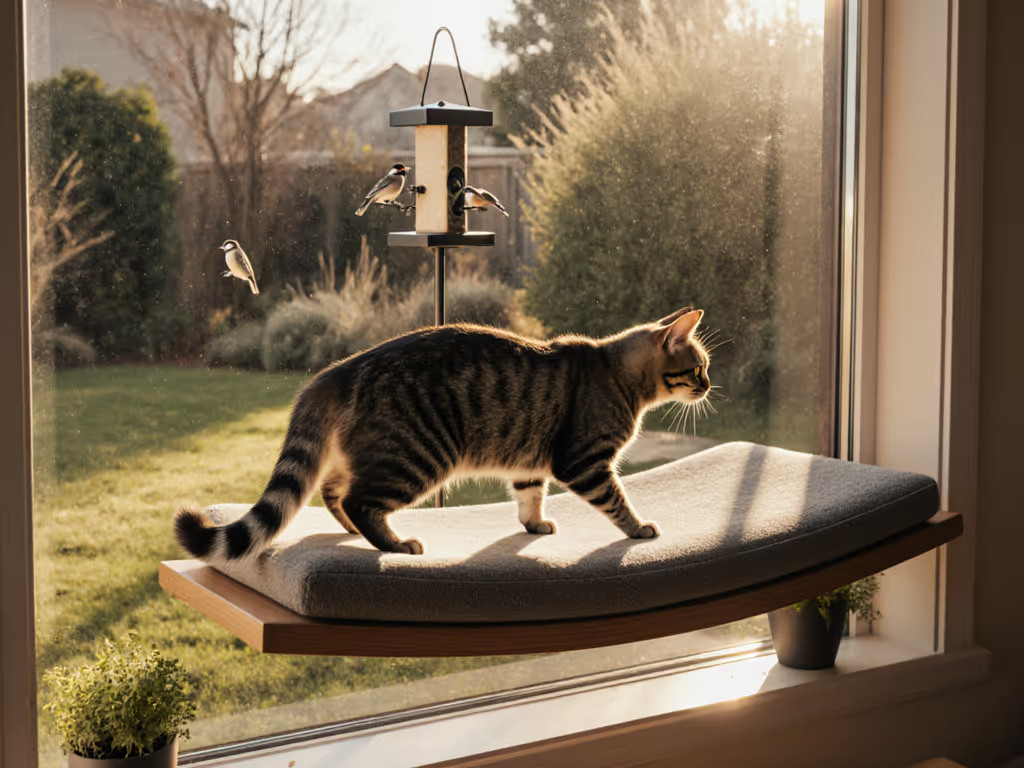
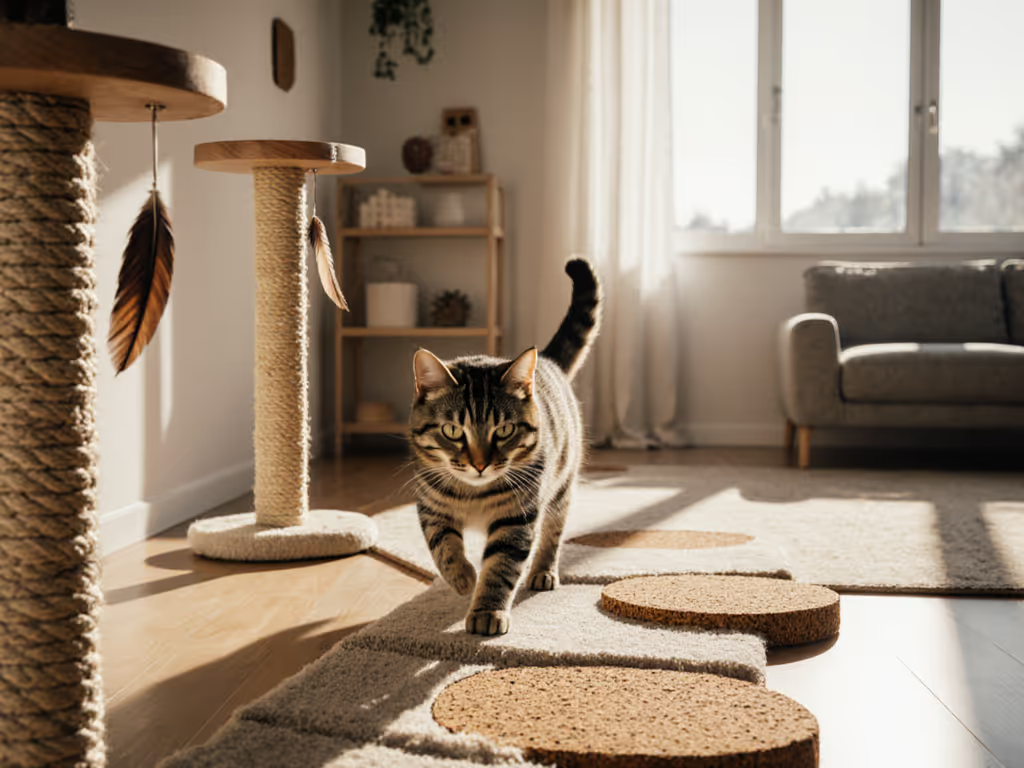
Maine Coon, Norwegian Forest Cat, Siamese, and Siberian cats have a pronounced hunting instinct.[3] See our top toys for Siamese if your cat needs extra outlets. They love toys shaped like mice, feather toys, and anything that simulates small prey.[6] Many also enjoy climbing and vertical play, so cat trees or wall-mounted shelves double as enrichment gear. These cats need multiple "prey" options to simulate a realistic hunt environment.
Your quick-start checklist:
- Feather toys or realistic toy mice (multiple, for rotation)
- Fishing-pole or teaser wand toy
- Cat tree or wall shelf for vertical territory
- Solo prey toys (toy mice) available throughout the home
Low-Energy, Gentle Breeds
Persian, British Shorthair, and Ragdoll cats prefer quieter play and comfort.[1] They're not uninterested in enrichment; they simply want it on their terms. Soft plush toys, fleece balls, and crinkle toys satisfy their need to engage without overwhelming stimulation. Solo play options allow them to entertain themselves at their own pace.[1]
Your quick-start checklist:
- One or two soft plush toys (cuddling counts as enrichment)
- Crinkle balls or rolling toys with hidden treats
- Avoid loud, battery-operated toys
- Keep interactive sessions under 5 minutes; let them set the pace
Russian Blue, Domestic Shorthair & Mixed Cats
Russian Blue and other adaptable, moderate-energy cats usually fall into a middle ground.[2][6] They're stimulated by puzzle feeders, soft toys, and gentle wand toys without needing intense daily input. These cats often appreciate novelty through rotation rather than constant activity. A small, well-rotated kit works beautifully for them.
Your quick-start checklist:
- One interactive wand toy (used 1–2x daily)
- One puzzle feeder or treat-dispensing toy
- Two to three soft toys on rotation
- Monthly rotation keeps engagement fresh
Starting Where Your Cat Says Yes
The best toy for your cat is one they'll actually use. This means starting where your cat says yes, observing what naturally captures their attention before you invest in anything.
A two-minute observation protocol:
- Watch what movements they track (fast, slow, erratic, predictable)
- Notice what textures they prefer to touch (soft, fuzzy, smooth, bumpy)
- Identify their preferred hunting outcome - do they want to catch, kill-shake, carry, or dissect?
- Observe their energy ceiling - do they tire easily, or do they escalate?
Once you see these patterns, you'll choose toys that align with their wiring, not against it.
Building Your Minimal, Rotation-Ready Kit
Consistency beats complexity. Rather than a toy avalanche, curate a lean collection and rotate it. This approach:
- Keeps clutter minimal (important for small spaces and calm homes)
- Renews novelty without buying constantly
- Lets you observe which toys actually get used
- Makes cleanup and storage manageable
Core kit for any cat:
- One interactive wand or teaser toy (used during structured play with you)
- One solo prey toy or puzzle feeder (used for autonomous enrichment)
- One soft comfort toy (for downtime or anxious moments)
- One "wildcard" toy that matches your cat's unique preference
Store them in a small, accessible container and rotate two toys off-stage weekly. Reintroduce them after 2-4 weeks, and they'll feel novel again.[7] Use this toy rotation plan to keep engagement high without buying more.
Safety as You Play
The toys that engage your cat best are often the ones that require your attention. String toys, fishing-pole wands, and small objects need supervision.[9] Store wand toys out of reach when unsupervised. Skip toys with detachable parts that could be ingested, and choose durable materials over flimsy plastics that splinter easily. For laser toys, always end the session with a physical toy or treat they can "catch" and hold, the prey-drive completion matters.[5]
For multi-cat homes, watch for resource tension. If one cat guards toys aggressively, provide duplicates or separate play times to keep the peace.
Your Next Step: The 5-Minute Play Audit
This week, choose one toy from your cat's predicted preference category and commit to five minutes of focused play, same time, same toy, for three days straight. Notice what happens: Does their energy change? Do they play differently at night? Do behavior concerns (biting, counter-surfing, zoomies) shift?
That small consistency is how you learn your cat's true preference. And once you know what works, you've solved the puzzle (not just for this cat, but for your whole routine). A calm, confident cat and a caregiver who feels capable: that's what this is really about.
Start where your cat says yes, build a routine they'll repeat, and trust that five focused minutes beats any gadget gathering dust.
Related Articles