
DIY Cat Sensory Enrichment: Household Items
By Naomi Chen • 10th May
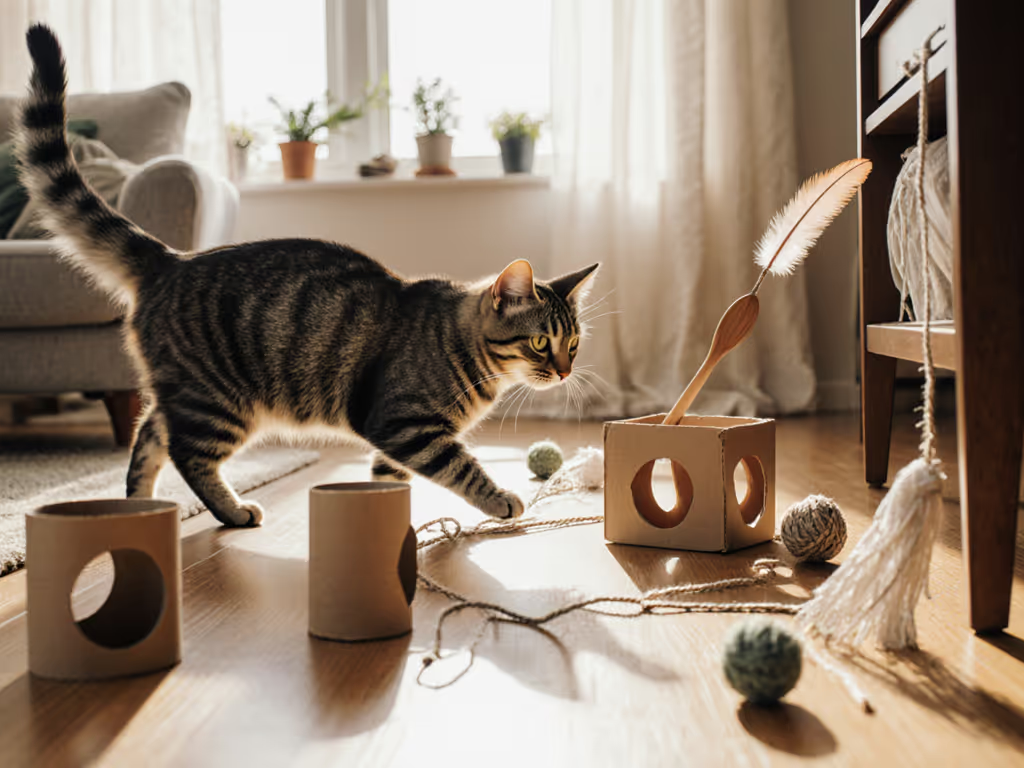
Most cat guardians know the frustration: you buy a toy with genuine hope, it arrives with promise, and your cat ignores it. Meanwhile, the paper bag it shipped in becomes the most prized possession in your home. The cost compounds. So does the guilt. And suddenly your carefully curated space is buried under colorful plastic that nobody uses.
Cat sensory enrichment doesn't demand a retail spree or an elaborate setup. What it does demand is intention (understanding that your cat's brain is wired to hunt, explore, and engage with textures, scents, and movements that tell their nervous system they're alive). The remarkable part? Most of the ingredients for meaningful cat toys and foraging experiences are already in your home: paper rolls, cardboard, fabric scraps, dried herbs from your pantry. And when enrichment is thoughtfully designed to fit your space and routine (not against it), it actually works.
When we downsized to a sunlit but echo-prone loft years ago, I learned this the hard way. Every jingle, every crinkle, every motorized whir bounced off the walls. Our cats grew withdrawn, frustrated. So we rebuilt our play corner from scratch with just three things: a slim dowel wand with a quiet feather, a silent target mat, and a lidded basket for storage. The transformation was immediate. Calm rooms invite play; chaos shuts curiosity down. Our evenings felt restored. And our cats played with actual purpose instead of drifting restlessly through clutter.
This guide shows you how to create sensory enrichment that respects your home, honors your cat's instincts, and won't leave you drowning in toys nobody uses.
Why Sensory Enrichment Matters (and Why Your Calm Depends on It)
Cats navigate the world through senses we often overlook. In nature, a cat hunts by sound (the rustle of a mouse in grass), follows scent trails to territory boundaries, learns about their body through texture, and responds to movement at the edge of vision. These sensory pathways aren't luxuries; they're how cats' nervous systems stay regulated and engaged.
When a cat's indoor environment offers little sensory variation, that input need doesn't vanish. It redirects. Unmet sensory hunger often shows up as night zoomies, counter-surfing, excessive grooming, ambush biting, or sudden aggression toward toys or hands. For you, this means sleep disruption, scattered energy, and guilt about not "enriching enough." For your cat, it means restlessness.
Here's what changes when sensory enrichment is woven into daily rhythm: a cat hunts for 10 to 15 minutes, captures prey (a toy or a hidden treat), eats, grooms, and rests deeply. This cycle mirrors natural behavior so closely that the nervous system (yours and your cat's) genuinely settles. For a deeper breakdown of this hunt-catch-eat-rest flow, see our prey sequence guide. You get calmer evenings. Your cat sleeps longer and plays with focus rather than desperation. This isn't a bonus; it's the foundation of coexistence in a shared home.
The Five Sensory Pathways (and Which Ones Work Best at Home)
When behaviorists talk about enrichment, they typically reference five categories: environmental (new spaces), sensory (texture, sound, scent), cognitive (puzzle-solving), food-based (hunting for meals), and social (interaction). If you're adding food or puzzle elements, match difficulty with our puzzle feeder skill-level guide. For small spaces and quiet homes, sensory enrichment is where most of the magic lives.
Within sensory play, focus on what you can control:
Sound and Texture: Crinkle and rustle trigger hunting instinct without the penetrating jingle of bells. A cat pouncing on crumpled paper engages predatory behavior in a way that, paradoxically, often calms because the play is containable and quiet.
Scent and Olfactory Trails: A cat's nose is their primary compass. Scent-based foraging is self-directed enrichment (your cat hunts while you're present but unavailable), perfect for WFH days.
Texture and Proprioception: Dragging claws across sisal, balancing on a narrow surface, rooting through crumpled paper... these tactile experiences build confidence and occupy restless energy.
Movement and Visual Engagement: Prey doesn't move constantly; it pauses, darts, flees. Toys that mimic this unpredictability engage far more than spinning gadgets.
DIY Projects by Sensory Category
Crinkle Play: Controlled Sound Without the Chaos
The trick here is engaging your cat's auditory and tactile needs without overwhelming your own. Crinkle balls from stores often come with bells (useful for the cat, maddening for a 2 a.m. wake-up).
Parchment Paper Crinkle Ball
- Use parchment paper (quieter than foil, safer if small pieces are swallowed).
- Crumple loosely into a ball roughly the size of a ping-pong ball.
- Toss gently or roll across the floor.
Your cat pounces, bats, carries, and "kills" the ball. The muted rustle satisfies the auditory trigger without the sharp jingle. When it falls apart, compost it and make another. Zero waste, zero storage required.
Variation for Noise-Sensitive Homes: Slip the crumpled ball into a small drawstring pouch or mesh fabric sachet. This contains the rustle even further. The sound is still audible enough to engage your cat but won't carry through walls or wake others.
Scent and Olfactory Foraging
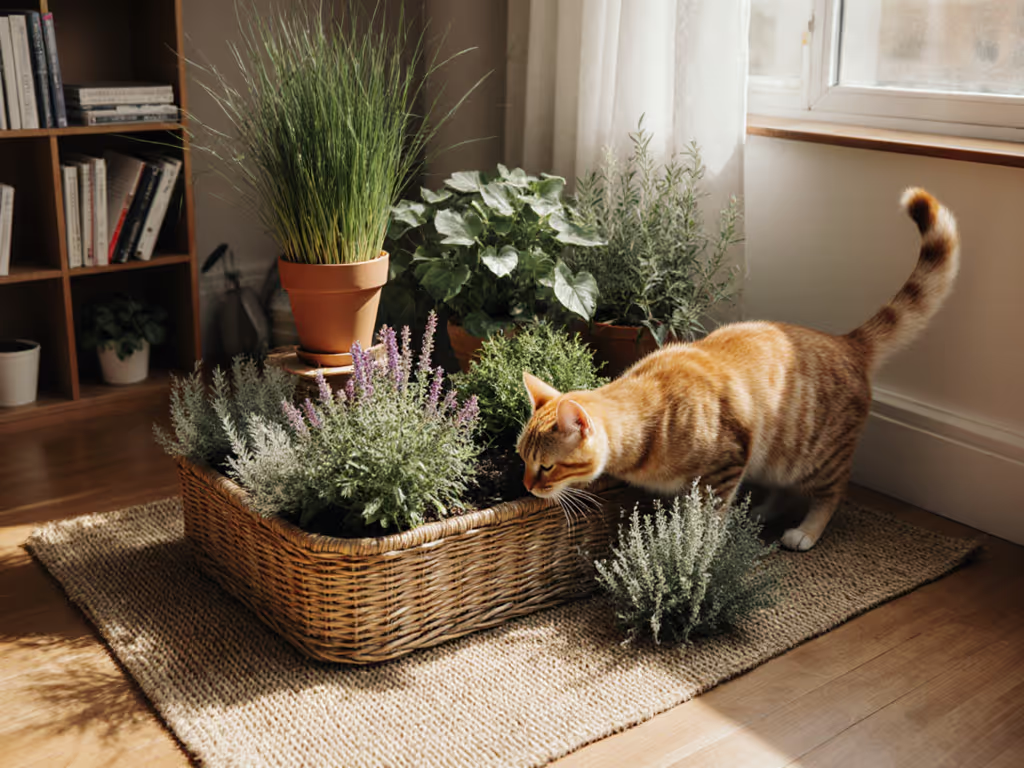
Cats follow scent with far more intention than most guardians realize. Learn how feline scent perception works—and how to use it safely—in our olfaction play explainer. A cloth infused with familiar or intriguing scents becomes a puzzle, a hunt, a reason to explore.
Cloth Scent Exploration Kit
- Cut old t-shirts or cotton fabric into 4" × 4" squares (or any small size).
- Infuse each square with a single scent:
- Rub one with dried catnip
- Dab another with a tiny amount of tuna juice (squeezed from a can)
- Dust another with dried silvervine or valerian root
- Leave one unscented as a neutral baseline
- Place cloths in different rooms, hide them under cushions, or arrange them in a low basket.
Your cat "forages" by following the scent gradient. This self-directed enrichment is ideal during WFH calls (your cat is meaningfully engaged while you're present but unavailable). No orchestration needed.
Textured Foraging: The Cardboard Box Revolution
Cardboard is the unsung hero of sensory enrichment: it's quiet, tactile, replaceable, and free.
DIY Cardboard Foraging Box
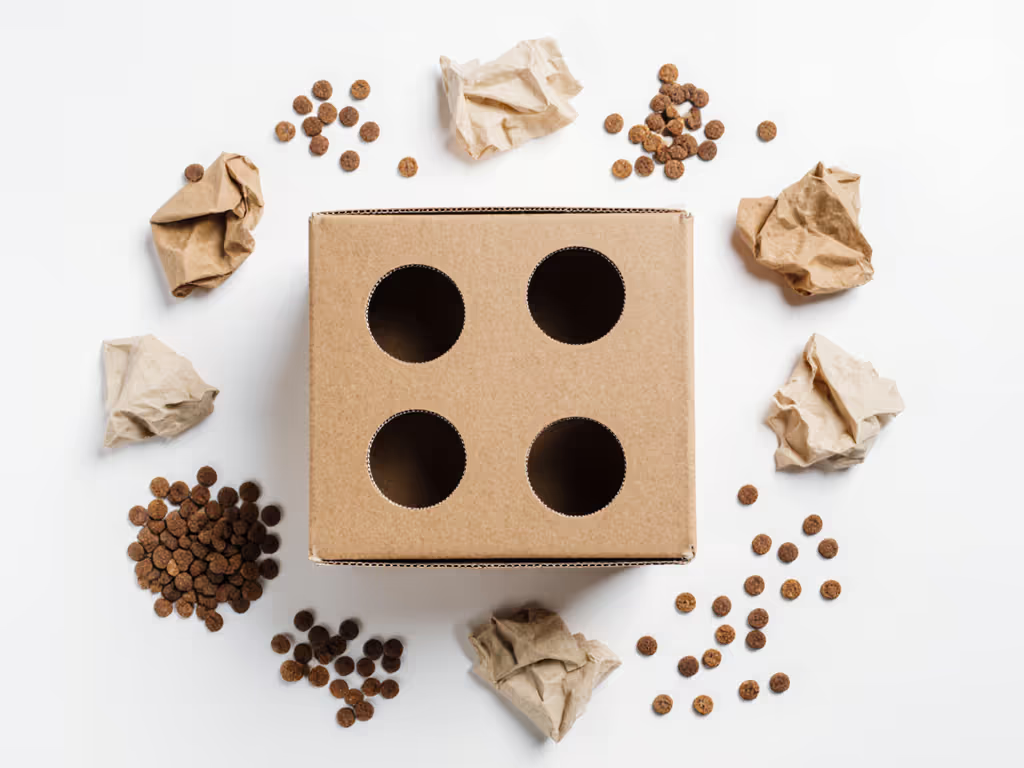
- Use any cardboard box (Amazon box, shipping carton, or shoebox).
- Cut or punch holes roughly 2 inches in diameter across the top and all four sides. Space them randomly so your cat explores different angles.
- Crumple kraft paper or packing paper and loosely fill the box halfway.
- Scatter kibble, small treats, or a few pieces of freeze-dried meat throughout the crumpled paper.
- Cover loosely with another layer of crumpled paper.
Your cat's nose and paws engage with paper texture, the quiet rustle of movement, and the scent of hidden food. The tactile work of rooting through layers slows eating, occupies the foraging instinct, and provides cognitive stimulation.
Why This Design Works: The box is semi-open, so your cat accesses treats easily but the structure contains mess. Once the treats are gone, refill with fresh paper or retire the box to recycling. No storage footprint. Clear floors, clear focus... and your cat is genuinely enriched.
Interactive Wand Play: The Quiet Hunt
A wand toy is among the few interactive toys where you control the engagement level, noise, and intensity. Most store-bought wands come with bells or jingling attachments. A simple swap transforms the experience.
Silent Wand Toy Upgrade
- Replace bells with a single feather or soft fabric tassel. Feathers flutter when jerked; movement alone triggers pouncing without sound.
- Use a slim wooden dowel (approximately 1/4 inch diameter) instead of plastic. It's lighter, quieter when your cat catches it, and has a more natural feel.
- Attach the prey mimic securely with knots or light glue; test it before play to ensure nothing will separate during a hunt.
A typical wand session lasts 10 to 15 minutes. For quiet, durable attachments that mimic real prey, browse our feather wand toy tests. You set the rhythm: the "prey" rests (your cat stalks), darts (your cat pounces), is "caught," and the play ends. Your cat rests deeply after a successful hunt. This structured cycle satisfies the predatory sequence and reliably ends with closure (the hunt concludes, the cat is sated, rest follows naturally).
Budget Wand: If you don't have a wand toy, make one in five minutes. Tie a feather or fabric scrap to twine, then tie the twine to a thin wooden stick. Secure everything with multiple knots. This simplicity often engages cats more than overengineered alternatives.
Vertical Texture and Climbing Enrichment
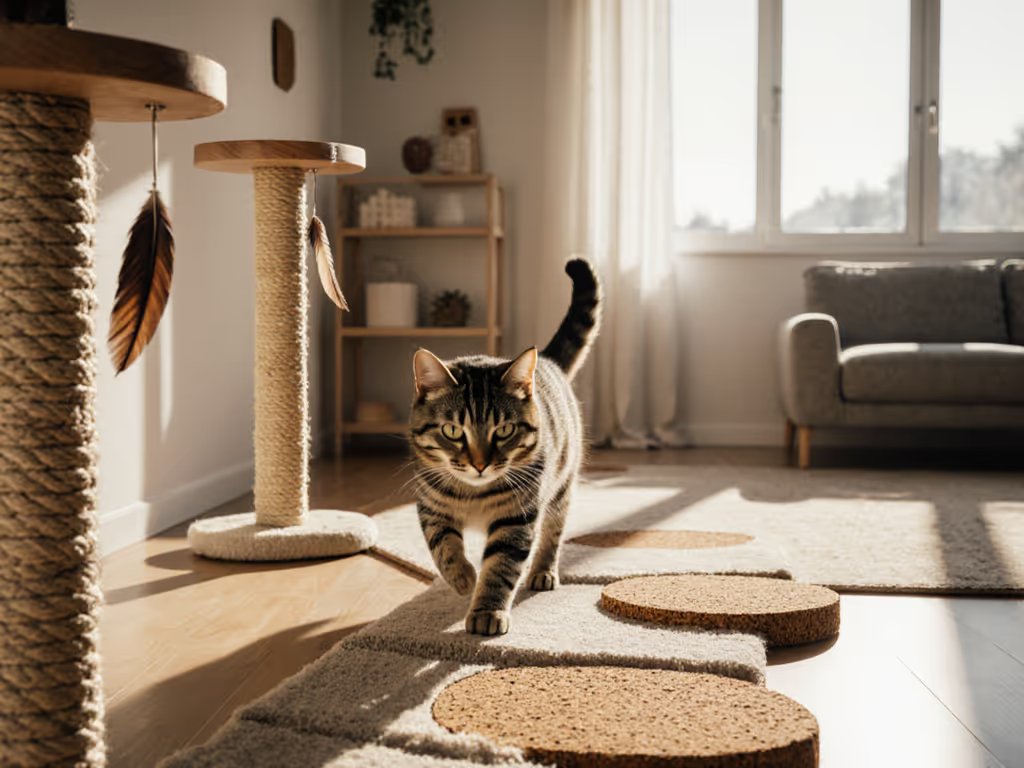
Cats feel confident and regulated when they can observe territory from height. Vertical enrichment also provides texture for scratching and tactile feedback.
DIY Corrugated Climbing Surface
- Cut corrugated cardboard to a size that fits your space (roughly 18" × 24" is versatile).
- Wrap or glue thin sisal rope around the board in horizontal bands using a hot-glue gun or strong adhesive.
- Lean it against a wall at a slight angle, or mount it with two heavy-duty hooks if wall-mounting works for your rental or home.
Your cat scratches, climbs, and perches on this textured surface. Corrugated cardboard is quieter than wood, easier to replace as it wears than traditional sisal posts, and occupies minimal footprint. As it deteriorates, simply replace it (no guilt, no waste, because the cost was essentially zero).
Storage, Rotation, and Keeping Clear Floors
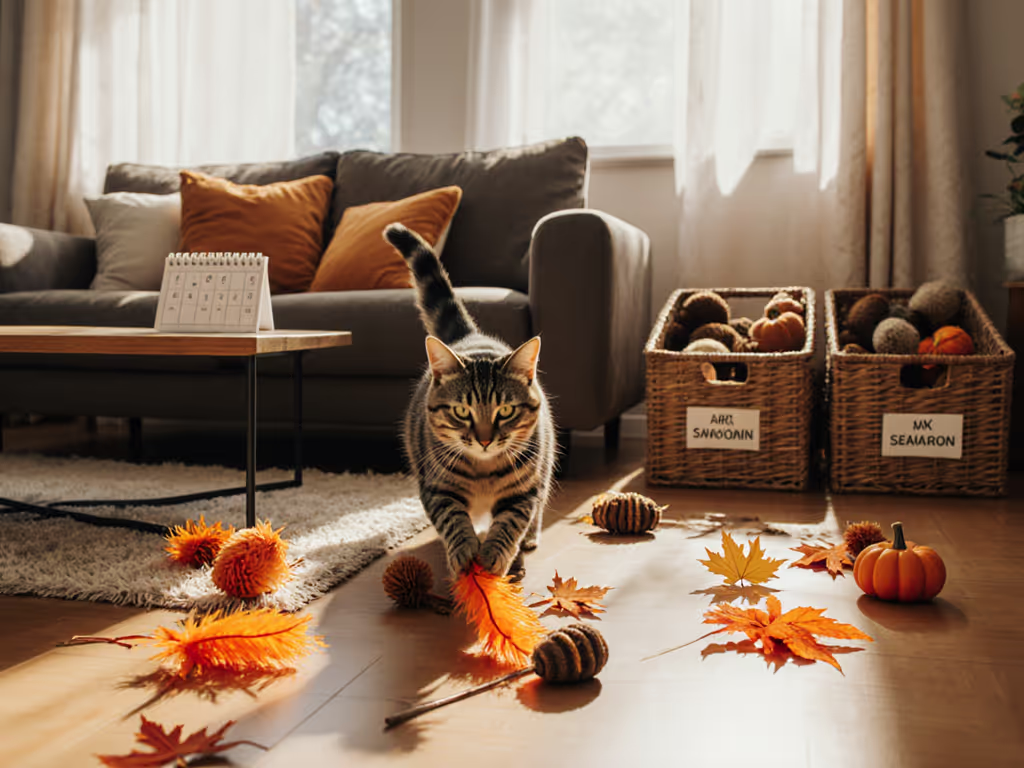
Here's a secret most enrichment guides skip: toys lose their appeal fast when they're always available. A cat surrounded by 20 toys engages with none of them. Rotation is the antidote, and it requires organization. Use our step-by-step toy rotation plan to keep novelty high without adding clutter.
The Clear-Container Rotation System
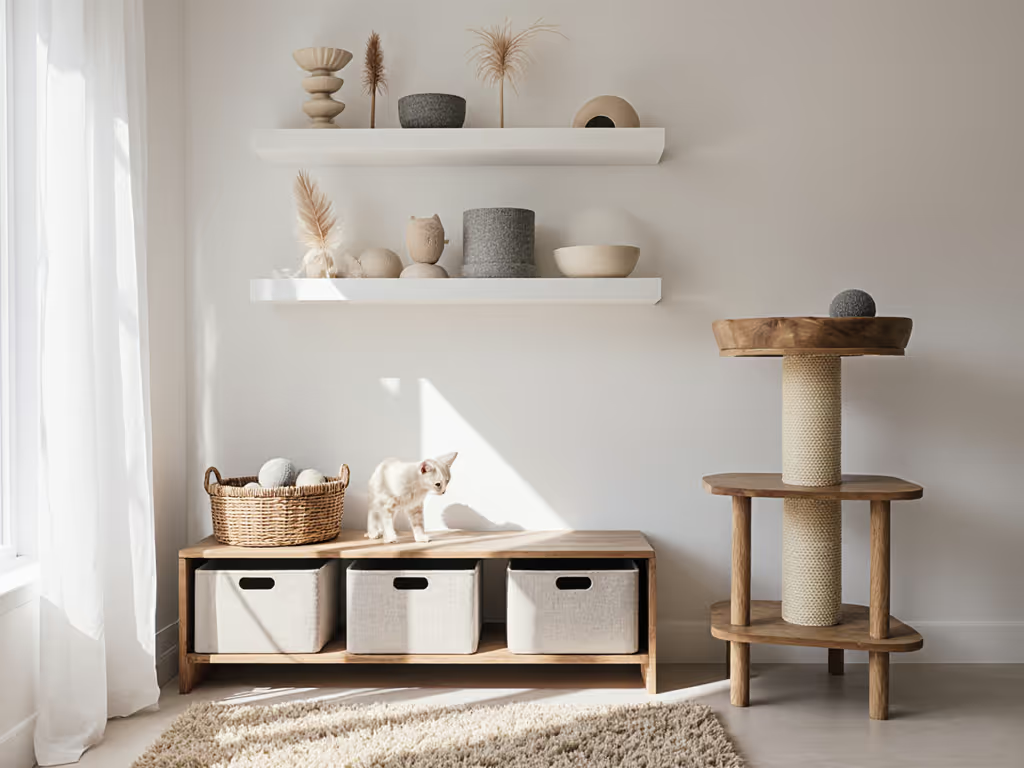
Store DIY toys in a clear, lidded plastic container or a fabric-lined basket. Keep this container in a closet, cabinet, or low shelf (visible enough that you remember to rotate it, hidden enough that it doesn't clutter your play space).
Rotation Rhythm: Introduce three to five toys, retire them after one to two weeks, then rotate in a fresh set. Your cat "re-discovers" old toys as novel again, without you buying anything new.
Why This Matters: With minimal toys in circulation, your floors stay clear. Your attention isn't scattered. Your cat still receives sensory variety because novelty cycles through predictably. This is how calm rooms invite play without chaos.
Measuring What's Actually Working
It's hard to know if enrichment is sufficient. Here are quiet, observable signs of success:
- Calm rest cycles: Your cat hunts during appropriate times (dawn and dusk for many), then settles into deep rest. Night zoomies decrease or vanish.
- Reduced redirected behaviors: Less ambush biting, counter-surfing, door-dashing, or excessive meowing for attention.
- Physical changes over weeks: Your cat may appear leaner, more flexible, or more confident as play increases.
- Self-directed engagement: Your cat initiates play (pouncing on crinkle balls without prompting, exploring scent cloths independently).
A simple play log (even notes in your phone) helps you spot patterns. "Cardboard box on Monday; cat used it five times by Wednesday" tells you what resonates.
When to Seek Additional Guidance
DIY enrichment handles most situations. But if your cat shows sustained disinterest despite consistent sensory engagement, or if boredom-related behaviors escalate, consider:
- A veterinary wellness check to rule out pain or illness.
- Consultation with a certified cat behavior specialist (especially in multi-cat homes or with extremely high-energy kittens).
- Intentional introduction of commercial puzzle feeders or climbing structures, but only with a clear usage plan and storage strategy.
Creating an Enriched, Calm Home Isn't a Trade-Off
The myth says enrichment requires clutter: gadgets, subscription boxes, elaborate setups. The reality is simpler. Enrichment is about threading sensory variety into your routines and space with intention (understanding that your cat's needs and your need for calm aren't opposing forces). They're aligned.
Your cat doesn't need everything. They need consistency, sensory variety matched to their prey profile, and an environment that invites curiosity rather than overwhelm. When enrichment harmonizes with your life instead of competing for attention and floor space, both you and your cat thrive.
Start small. Try one scent cloth or one crinkle ball. Observe what engages your cat. Build from there. Your home can remain beautiful, minimal, and deeply enriching all at once. That's not a paradox, that's the entire point.
Explore Further
If you're curious about identifying your cat's specific prey preferences or personalizing enrichment rotations to your household's unique rhythm, consider consulting resources from certified feline behavior specialists or chatting with your veterinarian about behavior-focused guidance. Every cat's sensory profile is distinct: what thrills one cat may bore another entirely. The beauty of DIY enrichment is that it adapts endlessly to your cat's needs and your own.
Related Articles